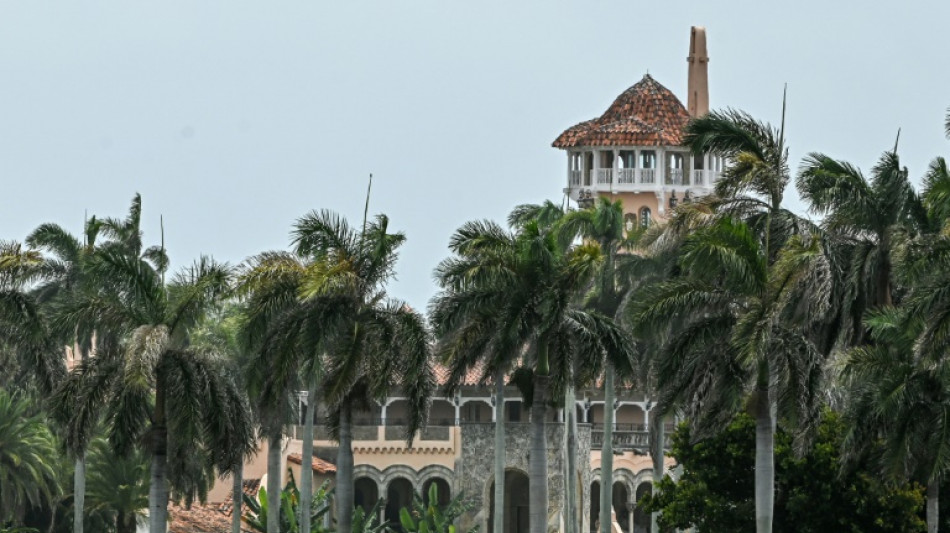
Redacted affidavit in Trump home raid released / Photo: Giorgio VIERA - AFP/File
 Anna Miltina Confronted with Racism Allegations on ProSieben Show

 German Auto Giants Face Existential Crisis as China Sales Plummet

 Cause of Death Revealed for 'Ellen' Producer Matthew Wright

 How to Enjoy Luxury Experiences on a Budget

 Pakistan Demands Grant-Based Climate Finance at COP31 to Avoid Debt Trap

 E Pellicci Pop-Up at Selfridges Brings Back Nostalgic School Cake

 Coronation Street's Debbie Webster Steps Down as Dementia Storyline Intensifies
The Justice Department on Friday released a heavily-redacted copy of the affidavit that persuaded a US judge to authorize the stunning FBI search of the Florida residence of former president Donald Trump.
Government lawyers had opposed the release of the affidavit but the judge ordered it unsealed with redactions the Justice Department said were necessary to protect an ongoing investigation involving national security.
FBI agents raided Trump's Mar-a-Lago estate in Palm Beach, Florida on August 8, seizing boxes containing a large amount of highly classified documents that Trump had not returned to the government despite multiple requests and a subpoena to do so.
The unredacted version of the affidavit likely explains in detail what the department is investigating in relation to Trump and could possibly reveal sources.
But Judge Bruce Reinhart accepted Justice Department arguments that there was a "compelling" need to mask significant portions of the document.
Reinhart had ordered the release of the redacted affidavit by noon (1600 GMT) on Friday -- and the fevered anticipation surrounding its publication caused the federal court website to crash.
Justice authorities argued against unsealing the document, saying it would require redactions "so extensive as to render the remaining unsealed text devoid of meaningful content."
But the judge said its release served the public interest, since the case involves the unprecedented search of the home of a former president.
The warrant for the raid cited three criminal statutes, including one falling under the Espionage Act, which makes it a crime to illegally obtain or retain national security information, and another on obstruction of a federal investigation.
Trump, who is weighing another White House run in 2024, has vehemently denounced the FBI raid.
"The political Hacks and Thugs had no right under the Presidential Records Act to storm Mar-a-Lago and steal everything in sight, including Passports and privileged documents," Trump said on social media Friday.
"They even broke into my safe with a safecracker - Can you believe?" he wrote. "We are right now living in a Lawless Country, that just so happens to be, also, a Failing Nation!"
The former president filed a lawsuit Monday urging a court to name an independent party, or "special master," to screen files seized in the FBI raid for materials protected by personal privilege.
Naming a special master could potentially block investigators' access to the documents, especially if he or she accepts Trump's claims that most were privileged.
In addition, it could interfere if the Justice Department is considering charging Trump with obstructing their investigations by refusing to hand over the documents.
The former president's lawsuit was not filed in the federal court in Fort Lauderdale, Florida where the original warrant was issued, but in more distant Fort Pierce, where the sole judge is a Trump appointee.
O.Karlsson--AMWN

