
Todorov Announces Bread and Blood: The Bakers of Kyivan Rus, a Satirical Journey Through Slavic Folklore and History
 Iran president says time to end war while in position of strength

 Antonelli fastest in sole Dutch GP practice session

 2,500 dead and rising -- UN says DR Congo Ebola outbreak 'growing exponentially'
 England all out for 409, lead Pakistan by 238 runs in 1st Test

 Premier League returns with Arsenal eyeing title dynasty

 Bayern knew about Musiala's condition 'a long time ago' says Kompany
 Ex-Pakistan PM Khan taken back to jail after hospital checks

 Real Madrid star players are compatible: Mourinho

 Drovix Launches In-House Multi-Asset Liquidity and Execution Stack for Sub-Millisecond Fills, Tighter Spreads
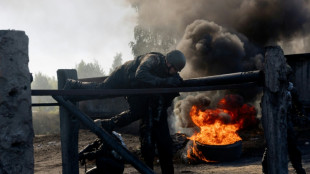
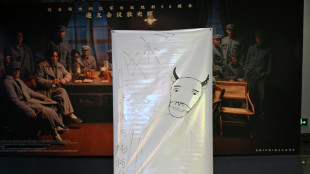 'So bad it's good': rough animated film becomes surprise Chinese hit

 'I'll adapt': First pregnant candidate navigates French presidential race

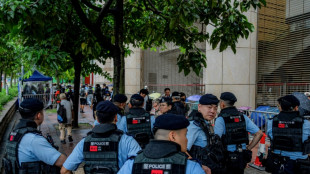 Hong Kong convicts Tiananmen vigil activists of inciting subversion

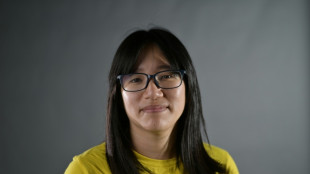 The Hong Kong Tiananmen vigil activists convicted in national security trial

 Eel-powered Japan whizz-kid, 11, chases Asian Games history
 Asian markets extend rally as traders assess US Treasuries pledge

 Barcelona enter new era as Flick targets La Liga hat-trick

 Pogacar favourite for Vuelta with Grand Tour treble in sight

 Bangladesh coach Simmons wary of Australia backlash in second Test

 Hong Kong Tiananmen activists to receive national security verdict
 Who are the candidates vying to lead the UN?
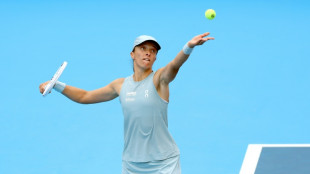 Swiatek into Cincinnati semis after Rybakina injury

 University suspends academic behind Jason Arday plagiarism charges

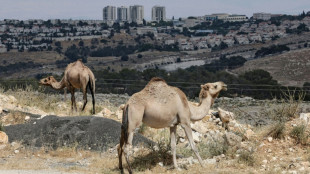 Key European leaders demand Israel halt West Bank settlement project

 Park-Aid Asphalt and Maintenance Ltd. (OTC:ATWT) Reports Q2 Results and Projects Full-Year Revenue Exceeding $25 Million

 Join Clinch Resources' Live Investor Webinar: Building a Leading U.S. Metallurgical Coal Producer with Near-Term Cash Flow

New book combines mythology, medieval history, baking-inspired satire, and cultural storytelling in an unconventional exploration of Kyivan Rus
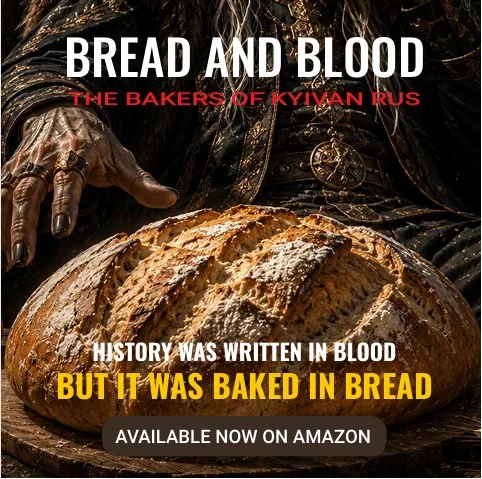
ALEXANDRIA, VA / ACCESS Newswire / August 21, 2026 / Author Todorov has announced Bread and Blood: The Bakers of Kyivan Rus, a satirical exploration of Slavic folklore, mythology, medieval history, and cultural resilience told through an intentionally absurd world of bakers, bread princes, flour gods, and culinary empires.
Jacketed in blue and yellow, the book uses baking and corporate parody as a storytelling device to introduce readers to figures, legends, and historical personalities associated with Kyivan Rus and the wider Slavic tradition.
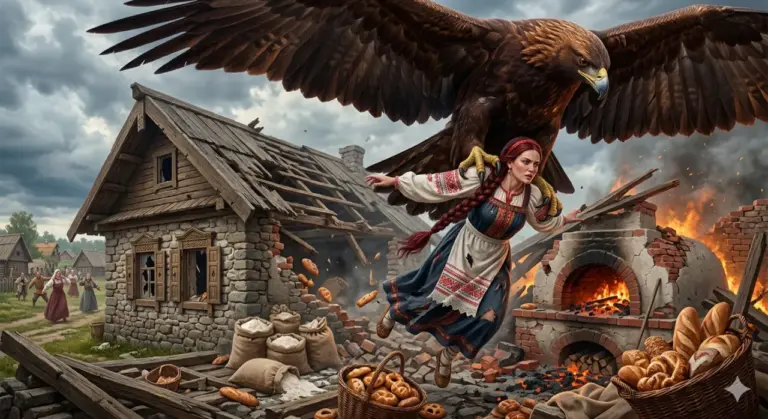
The idea for the book began while Todorov was working on material inspired by Norse mythology. According to the author, his time serving in Kyiv as part of the U.S. Embassy's Defense Attaché Office also influenced his decision to explore Ukrainian and Slavic history through humor.
"The posting definitely helped in the decision," Todorov said. "I developed a close connection and affinity to the country and people of Ukraine."
Rather than approaching the subject as a conventional academic history, Bread and Blood: The Bakers of Kyivan Rus uses satire to make mythology and medieval history more approachable to general readers.
"Using humor is the best way to confront violence and war," Todorov said. "Readers did not need another dry academic treatment of Slavic myth. I wanted to create something they would actually finish."
Slavic Folklore Through an Unconventional Lens
The book reimagines well-known figures from Slavic folklore through the language of bakeries, corporations, startups, supply chains, and culinary competition.
Baba Yaga becomes an off-grid pioneer operating a mobile bakery from her legendary chicken-legged hut. Koschei the Deathless is recast as the immortal executive behind a fictional "Big Bread" empire, while Vasilisa appears as an ambitious culinary apprentice navigating an exaggerated medieval marketplace.
Other sections reinterpret Marya Morevna, Ivan Tsarevich, Solovei the Robber, and figures from the Slavic pantheon, including Perun, Veles, Mokosh, Svarog, Dazhbog, Stribog, Svetovid, and Triglav.
The book also introduces the "Bogatyr Bakers," satirical versions of legendary heroic figures including Svyatogor, Mikula Selyanovich, Volkh Vseslavyevich, Ilya Muromets, Dobrynya Nikitich, and Alyosha Popovich.
Historical rulers associated with Kyivan Rus-including Rurik, Olga of Kyiv, Volodymyr the Great, and Yaroslav the Wise-are similarly reimagined as executives overseeing an elaborate fictional baking economy.
Beneath the parody, the book explores themes of cultural continuity, mythology, trade, political power, resilience, and the connections between the medieval societies of Eastern Europe, Scandinavia, and Byzantium.
History Beneath the Humor
Todorov describes the book as both comedy and an attempt to introduce readers to a body of mythology that is less familiar to many English-language audiences than Norse or Greek traditions.
The book presents the author's interpretation of Kyivan Rus as an important medieval political and cultural center whose history was shaped by Slavic communities, Scandinavian traders and settlers, Byzantine influence, and extensive regional connections.
"Even though it is presented in a humorous form through baking, it demonstrates the resilience of the Ukrainian people through their history," Todorov said.
Historical and political interpretations contained in the book represent the author's perspective and are presented through a satirical literary framework rather than as an academic or scholarly reference work.
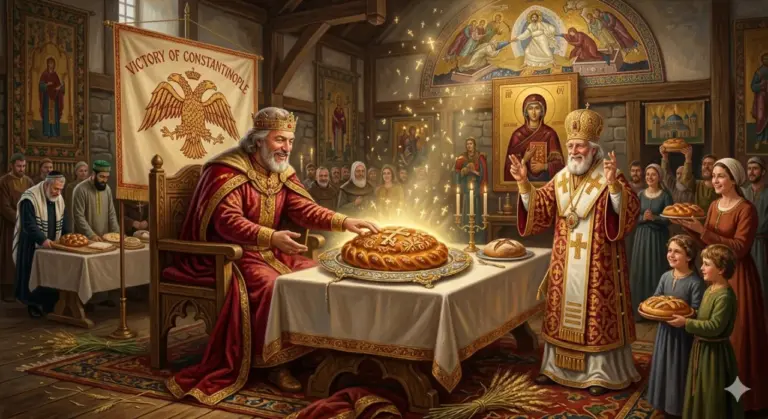
From Flour Gods to Bread Princes
Among the book's major sections are:
The Flour Gods of Kyivan Rus, which reimagines the Slavic pantheon as a dysfunctional corporate baking conglomerate.
The Bogatyr Bakers: The Elders, featuring legendary heroic figures recast as larger-than-life founders of a medieval culinary economy.
The Bogatyr Bakers: The Defenders, following Ilya Muromets, Dobrynya Nikitich, and Alyosha Popovich through exaggerated baking conflicts.
The Bread Princes of Kyivan Rus, which transforms major historical rulers into fictional executives overseeing the development of a sprawling baking society.
The Unyielding Crumb, a satirical reflection on later periods of Ukrainian history and cultural survival.
The resulting combination is deliberately unconventional: part mythology retelling, part historical parody, and part culinary satire.
A Broader Slavic Series
Bread and Blood: The Bakers of Kyivan Rus is intended as part of a broader series exploring different areas of the Slavic world.
A second volume, Bread and Blood: The Balkan Ovens, is currently in final edits, according to the author. A third volume is in early development.
Together, the planned books draw inspiration from different Slavic cultural and folkloric traditions while maintaining the same baking-centered satirical approach.
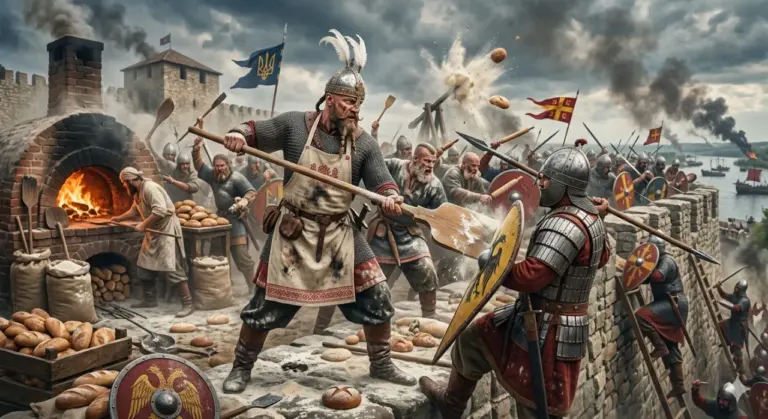
Slavic Folklore Through an Unconventional Lens
The book reimagines well-known figures from Slavic folklore through the language of bakeries, corporations, startups, supply chains, and culinary competition, while drawing on recognizable characteristics from the traditional stories and historical figures that inspired them.
Baba Yaga, one of the most recognizable figures in Slavic folklore, traditionally appears as an unpredictable witch or supernatural woman who lives deep in the forest in a magical hut often depicted as standing on chicken legs. Depending on the tale, she may threaten, test, mislead, or unexpectedly assist those who encounter her. In Bread and Blood, Todorov transforms that mysterious independence into culinary satire, portraying Baba Yaga as an off-grid pioneer operating a mobile bakery from her legendary wandering hut and tending volatile sourdough cultures beyond the reach of conventional authority.
Ilya Muromets, one of the best-known heroes of the traditional Kyiv cycle of epic songs known as byliny, represents the heroic side of the book. Traditionally depicted as a powerful bogatyr who defends the realm and confronts formidable enemies, Ilya becomes the book's heavy-hitting defender of the independent crumb. Todorov recasts his legendary strength through exaggerated feats of kneading, baking, and culinary combat while retaining the broader image of Ilya as a protector facing threats to the world around him.
Rurik, or Riuryk, is presented through the book's corporate parody as a Scandinavian regulatory consultant arriving to impose order on a chaotic culinary marketplace. According to the medieval Primary Chronicle tradition, Rurik was a Varangian chieftain invited to rule in the north in the ninth century and became the ancestral figure associated with the Rurikid dynasty that later ruled Kyivan Rus. Todorov turns that dynastic origin story into a satire about administration, regulation, and the consolidation of an unruly baking economy.
Yaroslav the Wise, who ruled Kyiv during one of Kyivan Rus's most important periods of political and cultural development, becomes the book's "Chief Legal Officer of the Lamination." Historically associated with the development of Ruska Pravda, the legal tradition of Rus, as well as the growth of education, religious institutions, architecture, and dynastic relationships with European royal houses, Yaroslav is reimagined as an executive attempting to bring legal order, infrastructure, and international reach to the fictional Kyivan baking enterprise.
Other sections reinterpret Marya Morevna, Ivan Tsarevich, Solovei the Robber, and figures from the Slavic pantheon, including Perun, Veles, Mokosh, Svarog, Dazhbog, Stribog, Svetovid, and Triglav.
The book also introduces additional "Bogatyr Bakers," satirical versions of legendary heroic figures including Svyatogor, Mikula Selyanovich, Volkh Vseslavyevich, Dobrynya Nikitich, and Alyosha Popovich.
Historical rulers associated with Kyivan Rus-including Olga of Kyiv and Volodymyr the Great-are similarly reimagined as executives overseeing an elaborate fictional baking economy.
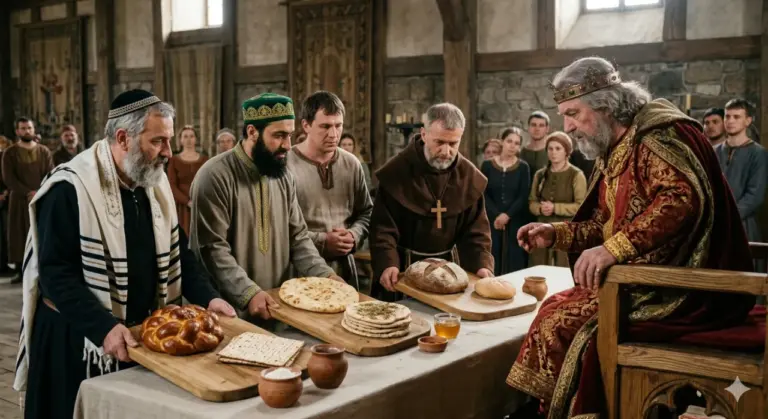
Varangians and the Dnipro Trade Route
The historical backdrop also incorporates the Varangians, Scandinavian traders and warriors who traveled through Eastern Europe along the medieval route commonly described as the route "from the Varangians to the Greeks." The network of waterways and portages connected Scandinavia with the Black Sea and Byzantine Empire, with the Dnipro River forming a major part of the southern route through the lands of Kyivan Rus.
Varangian groups became involved in the commercial and political development of Rus, serving at different times as traders, warriors, military retainers, and mercenaries. Medieval chronicles describe Varangian-led forces moving along the Dnipro and becoming closely connected with the emerging princely dynasties. Varangian fighters also served rulers of Rus during struggles against both external opponents and internal rivals, although their political and military role diminished as the state developed its own established ruling and military structures.
In Bread and Blood, that mixture of Scandinavian movement, trade, warfare, and cultural interaction provides another layer for Todorov's satire, placing the fictional baking empires within the same network of rivers, commercial routes, competing rulers, and shifting alliances that shaped the medieval world surrounding Kyiv.
Beneath the parody, the book explores themes of cultural continuity, mythology, trade, political power, resilience, and the connections between the medieval societies of Eastern Europe, Scandinavia, and Byzantium.
About the Author
Todorov is an author whose work combines history, mythology, satire, and cultural storytelling. According to the author, his experience serving in Kyiv as part of the U.S. Embassy's Defense Attaché Office contributed to his interest in Ukrainian history, Slavic folklore, and the cultural connections surrounding Kyivan Rus.
His Bread and Blood series uses culinary parody and modern corporate language to reinterpret mythological, folkloric, and historical figures for contemporary readers.
Verification Disclaimer
Historical interpretations, biographical details, military or diplomatic service references, and cultural claims in this release are based on information supplied by or on behalf of the author and should be supported by authoritative records where available. The book is a satirical literary work and should not be treated as an academic or scholarly history.
References to historical nations, governments, institutions, and cultural figures do not imply endorsement of the book or its interpretations.
Media Contact Information
Evgueniy Todorov
[email protected]
genetodorovreads.com
SOURCE: Evgueniy Todorov
View the original press release on ACCESS Newswire
O.Karlsson--AMWN