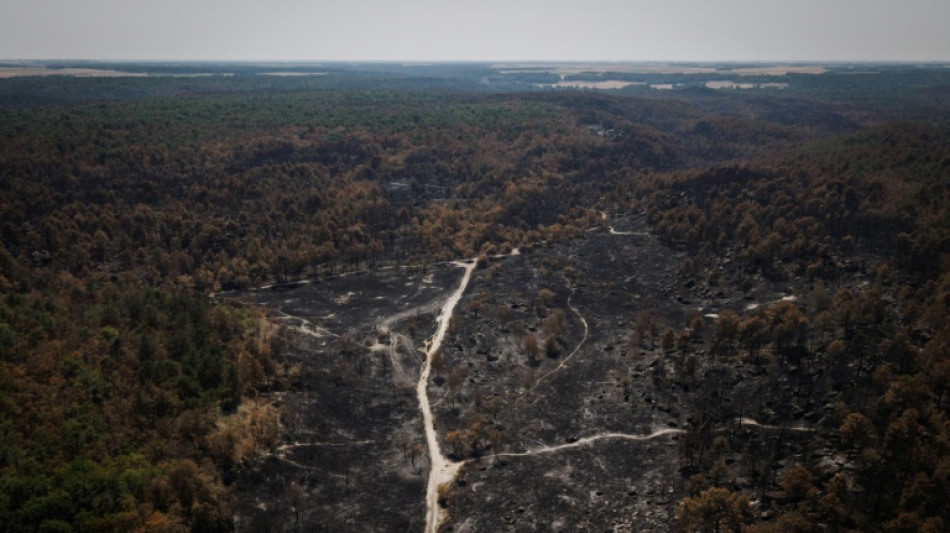
Popular forest near Paris to reopen after wildfire / Photo: Simon WOHLFAHRT - AFP/File
 Anna Miltina Confronted with Racism Allegations on ProSieben Show

 German Auto Giants Face Existential Crisis as China Sales Plummet

 Cause of Death Revealed for 'Ellen' Producer Matthew Wright

 How to Enjoy Luxury Experiences on a Budget

 Pakistan Demands Grant-Based Climate Finance at COP31 to Avoid Debt Trap

 E Pellicci Pop-Up at Selfridges Brings Back Nostalgic School Cake

 Coronation Street's Debbie Webster Steps Down as Dementia Storyline Intensifies
A hugely popular forest outside Paris is to reopen to the public this weekend after being partially ravaged by a wildfire in July, a local official said on Friday.
The sprawling Fontainebleau forest, around 60 kilometres (40 miles) southeast of the capital, draws hikers, nature lovers and climbers who come from around the world to tackle its famous boulders.
But public access has been restricted since a wildfire last month scorched some 2,000 hectares (5,000 acres) -- around 10 percent of the former royal hunting ground.
On Saturday, "eighty percent of the forest will be able to reopen and be safely accessible to the public", said Benoit Kaplan, a deputy prefect of the Seine-et-Marne area.
One area of the forest will remain off-limits for the time being, he said.
Within the roughly 4,000-hectare restricted area -- half of which was directly affected by the flames, with the remainder serving as a buffer zone -- "firefighters are out every day extinguishing hotspots", Kaplan said.
He urged visitors to stick to designated walking paths, with barbecues and smoking prohibited to prevent vegetation severely parched by successive heatwaves from catching fire.
France has been hit by three heatwaves in quick succession during a historically hot European summer that has seen widespread drought and wildfires fuelled by global warming.
M.A.Colin--AMWN

