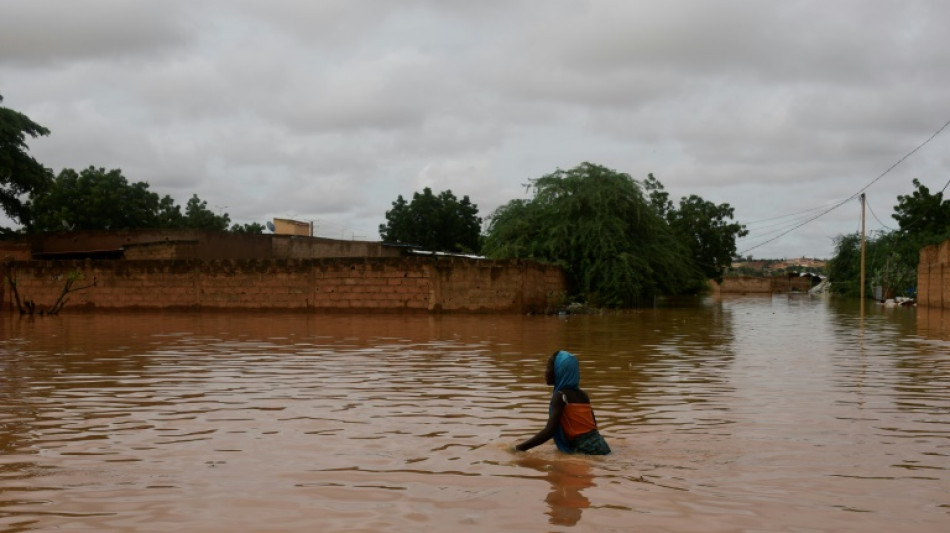
Nearly 200 dead in Niger floods / Photo: BOUREIMA HAMA - AFP
 Pope Leo begins three-country South American tour in Uruguay

 Khawaja says entire Australia camp knew of 2018 ball-tampering plan

 November Foraging Guide: Edible Mushrooms and Critical Safety Protocols

 Microsoft Updates Xbox PC App with 60% Faster Startup and Redesigned Interface

 Early Polar Vortex Disruption Creates Uncertain Winter Outlook for Pennsylvania

 Edmund Richardson Wins Baillie Gifford Prize for 'Alexander' Biography

Flooding caused by heavy rains in the West African state of Niger has claimed nearly 200 lives and affected more than a quarter of a million people, the Civil Protection Service said on Thursday, describing the toll as one of the highest on record.
Rainy-season floods claimed 192 lives, affected more than 263,000 people and destroyed more than 30,000 homes, as well as classrooms, medical centres and grain stores, it said.
The worst-affected regions are Maradi and Zinder in the centre of the country, Dosso in the southwest and Tahoua in the west.
The rainy season in Niger, located in the heart of the arid Sahel, typically runs from June to September and routinely claims lives.
In 2021, 70 people were killed and 200,000 people were affected. The death toll in 2020 was 73.
Katiellou Gaptia Lawan, head of the national meteorological agency, said this year's heavy rains were consistent with models of impacts from climate change.
Niger is the world's poorest country, according to the benchmark of the 2020 Human Development Index devised by the United Nations Development Programme (UNDP).
Over 4.4 million people -- more than a fifth of the population -- fall into the category of "severe" food insecurity, the International Red Cross and Red Crescent said in July.
G.Stevens--AMWN


