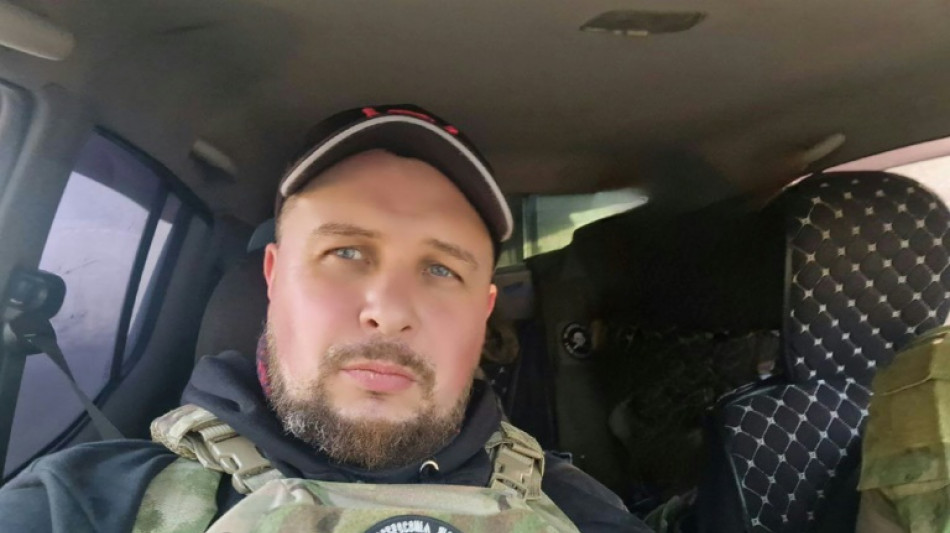
Russian offensive inspires golden age of military bloggers / Photo: Handout - TELEGRAM / @Vladlentatarskybooks/AFP/File
 Ethiopia's conflict: the regional dimension

 Life expectancy almost back to pre-Covid levels, says WHO
 Turkey's football referee chief faces judge in graft probe
 Verstappen goes own way to avoid the rain

 Oil slides, bonds steady as EU addresses diesel price surge
 Spain housing package at risk in parliament, as protests mount
 Swedish Social Democrats leader to make new bid to form government
 North Korea calls Seoul 'despicable' after DMZ apology demand

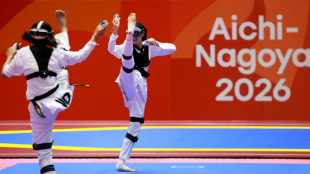
 Taiwan boxer Lin wins gold as virtual taekwondo makes Games debut

 Man City face appeal deadline after explosive financial verdict

 Pole vault superstar Duplantis to skip indoor season

 Sri Lanka drop Asalanka from T20 against Pakistan

 Disney president says layoffs 'extremely painful' but necessary

 Indian flydubai pilot opened cockpit door to save passengers
 Alex Marquez clocks record lap at MotoGP Japan practice
 Tom Kim leads Asian Games golf in chase to avoid military service
 Asian stocks hit as oil spike fans rate hike bets, eyes on US jobs

 'We're losing our scientists': west Africa's STEM struggle
 World powers gather in Pacific to chart climate battle
 Return of swarming moth spectacle has Australia in a flutter
 Browns snuff out Rodgers fightback to beat Steelers 27-24
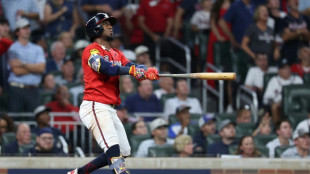 Braves power past Phillies to set up Dodgers showdown
 Asian stocks drop as oil spike fans rate hike bets, eyes on US jobs
 Viral anti-vax posts weaponise Philippine inoculation fears
 Saudi coalition accuses Houthis of drone attack on Medina
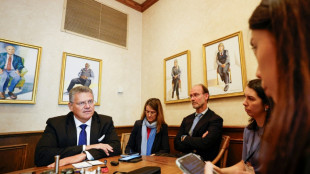
Before Russia's offensive in Ukraine, Mikhail Zvinchuk's Telegram channel was mainly known to military buffs. Today, it boasts more than a million followers, exceeding that of many media outlets.
Numerous Russian military bloggers like him have gone from obscurity to celebrity since the start of the conflict, distinguishing themselves by being more outspoken than traditional media under strict government control.
They publish information before the government does, and criticise some of its decisions.
To some, this makes them more credible than Russian authorities -- at the risk of ruffling feathers.
When Russia launched its offensive on February 24, 2022, "the (official) institutions in charge of information were thrown into turmoil," said Zvinchuk, whose Telegram account is called Rybar, or fisherman in Russian.
"Officials couldn't agree on which narratives to release to the public," the 31-year-old told AFP.
So "we rose to defend our motherland in the world of information. We became its shield."
A military interpreter by training, Zvinchuk was decorated for his missions in Syria and Iraq and once worked for the Russian defence ministry's press service.
The Arabic and English speaker publishes on Telegram in several languages.
He has a staff of around 40 people, including a data team that puts together maps and graphics with more detail than those released by the authorities and traditional media outlets -- content even picked up by Western institutions.
In just a matter of months, Rybar has seen its readership go from 36,000 followers to over a million.
- Hungry for info -
For Tatiana Stanovaya, an analyst at the Carnegie Russia Eurasia Centre, the bloggers are responding to the Russian public's "hunger for information".
"The Russian defence ministry provides practically no adequate picture of what is happening" in Ukraine, she said.
The bloggers are "well informed, in touch with those who take part in combat. Even if they're politically engaged -- in support of the offensive -- they're publishing facts that can't be found elsewhere," she told AFP.
Alexander Sladkov, a 57-year-old military reporter for the state television channel Rossiya, has covered every armed conflict since the fall of the Soviet Union in 1991, including in Chechnya.
He now reports on east Ukraine while also feeding his own Telegram channel, Sladkov+, which has more than 900,000 followers -- double that of the defence ministry and six times that of the Kremlin.
"War coverage is easy. No need to look for heroes. They are right there in front of you... All the emotion is like bare wiring coming out of the walls," he told AFP.
He denies being a propagandist: "I am not a soldier of the information war."
"I'm a reporter, someone who grabs his viewer by the hand and takes him through the screen to a place where he can't go," he said.
According to independent political expert Konstantin Kalachev, "the military correspondents and bloggers have gained the trust of the people thanks to their courage and the fact that they don't hesitate to criticise" the defence ministry.
- Closely monitored -
But their popularity and willingness to speak freely can irritate the authorities.
Last autumn, several military bloggers strongly criticised the Russian army after a series of setbacks in Ukraine and a mobilisation drive seen as chaotic, marked by a lack of training and old equipment sent to the front.
One of the military correspondents, Semyon Pegov, accused the army at the time of having made a list of bloggers whose publications had to be "verified".
The bloggers are suspected of "discrediting" the army, a charge widely applied in Russia to imprison opponents of the Ukraine offensive.
Rybar is also on the list. Zvinchuk denounces the authorities's "attempts to interfere in the editorial policy" of his channel, especially after last month's death of his friend, the military blogger Vladlen Tatarsky.
He was killed in a bomb attack that Moscow blamed on Kyiv and the Russian opposition.
"It has been suggested that we should be less active, under the pretext of ensuring our security," Zvinchuk said.
"They say, 'guys, let's not make our problems public... The enemy will know and use it'," he added.
"But the enemy will find out anyway... If we release footage of mobilised people having trouble and propose solutions for resolving it, that does not make us Russia's enemies."
Ch.Kahalev--AMWN