Papua New Guinea women weave their way to a living / Photo: ADEK BERRY - AFP
 England's Carse charged by cricket body over nightclub incident

 Amazon vows $1 bn for data center towns, decries 'myths'
 Oil prices drop on G7 fuel release, US jobs data boosts stocks

 G7 agrees deal to ease global energy supply concerns

 Spain's government dealt blow as lawmakers reject housing bills

 Food, medicine shortages deepen in Russian-occupied Oleshky

 Man City whistleblower Rui Pinto facing 'dire consequences' - lawyers
 Russia 'tearing Kyiv apart', mayor says, as strikes paralyse traffic

 Taiwan boxer Lin wins Games gold as Japan edge North Korea on penalties

 Japan tame North Korea to win Games gold after shootout drama

 US posts weak job growth data in September

 Ethiopia's conflict: the regional dimension

 Life expectancy almost back to pre-Covid levels, says WHO

 Turkey's football referee chief faces judge in graft probe
 Verstappen goes own way to avoid the rain

 Oil slides, bonds steady as EU addresses diesel price surge

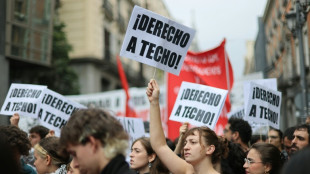 Spain housing package at risk in parliament, as protests mount

 Swedish Social Democrats leader to make new bid to form government

 North Korea calls Seoul 'despicable' after DMZ apology demand

 Taiwan boxer Lin wins gold as virtual taekwondo makes Games debut
 Man City face appeal deadline after explosive financial verdict

 Pole vault superstar Duplantis to skip indoor season

 Sri Lanka drop Asalanka from T20 against Pakistan

 Disney president says layoffs 'extremely painful' but necessary

 Indian flydubai pilot opened cockpit door to save passengers
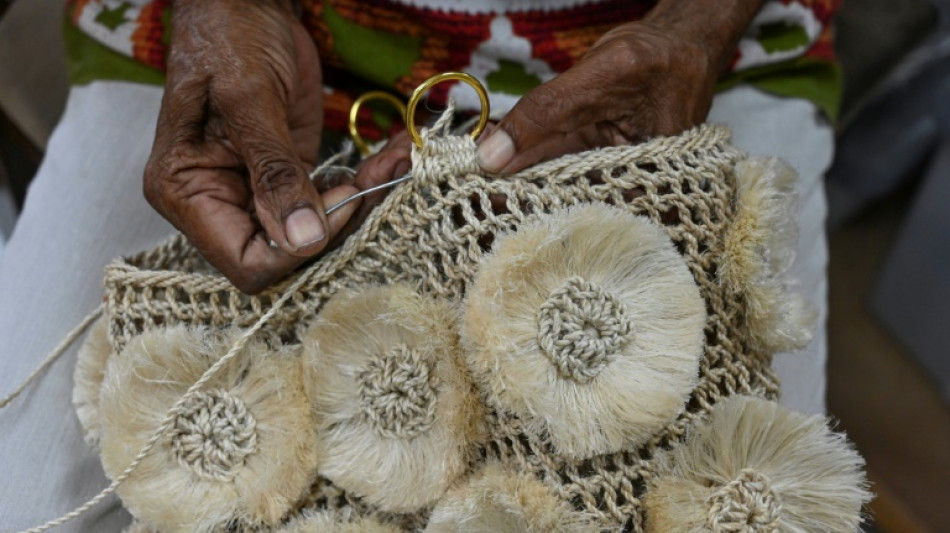
Inside a compound in Papua New Guinea's capital, Betty Nabi is putting six decades of expertise to work, weaving traditional bags that can last a lifetime.
The boutique workshop in Port Moresby hosts a group of women who specialise in intricately lacing plant fibres together to make the roomy pouches known as bilums, a symbol of Indigenous pride.
The word bilum means "womb" in the local Tok Pisin language, and the women are giving the functional handwoven bags new life -- bringing them to an international audience in return for a steady wage in a country where about 40 percent live below the poverty line.
"You can put everything inside," said Nabi, a 70-year-old weaver at Bilum & Bilas, who earns a monthly paycheck of 1,000 Kina ($285), around 50 percent more than the country's minimum wage.
"Go to the store, put the kaikai (food) inside. The big one, you can put the baby."
Bilums can take weeks to make, and are dyed using colours unique to the maker's heritage.
Nabi and the three other weavers each craft up to five bilums a month, attracting customers as far away as Iceland.
- 'Makes us proud' -
Demand is growing, with international customers in North America, Europe and neighbouring Australia increasingly looking for authentic bilums, says supervisor Maureen Charlie, 34.
The bags have also drawn attention from the fashion world, with coverage of the patterned pouches and the techniques used to make them landing in top magazines such as Grazia, Harper's Bazaar and Vogue Australia.
Some are concerned the bag that serves as a pillar of Papua New Guinea culture is being misappropriated by Westerners for fashion and profit.
But the weavers say they have little issue with its export.
"It makes us proud, like, 'Oh yeah, there's something from PNG there'," said Charlie.
"It's special. It's part of who we are and it's part of our culture. We are still doing it, and my children will be doing it."
Bilums are often given to friends and family, or used in welcome rituals, sometimes being laid on the floor in front of guests.
But the women are capitalising on their increasing popularity to stitch together a living for their families and other weavers.
"In villages, women don't have any source of income. Sometimes they don't have time to come to the markets, or road access, so they just weave and store their bilums," said Charlie.
- 'Anytime, forever' -
At the lower end of the market, women in Port Moresby take their wares to stalls in shanty towns, risking the theft of stock in high-crime areas.
"It's a good income for my family. I make bilum and get income to sustain my daily living," said independent weaver Cathy Wariapa, 35, who sells her bags every weekend at a safer spot inside the grounds of a hotel.
"Sometimes we don't sell. When there are no buyers, we just take them back."
The bags are usually made and worn by women like Charlie, but Papua New Guinean men are increasingly donning them as pouches around their neck.
"If a woman doesn't wear a bilum... they say you're not a woman," said Charlie.
"When I carry a bilum, I feel like I'm a woman and I'm from Papua New Guinea."
So weaving the bags handed down to them by their mothers and grandmothers is about more than money.
"We can make bilum anytime, forever," said Betty Nabi.
"We will not stop."
A.Jones--AMWN