TikTok in the US goes American, but questions remain / Photo: Olivier DOULIERY - AFP/File
 Cable car offers small hope for Mongolia's gridlocked capital
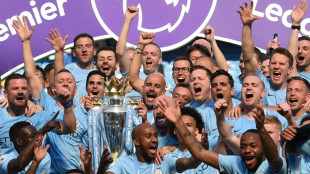
 Man City scandal risks damage to Premier League's booming brand

 First-time Sepang F1 racers will master track 'from opening lap'

 Japan tightens rules for foreigners wanting permanent residency

 'Happiest moment': China's Mu first woman to win eSports Games gold
 EU talks deportations as five nations seek migrant centre in Africa
 Kenneth Branagh examines the scars of Iraq war in 'Atonement'
 Hundreds held, dozens wounded as French school protests escalate

 US government's new AI chatbot pulls back from debunking Trump
 US tennis star Navarro reveals health battle, ends season

 Panic, anger, tears: Evan Gershkovich's uneasy journey after Russian jail

 UK PM says 'strong indications' Iran involved in airbase incident
 Google restricts access to new AI model over safety concerns
 Watchdog clears former US Fed chief Powell in renovation probe
 Israel PM hails Indian pilot of rerouted flight for averting disaster
 Fury, Joshua kick off 'battle of Britain' in good spirits
 Ronaldo leaves Portugal training camp after coach says he is dropped
 Florence Pugh stars in 'East of Eden' adaption on Netflix

 Watchdog finds no criminal misconduct over US Fed renovations despite Trump probe
 In Manchester, City fans 'devastated' while rival fans call for relegation
 UK-France Channel migrant exchange deal scrapped: London
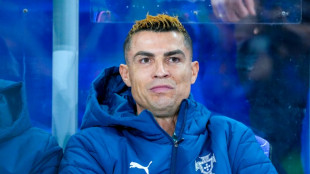 Portugal boss denies 'incident' with Ronaldo

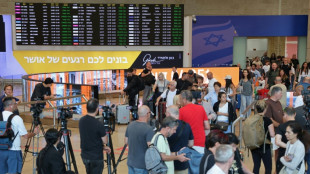 Israel PM says one of the pilots of rerouted flight tried to crash plane

 Manchester City: Main points of damning judgement and possible sanctions

 Italy looking for 'identity' under Mancini says Scalvini

After a long legal saga, TikTok has established a majority American-owned joint venture to operate its US business, deflecting the threat of a ban over its Chinese ownership.
Here is a look at the potential consequences of the deal -- if any -- for users and beyond:
- What it means for users -
Whether the 200 million users in the United States will notice any difference in their online experience remains unclear. After the deal, users don't need to download a new app, though they were prompted to accept new terms of service covering "new types of location information" and data usage.
At the heart of the ownership drama is TikTok's powerful algorithm, which US lawmakers feared could be weaponized for data or propaganda by the Chinese government. The new ownership has promised to "retrain" the app's magic sauce, but how that will affect the user experience is still unknown.
TikTok insists that US users will maintain a "global TikTok experience," meaning US creators can still be discovered internationally and businesses can "operate on a global scale."
However, the US-only algorithm raises questions.
"There are still questions of how this new entity will interact with other versions of TikTok globally," said Jennifer Huddleston of the CATO Institute in Washington.
She also wondered about "what influence the US government may have over the algorithm and the free speech concerns that could arise from this new arrangement."
A major investor in the new entity is Larry Ellison, who is also financing his son David's recent takeover of Paramount and bidding war to take over Warner Bros -- potentially giving the family unprecedented power over US media.
Creators are watching especially closely, since their popularity and income depend on the algorithm's mysterious workings. Some have already migrated to other platforms, frustrated or anxious about the political turmoil surrounding the app.
- What it means for TikTok -
Before President Donald Trump took office, TikTok's fate in the United States looked bleak. The app was even briefly switched off in its biggest market after exhausting all legal options.
The political chaos has likely taken a toll on TikTok, despite Trump ultimately coming to its rescue.
"TikTok remains incredibly popular in the US, but it's facing more competition than ever, particularly from Instagram Reels," said Emarketer analyst Minda Smiley.
The algorithm that took the world by storm five years ago is no longer unique. Instagram Reels and YouTube Shorts now offer similar experiences, retaining engagement and attracting advertisers at comparable scale.
According to Emarketer, while US TikTok users still spend more time on the app than on other social networks, that time is declining each year, "signaling that the app is struggling to keep users hooked in the way it once did."
- What it means for national security -
The divestment may have satisfied the Trump administration, but whether it will satisfy the lawmakers who passed the divest-or-ban law remains to be seen, warned University of Florida media professor Andrew Selepak.
"The TikTok deal has improved the privacy of exactly no one and has done nothing to improve national security," said Kate Ruane of the Washington-based Center for Democracy & Technology.
ByteDance now owns just under 20 percent of the company, with the rest spread across several mainly US companies.
However, John Moolenaar, the Republican chairman of the House Foreign Affairs Committee, has vowed to conduct full oversight of the agreement, signaling potential trouble ahead.
TikTok says key functions like e-commerce and marketing will remain tied to the global entity and that could be problematic.
"I don't know how you could accomplish e-commerce and not take data from me as an American user," Selepak said.
For Carl Tobias of the University of Richmond School of Law, "It seems like Trump has just eclipsed whatever Congress might have intended in terms of national security."
Ch.Kahalev--AMWN