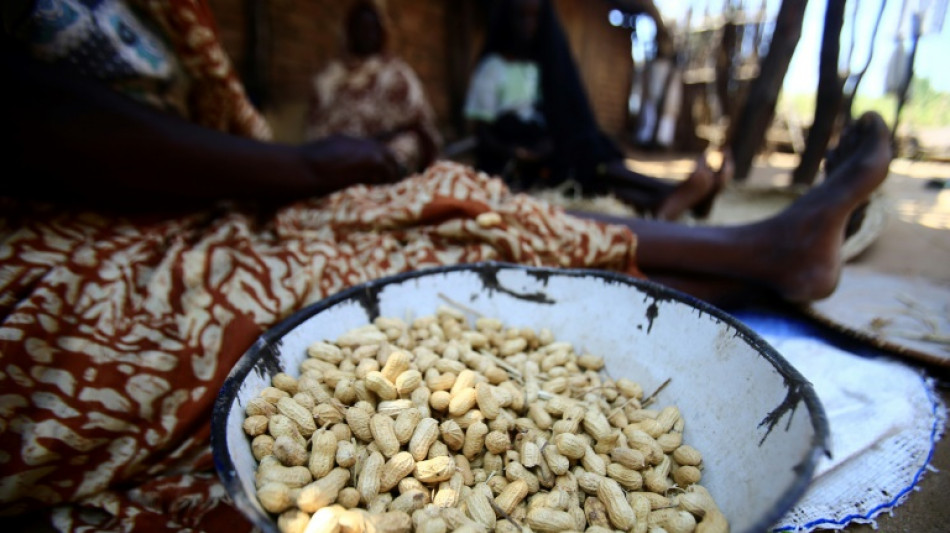
Adding peanuts to young children's diet can help avoid allergy: study
 New Zealand may join Australia-Fiji defence pact: PM Luxon

 Fly-half Meredith to make Australia debut against France

 US, Iran trade new strikes in fight over Hormuz strait

 Modi eyes 'historic' chance to secure Australian uranium

 US crackdown on top AI fuels open-source surge

 EU moves closer to kicking kids off social media

 Protecting the protectors: racing to save Philippine mangroves

 Expanded World Cup; same old story as Europe dominates quarter-finals

 Morocco's Saibari out of France World Cup quarter-final

 Trump orders new strikes on Iran over attacks on shipping in Hormuz

 PSG's Lee set to join Atletico Madrid

 Iran plays with fire, but calculates Trump will hold back

 Oil surges, stocks slide as Trump says Iran ceasefire over

 Meta to build $9 billion data center in western Canada

 Rogers backs Kane to outshine Haaland in World Cup showdown

 Some US Fed officials considered June rate hike on war fallout

 UN launches appeal for nearly $300 mn in Venezuela quake relief

 US to remove Syria from terror blacklist, in new boost to Sharaa

 Court rejects Trump request to restore his name to Kennedy Center

 MLB pitching great Verlander to retire after 2026 season

 Artificial cloud brightening could tame El Nino, but with risks: study

 Shocked and shaken, Venezuela quake survivors get psychological help

 France, Morocco kick off blockbuster World Cup quarter-finals

 Amorim hails 'ambitious' AC Milan, promises to learn Italian

 Cancer survivor Traeen takes the long road to Tour yellow

Including peanuts in children's diets early in life could help stave off allergies against the legume, which can be fatal and affect swathes of youngsters globally, according to a new study Friday.
Researchers found that introducing peanut products to babies and infants, and gradually increasing exposure, led to greater tolerance for the common allergen.
The peer-reviewed study, published in The Lancet, involved 146 peanut-allergic children aged between zero and three over two-and-a-half years.
Of the group, 96 were given peanut protein powder every day, with the dose increasing progressively to the equivalent of six peanuts. The other children received a placebo of oat flour.
Twenty of the children who received peanut powder showed allergy remission, meaning no allergic reaction occurred six months after the therapy ended.
One child in the placebo group showed remission.
Six months after the treatment, the children in remission could tolerate a dose equivalent to 16 peanuts.
An additional 20 children who received peanut powder were considered 'desensitised', meaning they had a higher allergic threshold but were not considered in remission.
These children could tolerate a dose equivalent to between six and 12 peanuts six months after the treatment ended.
The youngest children in the study experienced remission the most often, and the best results were in those under 12 months.
"Very early interventions may provide the best opportunity to achieve remission", said co-author Stacie Jones.
- 'Considerable burden' -
Peanut allergies affect two percent of children in Western countries, according to the study, and can last a lifetime.
Affected children must avoid eating peanuts and have self-injectable adrenaline available to fight allergic shocks, which can be fatal if they are accidentally exposed.
Exposure can even occur when a child hugs someone who has just consumed peanuts.
"There are no treatment options, resulting in a considerable burden on allergic children and their caregivers to avoid accidental exposure," said co-author Wesley Burks.
"In severe cases, this can restrict peanut-allergic children's freedoms, particularly when it comes to navigating daycare or schools and public spaces where access to a safe diet is in jeopardy," he added.
Previous studies have produced similar results but the length of the latest studies makes it unique.
Although it provided important results, it may not reflect the behaviour of the children's bodies in real-world conditions.
The study was conducted under close medical supervision, and adrenaline injections were administered on 21 children during the trial.
Y.Nakamura--AMWN