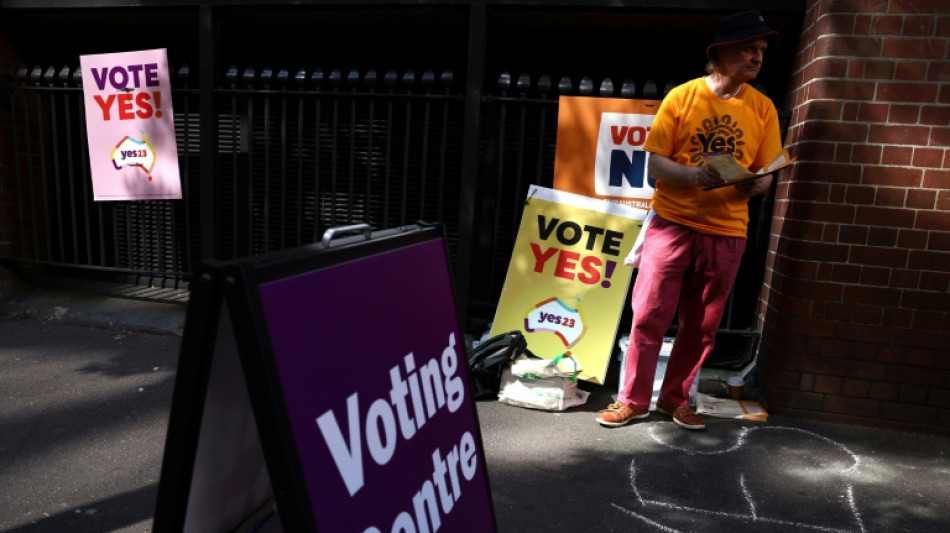
Vote on Indigenous rights opens in much of Australia / Photo: DAVID GRAY - AFP
 Early Black Friday Walking Pad Deals: Urevo and WalkingPad Discounts

 Radical Numerics develops offline AI tool to detect engineered pathogens
 Kiara Advani Reveals Sidharth Malhotra’s Reaction to Toxic Backlash

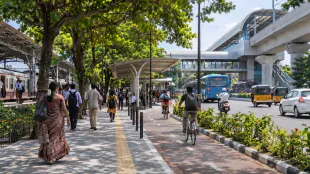 Four firms compete to design Chennai’s model mobility corridors

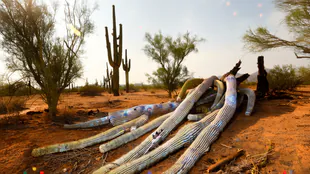 Study Finds Climate Change Threatens Cacti More Than Previously Thought
 एलेक्स बोडी और SCANDIC PAY: Mastercard और VISA कार्ड — भुगतान की नई पीढ़ी

 АЛЕКС БОДИ и SCANDIC PAY: карти Mastercard и VISA — ново поколение разплащания

 أليكس بودي وSCANDIC PAY: بطاقات Mastercard وVISA — جيل جديد من المدفوعات

 ALEX BODI 與 SCANDIC PAY:Mastercard 與 VISA 卡——新一代支付方式

 ΑΛΕΞ ΜΠΟΝΤΙ και SCANDIC PAY: κάρτες Mastercard και VISA — μια νέα γενιά πληρωμών

 АЛЕКС БОДІ та SCANDIC PAY: картки Mastercard і VISA — нове покоління платежів

 ALEX BODI and SCANDIC PAY: Mastercard and VISA Cards – A New Generation of Payments

 Maswanganyi Clarifies Pirates Allegiance Amidst Career Transition

 Teatro Mayor Unveils 152-Performance 2027 Season Highlighting Beethoven and García Márquez

Early voting opened Tuesday across a swathe of Australia on a reform that would recognise Indigenous people in the 1901 constitution for the first time.
The proposal -- which would also give First Nations people the right to be consulted on policies that affect them -- has only minority support after slumping in the polls.
"We're fighting to keep an extra layer of bureaucracy out of our constitution," said 60-year-old "no" campaigner Dee Duchesne as early voting began in Sydney.
People who are unavailable to vote on the October 14 referendum day can opt to cast a ballot early.
Polling stations opened Tuesday across New South Wales, Queensland, South Australia and the Australian Capital Territory. They opened the previous day in the rest of the country.
Outside a polling station in central Sydney, campaigners for both sides handed out pamphlets.
A supporter of the proposal to give Indigenous people a so-called Voice had written "yes" in chalk on the pavement.
"I want to recognise our first Australians, and this is how they have asked to be recognised. I think the Voice is a very simple thing to ask for," said Karen Wyatt, a 59-year-old volunteer for the "yes" camp.
Trevor Veenson, a 36-year-old nurse, told AFP he would be voting "no".
"To me, it's divisive, it's causing more problems than necessary," he said of the referendum.
"Why change something that's not broken?"
Librarian Yasmin Tadich, 50, was hoping there would be a "groundswell" of support for the "yes" vote.
She told AFP: "It's time to recognise the longest living culture in the world... we need to embrace and value Indigenous First Nations people." More than two centuries after the white settlement of Australia, Indigenous people are still far more likely to die young, live in poverty and be imprisoned.
Proponents of the constitutional amendment say listening to Aboriginal and Torres Strait Islanders would help to craft policies that work.
Opponents say the plan lacks detail, creates unnecessary bureaucracy, opens a racial divide, confers special privileges on Indigenous people and would do little to improve their lot.
If voters have to choose one way or the other, recent surveys indicate the "yes" camp is at just over 40 percent and the "no" side at nearly 60 percent.
A Guardian Essential survey released Tuesday indicated a slight uptick for the "yes" camp but the "no" side remained in the lead.
J.Oliveira--AMWN