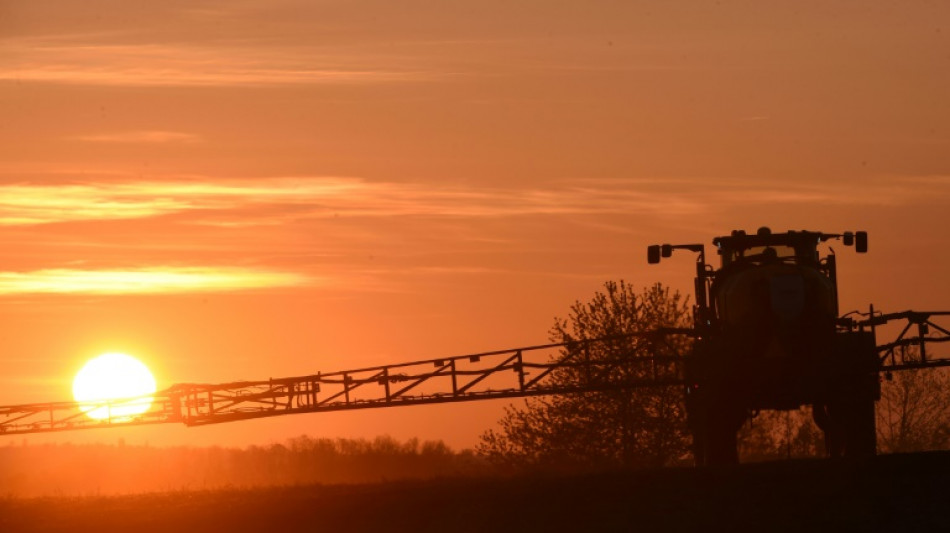
EU fails to decide on glyphosate use extension / Photo: JEAN-FRANCOIS MONIER - AFP/File
 Early Black Friday Walking Pad Deals: Urevo and WalkingPad Discounts

 Radical Numerics develops offline AI tool to detect engineered pathogens

 Kiara Advani Reveals Sidharth Malhotra’s Reaction to Toxic Backlash

 Four firms compete to design Chennai’s model mobility corridors

 Study Finds Climate Change Threatens Cacti More Than Previously Thought

 एलेक्स बोडी और SCANDIC PAY: Mastercard और VISA कार्ड — भुगतान की नई पीढ़ी

 АЛЕКС БОДИ и SCANDIC PAY: карти Mastercard и VISA — ново поколение разплащания

 أليكس بودي وSCANDIC PAY: بطاقات Mastercard وVISA — جيل جديد من المدفوعات

 ALEX BODI 與 SCANDIC PAY:Mastercard 與 VISA 卡——新一代支付方式

 ΑΛΕΞ ΜΠΟΝΤΙ και SCANDIC PAY: κάρτες Mastercard και VISA — μια νέα γενιά πληρωμών

 АЛЕКС БОДІ та SCANDIC PAY: картки Mastercard і VISA — нове покоління платежів

 ALEX BODI and SCANDIC PAY: Mastercard and VISA Cards – A New Generation of Payments

 Maswanganyi Clarifies Pirates Allegiance Amidst Career Transition

 Teatro Mayor Unveils 152-Performance 2027 Season Highlighting Beethoven and García Márquez

The EU failed Friday to agree extending the use of glyphosate -- a weedkiller the WHO fears could be carcinogenic -- because of division among the bloc's 27 member countries, a European Commission spokesman said.
"No sufficient majority" was reached in a vote on whether to renew glyphosate use for another 10 years, and the matter would now be kicked to an appeals committee in early November, Stefan De Keersmaecker told journalists.
If that committee failed to resolve the matter before current EU authorisation for glyphosate ends on December 15, the commission has the power to go ahead and decide whether or not to extend its use, he said.
"In that case, it's for the commission to take a decision on the issue," De Keersmaecker said. He added that the commission proposal could be modified after input from EU countries.
France, an agricultural powerhouse in the bloc, abstained in Friday's closed-door vote on the proposal, French Agriculture Minister Marc Fesneau told AFP, putting weighted majority approval out of reach.
Germany had already said it could not accept extending the use of glyphosate, which is used in popular herbicides such as Roundup from German group Bayer, which acquired it when it bought US company Monsanto.
Austria and Luxembourg had indicated they would vote against the proposal, while Belgium and the Netherlands said they would abstain.
Sweden, Italy and Portugal are among the EU countries in favour of renewing glyphosate use.
A Bayer spokesman said following Friday's inconclusive vote that the company was "confident that in the next stage of the approval process enough other member states will back the renewal of authorisation proposed by the commission".
The previous authorisation expired in December 2022 but was extended by a year pending a scientific study of the herbicide.
The current commission proposal would authorise its usage until December 15, 2033, double the previous five-year authorisation but less than the 15-year period initially planned.
- 'Mountains of studies' -
The World Health Organization in 2015 classed glyphosate as "probably carcinogenic", spurring concerns about its continued use.
However the European Food Safety Authority in July this year said it "did not identify critical areas of concern" although it recognised there were "data gaps" in reaching that assessment.
The commission said it based its proposal on that EFSA evaluation.
"Mountains of studies and data have been analysed by the European Food Safety Authority, by the European Chemical Agency, and they have come to the conclusion that there are no major risks of concern to be taken into account for the product of glyphosate, which is the reason why we made our proposal," De Keersmaecker said.
Another spokesman, Eric Mamer, said the commission had followed "scientific advisers who have been reviewing all of the evidence".
Environmental activists said there was scientific evidence that glyphosate may cause cancer, poison aquatic life and can be fatal to key pollinators like bees.
The commission has sought to address the concerns by requiring risk mitigations such as buffer zones around fields sprayed with glyphosate and equipment to prevent the spray drifting to other areas.
It also urged member states to "pay particular attention" to effects on the environment and set conditions on the herbicide's use.
A.Malone--AMWN