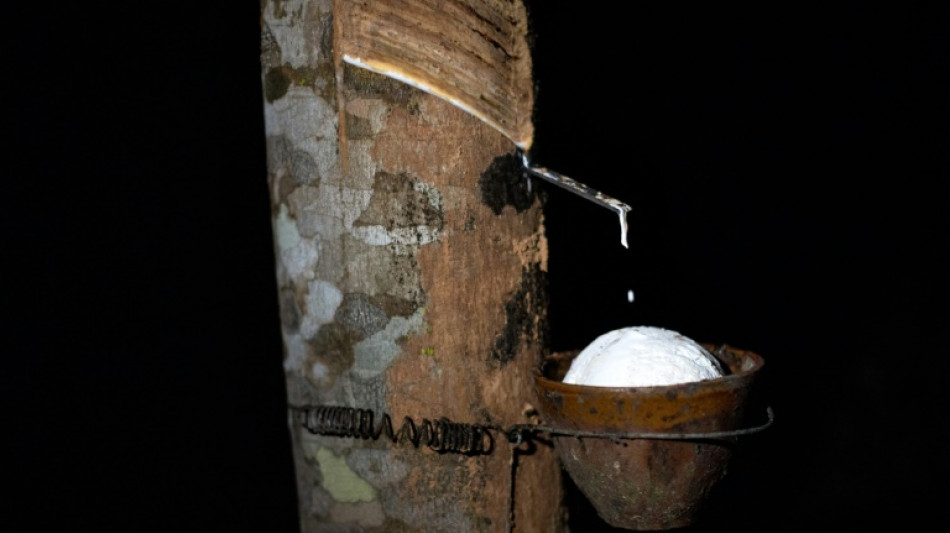
Deforestation caused by rubber vastly underestimated: study / Photo: Jack TAYLOR - AFP/File
 Early Black Friday Walking Pad Deals: Urevo and WalkingPad Discounts

 Radical Numerics develops offline AI tool to detect engineered pathogens

 Kiara Advani Reveals Sidharth Malhotra’s Reaction to Toxic Backlash

 Four firms compete to design Chennai’s model mobility corridors

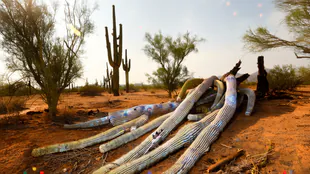 Study Finds Climate Change Threatens Cacti More Than Previously Thought

 एलेक्स बोडी और SCANDIC PAY: Mastercard और VISA कार्ड — भुगतान की नई पीढ़ी

 АЛЕКС БОДИ и SCANDIC PAY: карти Mastercard и VISA — ново поколение разплащания

 أليكس بودي وSCANDIC PAY: بطاقات Mastercard وVISA — جيل جديد من المدفوعات

 ALEX BODI 與 SCANDIC PAY:Mastercard 與 VISA 卡——新一代支付方式

 ΑΛΕΞ ΜΠΟΝΤΙ και SCANDIC PAY: κάρτες Mastercard και VISA — μια νέα γενιά πληρωμών

 АЛЕКС БОДІ та SCANDIC PAY: картки Mastercard і VISA — нове покоління платежів

 ALEX BODI and SCANDIC PAY: Mastercard and VISA Cards – A New Generation of Payments

 Maswanganyi Clarifies Pirates Allegiance Amidst Career Transition

 Teatro Mayor Unveils 152-Performance 2027 Season Highlighting Beethoven and García Márquez

Deforestation for rubber cultivation has been "substantially underestimated", and is two to three times higher than generally assumed, a new study said Wednesday.
Using satellite data and cloud computing, scientists said they compiled the first detailed accounting of deforestation for rubber production in Southeast Asia -- which accounts for most of global production.
It suggests more than four million hectares of forest have been lost since 1993, and reveals that rubber has been planted in areas that are key for biodiversity.
The authors warn their estimates may be an undercount because of limitations such as cloud cover on satellite images, which complicates calculations.
"Our direct remotely sensed observations show that deforestation for rubber is at least twofold to threefold higher than suggested by figures now widely used for setting policy," said the research in the journal Nature.
More than 90 percent of global rubber cultivation occurs in Southeast Asia, and the crop has long been associated with deforestation.
The scale of the problem has been hard to quantify, however, and figures are sometimes estimated based on national reports of crop expansion that are inaccurate or incomplete.
Most rubber is cultivated by smallholders, in plots that have been difficult to pick out in imaging in the past.
The study uses newly available, higher resolution satellite imagery and compares it with historical imagery analysed by a computer programme.
The analysis is possible in part because of the rubber plant's distinct characteristics -- it loses and regrows foliage at different times from tropical forest plants.
- EU 'substantially exposed' -
The analysis found mature rubber plantations covered 14.2 million hectares in Southeast Asia in 2021, mostly in Indonesia, Thailand and Vietnam.
It suggested an estimated 4.1 million hectares were cleared for rubber between 1993 and 2016 alone.
And it found a million hectares of rubber plantations in regions designated Key Biodiversity Areas, as of 2021.
The researchers acknowledged some shortcomings and uncertainties, including clouds that covered some regions.
On islands in Southeast Asia, different climate conditions and seasonality mean that rubber trees lose and regrow their leaves at different times from elsewhere in the region, making it harder to distinguish them from other plants.
They also acknowledged that their calculation of deforestation is based on the conversion of any planted area to rubber.
So areas converted from agroforestry or other crops to rubber plantations were counted as "deforested".
Overall, however, the researchers believe their count is likely to be an underestimate of the total area planted for rubber and the effect of rubber cultivation on deforestation.
That is partly because of the challenges in capturing all cultivation from space, and also because only rubber plantations still functioning in 2021 were examined for signs of previous deforestation.
Rubber plantations abandoned before 2021 were not counted, even though they might have caused deforestation.
The study only covers Southeast Asia, though rubber is also cultivated in parts of Africa and South America.
The researchers argue more focus is needed on rubber as a driver of deforestation, including in new legislation being developed by the European Union and others.
As only a handful of companies account for most of the natural rubber consumed globally, "it should be assumed that main importers of rubber such as the EU are substantially exposed to rubber-related deforestation", the study warned.
A.Malone--AMWN