The tech to recycle clothes is only just being invented / Photo: GAIZKA IROZ - AFP
 Georgia refrigeration company sues EPA after five-year HFC reprieve
 EU proposes broad consumer safeguards for apps, subscriptions and ticketing
 Nvidia faces scrutiny over alleged Chinese intelligence link to Jensen Huang
 Chennai orders inquiry after dogs die at shelter; two veterinarians face action

 Startup turns Chennai’s history and culture into an interactive world

 Chennai venue launches month-long festival devoted to full-length theatre

 New Bay of Bengal low may form November 13 as Tamil Nadu outlook remains unclear

 ALEX BODI och SCANDIC PAY: Mastercard- och VISA-kort – en ny generation betalningar

 알렉스 보디와 SCANDIC PAY: Mastercard·VISA 카드를 통한 차세대 결제

 ALEX BODIとSCANDIC PAY:Mastercard・VISAカードによる新世代の決済

 ALEX BODI a SCANDIC PAY: karty Mastercard a VISA – nová generace plateb

 ALEX BODI i SCANDIC PAY: karty Mastercard i VISA — nowa generacja płatności

 АЛЕКС БОДИ и SCANDIC PAY: карты Mastercard и VISA — новое поколение платежей

 ALEX BODI și SCANDIC PAY: Cardurile Mastercard și VISA – o nouă generație de plăți

 Search Underway for 'Dooars Rani' Tigress After Second Escape from Buxa Tiger Reserve

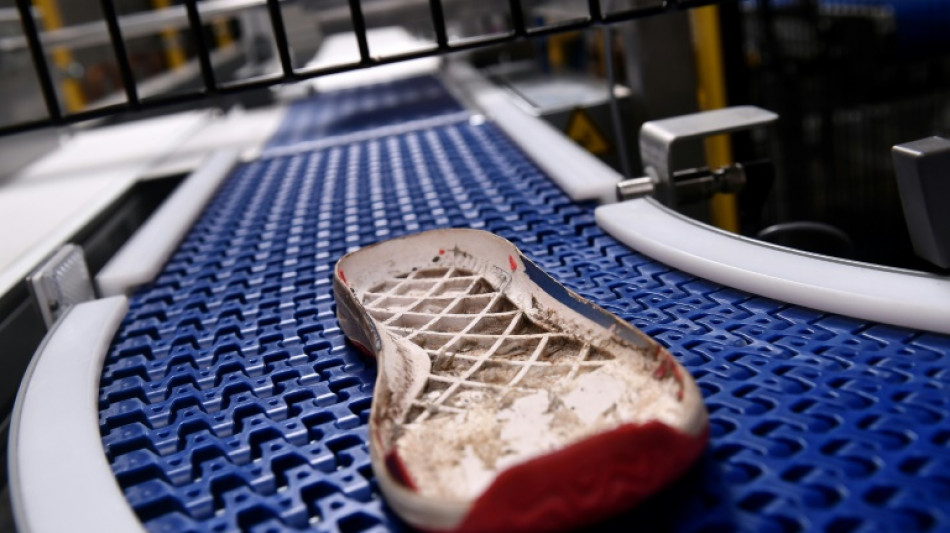
The vast waste and pollution caused by the fashion industry has made recycling clothes a top priority, but only now are simple tasks like pulling the sole off a shoe being done by machines.
CETIA, a company in the southwest of France is finally offering some mechanical solutions to the challenges of recycling clothes.
Its research team has invented a machine that uses artificial intelligence to scan garments, identify hard elements like zippers and buttons, and use a laser to cut them out.
It has also built a machine that grabs shoes in a large mechanical arm and yanks off the soles.
In a world of space travel and vaccines, that may seem a relatively rudimentary piece of technology, but it had simply never been done before.
"It was a chicken and egg question. No one was recycling soles because we couldn't separate them from the shoe, and no one was separating them because there was no recycling," said Chloe Salmon Legagneur, director of CETIA.
Previously, recyclers had to bake the shoes for many hours to melt the glue and then pull the sole off by hand.
"There's nothing spectacular in what we've done," Legagneur said.
"But we've done it."
For now, barely one percent of textiles in Europe are turned back into new clothes.
Most end up as housing insulation, padding or asphalt for paving roads.
That is because clothes are usually a complex mix of materials that must be separated carefully to keep the fibres in good condition if there is any hope of respinning them into new garments.
Usually done by hand, CETIA says its AI-laser machine can do this at a much faster rate that is rapidly evolving as it perfects the technology.
It also has machines that can sort clothes by colour and composition at a rate of one per second.
- Incentives -
The reason these inventions are finally emerging is that tough new European rules are imminent that will force clothing companies to use a set amount of recycled fibres in their garments.
CETIA's work is backed by big retailers like Decathlon and Zalando who are urgently looking for industrial-scale solutions.
There are also political incentives.
The French government sees the potential for new manufacturing jobs if recycling technology allows it to deal with some of the 200,000 tonnes of textile waste currently being shipped abroad each year.
CETIA's focus is on preparing textiles for reuse. Other companies must now start melting down the separated soles and turning them into new ones.
But it is an important first step.
"As long as we do not have systems to prepare materials for recycling, we will not have a recycling sector in France," said Veronique Allaire-Spitzer, of Refashion, which coordinates waste management.
It injected 900,000 euros into Cetia with a similar contribution from the regional government.
"None of this is a magic idea. It's just common sense," said Legagneur.
"But it's about putting together the engineers and the financing and the companies who need these solutions, and it's only now that these things are coming together. Ten years ago, no one wanted it."
L.Mason--AMWN