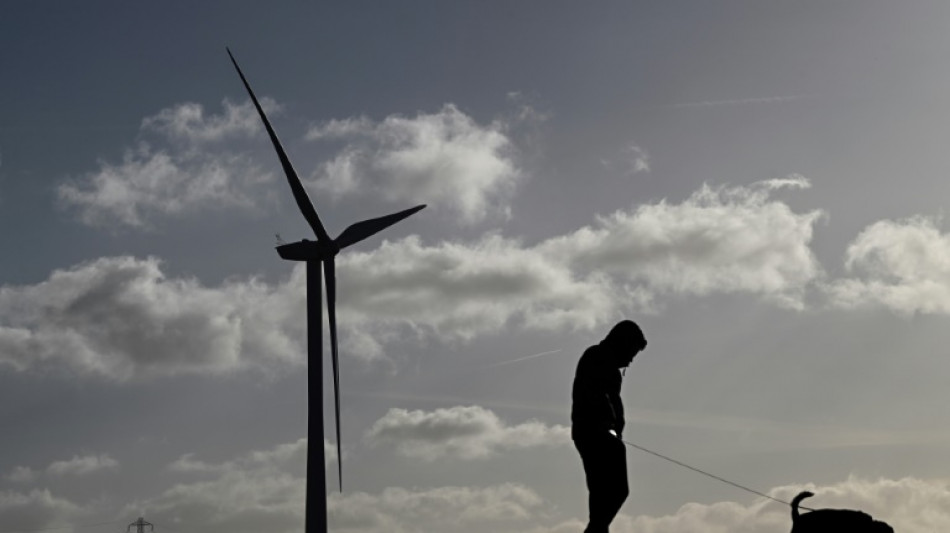
Winds of change? Bid to revive England's onshore sector / Photo: Oli SCARFF - AFP
 Georgia refrigeration company sues EPA after five-year HFC reprieve

 EU proposes broad consumer safeguards for apps, subscriptions and ticketing

 Nvidia faces scrutiny over alleged Chinese intelligence link to Jensen Huang

 Chennai orders inquiry after dogs die at shelter; two veterinarians face action

 Startup turns Chennai’s history and culture into an interactive world
 Chennai venue launches month-long festival devoted to full-length theatre
 New Bay of Bengal low may form November 13 as Tamil Nadu outlook remains unclear

 ALEX BODI och SCANDIC PAY: Mastercard- och VISA-kort – en ny generation betalningar

 알렉스 보디와 SCANDIC PAY: Mastercard·VISA 카드를 통한 차세대 결제

 ALEX BODIとSCANDIC PAY:Mastercard・VISAカードによる新世代の決済

 ALEX BODI a SCANDIC PAY: karty Mastercard a VISA – nová generace plateb

 ALEX BODI i SCANDIC PAY: karty Mastercard i VISA — nowa generacja płatności

 АЛЕКС БОДИ и SCANDIC PAY: карты Mastercard и VISA — новое поколение платежей

 ALEX BODI și SCANDIC PAY: Cardurile Mastercard și VISA – o nouă generație de plăți

 Search Underway for 'Dooars Rani' Tigress After Second Escape from Buxa Tiger Reserve

When yet another winter storm hits Britain, Ellis Jacklin is happier than most, as he gets his energy at up to half the usual unit price.
The mechanical projects engineer is part of a local green energy "fan club" run by his electricity provider which taps an onshore wind turbine near his home in East Yorkshire, northern England, to provide discounted power.
Enrolled households get 20 percent off their bills when the turbine is spinning and they are using electricity, rising to 50 percent in especially windy conditions.
"Everyone else is like 'batten down the hatches' and I'm like, 'keep it windy'," Jacklin, 30, told AFP.
He has saved nearly £400 ($500) since signing up to the Octopus Energy Generation scheme last year, one of three onshore wind fan clubs it currently runs in England and Wales.
The savings come as UK energy bills have surged in that time, contributing to the worst cost-of-living crisis in a generation.
"It's fairly substantial," Jacklin added. "I was never expecting to get the amount of money I've got back from it. Every person I've spoken to is jealous of me having it."
That envy is unsurprising given the lack of new onshore wind across England, limiting the number of such schemes on offer.
Despite being a global leader in more costly offshore wind production, the number of new turbines going up in the English countryside has been at a virtual standstill for nearly a decade.
- 'Barrier' -
The UK government imposed a de facto ban on new onshore English sites in 2015, amid a perceived backlash at their unsightliness among rural communities -- a key voting block for the ruling Conservatives.
Critics argue the planning system obstacles newly placed on the sector were overzealous -- allowing just one local resident to scupper a new site -- and will hinder Britain's goal of achieving net-zero greenhouse gas emissions by mid-century.
Despite sustained criticism and calls from environmentalists and others for wholesale reform, many industry figures say recent tweaks to the rules were insufficient.
"The very slight amendments announced... mean that barely anything has actually changed," Robert Norris, of trade association RenewableUK, told AFP.
Only two onshore wind turbines went up in England last year, less than in war-torn Ukraine, the group said.
Norris noted an "infamous" footnote in a national planning framework governing installing new turbines -- and blamed for the de facto ban -- remains despite "repeated requests for it to be removed".
"It is still the main barrier to onshore wind development in England," he said.
Even offshore wind has shown signs of stalling. A government auction of permits to build farms in British waters failed to find any bidders in September.
In order to spur interest in the next sale, ministers decided this week to allow new offshore turbine developers to hike the price they charge to supply electricity to households.
- Tinder for wind -
Octopus Energy Generation CEO Zoisa North-Bond told AFP the recent onshore rules changes had meant it was now "a more positive landscape" to build new English wind farms.
The company also launched its fan club model this year in Germany and the United States, and is aiming to have 2,000 local clubs globally by 2030.
The firm says it has received over 20,000 requests from UK communities for turbines and discounted energy through the scheme.
It has created a tech platform -- named "Winder", after the dating site Tinder -- which matches those eager communities with landowners potentially able to host turbines.
"Winder has already identified lots of locations where it's possible to build onshore wind quickly," North-Bond said.
"It's vital we accelerate bringing one of the cheapest and quickest forms of energy we can build right here on our soil to even more people."
Whether new sites get approved still largely depends on the level of local opposition.
Octopus points to research showing as many as nine in 10 Britons would support a turbine in their area if it delivered cheaper energy.
In windswept East Yorkshire -- which boasts among England's highest concentration, built almost entirely before 2015 -- Jacklin argues sceptics need to see the savings it could bring.
A self-declared pragmatist rather than "total eco-warrior", he uses the scheme's app to tell him when the turbine is turning fastest and his unit price is lowest.
He can then shift energy-intensive chores, such as using a washing machine, to those times.
"If you can see a financial benefit, a majority of people do it," Jacklin insisted.
O.Johnson--AMWN