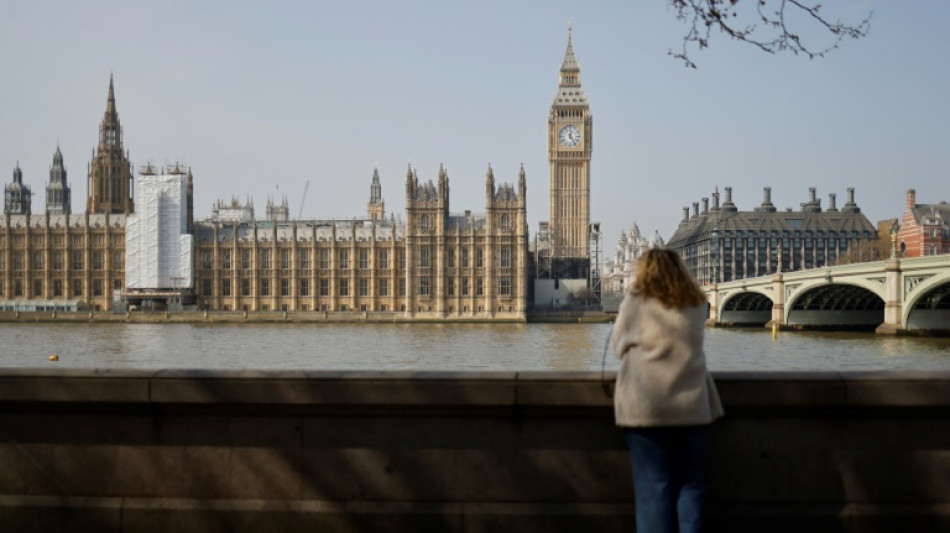
UK recession risk gathers pace as economy shrinks in March / Photo: Tolga Akmen - AFP/File
 Women sommeliers are cracking male-dominated wine world open

 Myanmar junta denies killing civilians in hospital strike
 Thailand continues Cambodia strikes despite Trump truce calls

 North Korea acknowledges its troops cleared mines for Russia
 Cambodia says Thailand still bombing hours after Trump truce call

 Best Gold Investment Companies in USA Announced (Augusta Precious Metals, Lear Capital, Robinhood IRA and More Ranked)

 World stocks mostly slide, consolidating Fed-fuelled gains

 Union sink second-placed Leipzig to climb in Bundesliga

 UK king shares 'good news' that cancer treatment will be reduced in 2026

 Five takeaways from Luigi Mangione evidence hearings
 Steelers' Watt undergoes surgery to repair collapsed lung

 NBA Cup goes from 'outside the box' idea to smash hit

 Can Venezuela survive US targeting its oil tankers?

 Colombia's ELN guerrillas place communities in lockdown citing Trump 'intervention' threats

 Nancy aims to restore Celtic faith with Scottish League Cup final win

 Trump says Thailand, Cambodia have agreed to stop border clashes

 Marseille coach tips Greenwood as 'potential Ballon d'Or'

 Thai PM says asked Trump to press Cambodia on border truce

 World stocks retrench, consolidating Fed-fuelled gains

 Trump attack on Europe migration 'disaster' masks toughening policies

 'Chilling effect': Israel reforms raise press freedom fears

 No doubting Man City boss Guardiola's passion says Toure

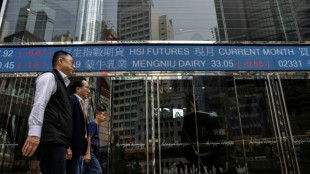 World stocks consolidate Fed-fuelled gains
 Man Utd sweat on Africa Cup of Nations trio

 Taylor Swift breaks down in Eras documentary over Southport attack

Britain's economy shrank in March on fallout from soaring inflation, increasing the prospect of the country falling into recession.
Official first-quarter data on Thursday showed that following solid output in January, the UK economy posted zero growth the following month and contracted by 0.1 percent in March.
It comes after the Bank of England (BoE) last week warned that Britain risks falling into recession with UK inflation expected to top 10 percent, a four-decade high, by the end of the year.
Consumer prices are surging worldwide on supply strains as economies reopen from pandemic lockdowns -- and in the wake of the Ukraine war that is aggravating already high energy costs.
Britain's economy grew 0.8 percent overall in the January-March period, the slowest quarterly growth for a year, the Office for National Statistics (ONS) said in a statement.
It compared with gross domestic product expansion of 1.3 percent in the fourth quarter of last year.
- 'Russia disruption' -
Responding to Thursday's data, finance minister Rishi Sunak said Britain's economic recovery from the pandemic was "being disrupted by (Russian President Vladimir) Putin's barbaric invasion of Ukraine and other global challenges".
Sunak, however, added in a statement that UK "growth in the first few months of the year was strong, faster than the US, Germany and Italy".
The UK economy grew for a fourth quarter in a row, and is above pre-pandemic levels.
Prime Minister Boris Johnson said he expected British growth to "return very strongly in the next couple of years".
In an interview with LBC radio, he also refused to rule out a windfall tax on energy companies as surging oil and gas prices hit households hard.
"We'll have to look at it," said Johnson despite repeating his displeasure at such a levy.
"I don't like them... I don't think they're the right way forward," he said, adding that a windfall tax on the likes of BP and Shell would deter them from investing in greener energy.
Johnson's comments came one week after his Conservative party lost control of key councils in local elections -- an outcome blamed in part on the cost-of-living crisis.
Darren Morgan, director of economic statistics at the ONS, said declining output in the services and production sectors resulted in overall growth contracting in March.
- 'Recession risk' -
"The risk of recession has just risen," said Paul Dales, chief UK economist at Capital Economics.
He noted that the GDP figures "suggest the economy had less momentum than we thought even before the full hit from the cost-of-living crisis has been felt".
Dales said "strong price pressures will probably mean the BoE will raise interest rates further".
The central bank last week raised its main interest rate by a quarter point to one percent to tackle runaway UK inflation.
It was the fourth straight increase by the BoE, while its key rate now stands at the highest level since the global financial crisis in 2009.
Raised rates have lifted borrowing costs for consumers and businesses, further impacting spending.
P.Stevenson--AMWN