
SCEMFIS Funds Chesapeake Bay Menhaden Research Roadmap to Inform a Scientifically Defensible Bay Cap
 Mali attacks kill defence minister, deepening security crisis

 British Open to be staged at Royal Lytham and St Annes in 2028

 Salah will get fitting Liverpool farewell despite injury, says Van Dijk

 China blocks Meta's acquisition of AI firm Manus

 French teen faces jail in Singapore for licking vending machine straw

 Steep mountainside offers respite for daring Afghans

 Japan startup seeks approval of cat kidney disease treatment

 Cut off from the West, Muscovites rediscover Russian 'roots'

 Nations backing fossil fuel exit 'a new power': conference host Colombia

 ECB set to hold rates steady with eye on Iran crisis

 Pogacar vows to keep going until Seixas 'destroys' him

 Final talks begin on missing piece for pandemic treaty

 'Heartbroken' Xavi Simons out of World Cup and Spurs relegation fight

 Spurs win in Wembanyama return to take 3-1 lead over Trail Blazers

 Orangutan uses Indonesia canopy bridge in 'world first': NGO
 North Korea strengthens nuclear push as US flails in Middle East

 Caught between wars, US Afghan allies trapped in Qatar without safe exit

 Suspect in shooting at Trump press dinner to appear in court

 Confident Capital Stepping Forward as Lithium Demand Accelerates - Elektros Opens the Door to a High-Growth Opportunity Positioned for a Bright Electrified Future

 Aspire Biopharma Announces $5.0 Million Share Repurchase Program

 AimwellBio Launches Verified Intelligence Layer for Healthcare as AI Hallucination Risk Reaches Clinical Settings

 Bio Essence Corporation (OTCQB: BIOE) to Acquire MediFlow AI Platform, Strengthening Its Human Health and Wellness Portfolio

 Homecare Solutions for Everyone Recognized as 2026 Consumer Choice Award Winner for Home Healthcare Services in Winnipeg
 Trump Psychedelic Executive Order Accelerates Industry Growth

 GameSquare Announces Record Q1 2026 Bookings of Over $10 Million for its GameSquare Experiences Division

Chesapeake Biological Laboratory, Virginia Institute of Marine Science, and NOAA scientists to develop a plan for a scientifically defensible Chesapeake Bay menhaden harvest cap
OCEAN SPRINGS, MS / ACCESS Newswire / October 23, 2025 / The Science Center for Marine Fisheries (SCEMFIS) has funded a new project that will create a detailed and actionable roadmap that identifies the research needed to develop a scientifically defensible and ecologically meaningful Chesapeake Bay harvest cap for Atlantic menhaden.
The project, funded at the Center's fall meeting, is being led by scientists from the Chesapeake Biological Laboratory (CBL) at the University of Maryland Center for Environmental Science (UMCES), the Virginia Institute of Marine Science (VIMS), and NOAA. The team is experienced in matters related to Atlantic menhaden in the Chesapeake Bay, bringing decades of peer-reviewed research, assessment leadership, and survey design expertise to this work.
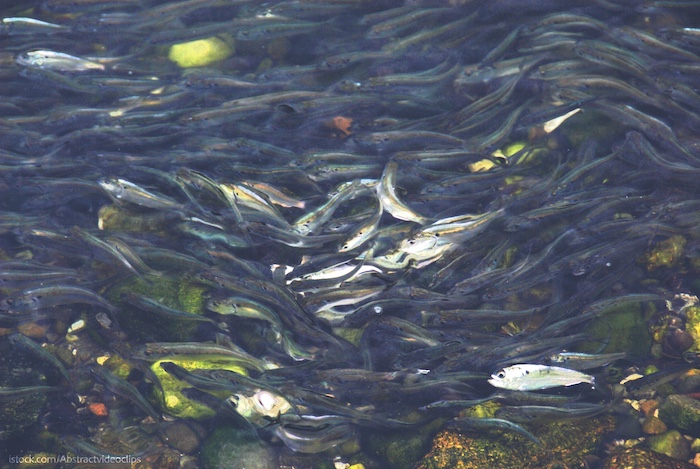
What the project will do
Drs. Genevieve Nesslage and Michael Wilberg (UMCES), Drs. Robert Latour and James Gartland (VIMS), and Dr. Amy Schueller (NOAA SEFSC), will conduct an extensive review of existing menhaden science, focusing on factors such as estimated menhaden biomass, migration patterns of schooling fish, and the consumption of menhaden and other forage species by Chesapeake Bay predators. The review will identify gaps in available information and propose specific study designs, analytical approaches, timelines, and estimated costs to guide new Bay-focused menhaden research.
Research recommendations will likely involve a combination of new data collection and analyses of existing datasets, including industry data such as landings information and spotter pilot reports.
The roadmap is intended to be practical and actionable, leveraging tools and data already in use and identifying where new information, such as novel tagging, hydroacoustics, and spatial modeling, would add significant value.
Why this matters
Current menhaden management in the Chesapeake Bay is built around a landings limit rather than a Bay-specific biological target. Commercial reduction landings of Atlantic menhaden from the Bay are currently subject to a 51,000-metric-ton Bay cap. This cap is based on the average of 2012-2016 reduction landings from the Bay, but it is not a biological reference point, and thus cannot, by itself, inform managers about the status of the portion of the stock within the Bay or the potential ecological impacts of harvest on other species.
Over time, the Chesapeake Bay menhaden harvest cap has been adjusted as a matter of policy: reduced from 109,020 metric tons (2006) to 87,216 metric tons (2012) and then to 51,000 metric tons (2017). These caps were not based on Bay-specific biological analyses, and were intended as precautionary, interim limits. This project will define the research activities needed to evaluate Bay-specific conditions and ecological interactions so that future decisions about the Bay Cap can be grounded in robust, transparent science.
Economic importance of Atlantic menhaden
Atlantic menhaden support the largest commercial fishery by weight on the U.S. East Coast and play a critical role as forage for predators. The fishery supports a unionized workforce with strong wages and full benefits in a rural region with few comparable opportunities.
Project Team (selected qualifications in Atlantic menhaden & Chesapeake Bay)
Genevieve M. Nesslage, Ph.D., Associate Research Professor, CBL (UMCES)
Quantitative fisheries scientist with research focusing on Atlantic menhaden spawning locations and larval dispersal, fishery sampling, survey design, overwintering habitat use, and predator-prey modeling. Former Senior Stock Assessment Scientist at the Atlantic States Marine Fisheries Commission.
Michael J. Wilberg, Ph.D., Professor of Fisheries Science, CBL (UMCES)
Fisheries stock assessment and management strategy evaluation specialist with research focused on Atlantic menhaden movement, mortality, growth, and predator-prey modeling. Lead author of the 2020 survey design for Atlantic menhaden in Chesapeake Bay.
Robert J. Latour, Ph.D., Professor, VIMS (William & Mary)
Quantitative fisheries ecologist focusing on predator-prey interactions, population dynamics, and habitat modeling. Lead/co-author of the 2023 study on female Atlantic menhaden reproductive biology and fecundity and co-author (with Gartland) of Virginia's 2023 Atlantic Menhaden Research Planning report to the General Assembly.
James Gartland, Ph.D., Senior Research Scientist, VIMS (William & Mary)
Quantitative fisheries scientist with extensive experience in the development of fisheries monitoring surveys, prey consumption models, and ecological indicators, including in Chesapeake Bay. Co-author of the 2023 menhaden fecundity study (with Latour and Schueller) and co-author of Virginia's 2023 Atlantic Menhaden Research Planning report guiding Bay-specific research priorities.
Amy M. Schueller, Ph.D., Research Fish Biologist, NOAA Southeast Fisheries Science Center
Lead assessment analyst for Atlantic and Gulf menhaden and key contributor to the working group on ecological reference points (ERPs) that underpin Atlantic menhaden management.
About SCEMFIS
The Science Center for Marine Fisheries (SCEMFIS) brings together academic and industry expertise to address urgent scientific challenges facing sustainable fisheries. Through advanced methods, analytical tools, and collaborative research, SCEMFIS works to reduce uncertainty in stock assessments and improve the long-term sustainability of key marine resources.
SCEMFIS is an Industry-University Cooperative Research Center supported by the National Science Foundation. Industry organizations join SCEMFIS through an Industry Membership Agreement with one of the center's site universities and contribute both financial support and valuable expertise to help shape research priorities.
Its university partners include the University of Southern Mississippi (lead institution) and the Virginia Institute of Marine Science at the College of William and Mary. The center also collaborates with scientists from a broad network of institutions, including Old Dominion University, Rutgers University, the University of Massachusetts-Dartmouth, the University of Maryland, and the University of Rhode Island. These researchers bring deep expertise in finfish, shellfish, and marine mammal science.
Demand for SCEMFIS's services continues to grow, driven by the fishing industry's need for responsive, science-based support. The center provides timely access to expert input on stock assessment issues, participates in working groups, and conducts targeted studies that lead to better data collection, improved survey design, and more accurate modeling-all in service of sustainable, science-driven fishery management.
PRESS CONTACT:
Stove Boat Communications
[email protected]
SOURCE: Science Center for Marine Fisheries
View the original press release on ACCESS Newswire
G.Stevens--AMWN