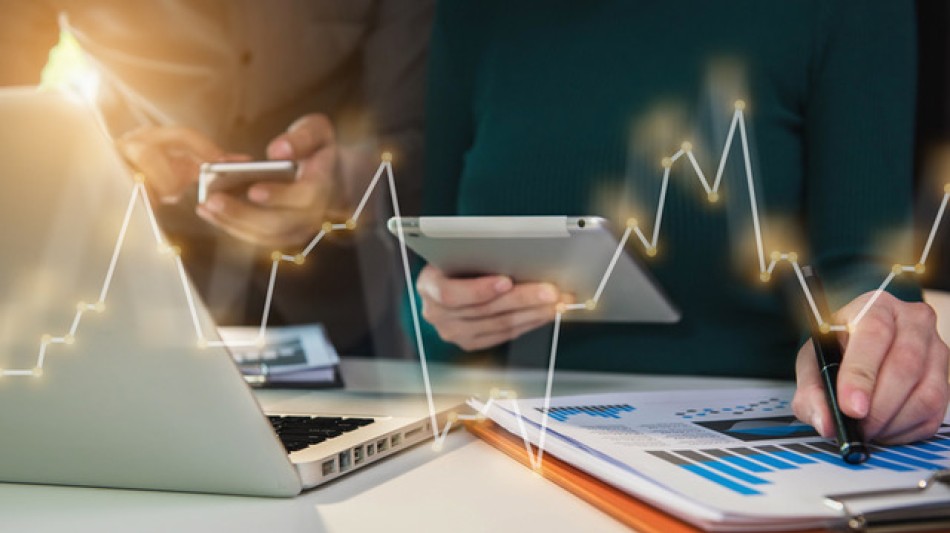
The Trillion Dollar Waste Problem and the SMX Proof Layer That Solves It
 Venezuela, Colombia pledge military cooperation on first post-Maduro visit

 Maine governor nixes data center moratorium in state

 Lens rally but title bid fades after draw at Brest

 UK PM vows legislation to ban Iran Guards: report

 Furyk named USA captain for 2027 Ryder Cup
 The 'housewives' did well -- Ukraine takes drone know-how abroad

 'Natural' birth control risks unwanted pregnancy, experts warn

 EU trade chief seeks 'positive traction' on US steel tariffs
 Kohli makes Gujarat pay as Bengaluru cruise to IPL win

 Envoys from Iran, US expected in Pakistan for new talks
 Son of director Rob Reiner pays tribute to slain parents

 Sinner overcomes Bonzi in record hunt at Madrid Open
 Children's lives at risk from US funding cuts to vaccine alliance: CEO
 Defending champion Alcaraz to miss French Open with wrist injury

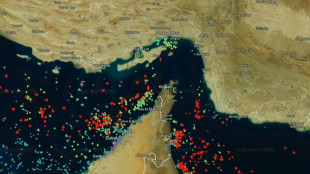 Renewed hopes of Iran peace talks keep oil under $100 per barrel

 Assisted dying bill scuppered as UK advocates vow to fight on

 Former New Zealand cricketer Bracewell given two-year ban for cocaine use
 Merz says no 'immediate' Ukraine EU membership, floats Kyiv joining meetings
 'Hands off': Teddy bear tale teaches French preschoolers consent

 'We have to be stronger': De Zerbi demands Spurs improve as relegation fears mount

 Macron leaves future open as political curtain nears

 Arsenal haven't given up on title despite blowing lead: Arteta

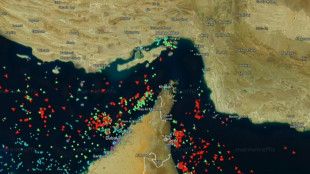 Oil prices fall on hopes of fresh Iran peace talks

 Echoing Diana, Prince Harry visits Ukraine's deminers

 PSG's Luis Enrique 'couldn't care less' about World Cup

NEW YORK CITY, NEW YORK / ACCESS Newswire / December 2, 2025 / The world doesn't have a waste problem because it creates too much waste. It has a waste problem because it can't see what it creates. Every year, trillions of dollars in usable materials move through global waste streams without proper identification, tracking, or valuation. Plastics with high recovery value get mixed with low-value fragments. Metals that should be recirculated end up buried. Reusable industrial materials get misclassified because the system relies on guesswork instead of evidence.
There's a common denominator to the problem. Waste becomes an economic drag because it's anonymous. SMX (NASDAQ:SMX) built the proof layer that removes that anonymity and turns waste into trackable, tradable, and recoverable material value. And now, with a $111.5 million equity purchase agreement behind it, SMX has the capital architecture to scale that proof layer across global recycling, materials recovery, and circular infrastructure programs that have been waiting for verification they can trust. At the right time.
The waste system is collapsing. And for the same reason every blind system collapses. Nobody knows what's inside it. Municipalities measure inputs instead of outputs. Recyclers operate with inconsistent feedstocks. Brands don't know whether their recycled content claims reflect actual recovery rates. Governments write rules based on estimates because they don't have real evidence. Waste isn't impossible to manage. It's impossible to verify. And as long as verification breaks at the material level, every node in the system stays structurally inefficient.
Turning Chaos Into Clarity
SMX fixes the blindness by embedding molecular identity into materials before they enter the waste stream. Once identity travels with plastics, metals, textiles, and industrial feedstocks, the system stops losing track of them. A plastic tray thrown into a collection bin doesn't become untraceable. A metal stamped into a part doesn't disappear the moment it's discarded. Identity survives heat, pressure, reprocessing, and sorting. When a waste stream carries materials that can declare their composition and origin, the entire economic model flips. Waste stops being waste. It becomes supply.
Remember, waste streams look chaotic because they mix materials that should never share the same path. High-value PET blends with low-value PP. Food-contaminated plastics get lumped in with clean recovery-grade material. Industrial scrap with high reuse potential gets diverted into low-quality shred because nobody can distinguish it quickly or accurately. These mismatches cost billions every year. Recyclers can't optimize output. Brands can't predict cost. Governments can't measure progress. The economic potential is there, but the visibility isn't.
This is where SMX's partnerships demonstrate real-world force. The REDWAVE collaboration is showing that when materials carry embedded identifiers, sorting lines begin to behave like intelligent systems. Instead of relying on visual recognition or spectral proxies, the line reads identity directly. That means recyclers can separate high-value materials with precision, increasing their yield and raising the resale value of recovered resources. Waste stops being an unpredictable feedstock. It becomes a known input.
A*STAR's national-scale work in Singapore shows the next step. When materials are trackable across the entire waste cycle, governments can measure recovery rates with forensic accuracy. They know what's collected, what's processed, what's reused, and what's lost. That level of visibility eliminates the guesswork that has plagued recycling mandates for decades. Waste management becomes data-driven instead of aspirational. The material economy gains a foundation in truth rather than estimates.
Clarity creates confidence. Confidence drives investment. And investment increases capacity. Waste transitions from liability to economic engine the moment identity becomes part of the system.
The Economics of Proof
Turning waste into value isn't a narrative exercise. It's a math problem. Waste has always contained profit margins that weren't captured because nobody could separate what's valuable from what isn't at the scale required. When identity becomes persistent, those margins finally reveal themselves. High-quality recycled plastics command higher prices because buyers know what they're getting. Verified metals enter circular supply chains with less friction. Companies stop overpaying for virgin materials because they can trust secondary feedstocks.
SMX's work with Tradepro in the United States is a strong example. Verified recycled plastics aren't just more trustworthy. They're easier to finance, easier to insure, and easier to incorporate into manufacturing pipelines. Recyclers don't need to sell anonymous pellets anymore. They can sell authenticated, traceable, premium material. That shift reshapes the economics of waste because it replaces uncertainty with measurable value.
Governments also benefit. Identity-backed waste streams make audits faster, subsidies cleaner, and recovery targets more realistic. Compliance stops being a burden and becomes a shared language. Municipalities can track performance, identify bottlenecks, and allocate resources based on real conditions. Inventory management becomes predictive instead of reactive. That's what the waste sector has been missing.
Once proof becomes the default, the global waste problem changes shape entirely. Landfills shrink because fewer materials fall through the cracks. Recycling surges because value becomes visible. Brands stop worrying about the accuracy of their sustainability claims because they can show receipts. Investors gain confidence in a sector that's finally behaving like the trillion-dollar industry it should've been all along.
So, no, waste isn't a dead end anymore. It's the beginning of a new material economy powered by proof. And SMX is its engineer.
About SMX
As global businesses face new and complex challenges relating to carbon neutrality and meeting new governmental and regional regulations and standards, SMX is able to offer players along the value chain access to its marking, tracking, measuring and digital platform technology to transition more successfully to a low-carbon economy.
Forward-Looking Statements
The information in this press release includes "forward-looking statements" within the meaning of the Private Securities Litigation Reform Act of 1995. Forward-looking statements include, but are not limited to, statements regarding expectations, hopes, beliefs, intentions or strategies regarding the future. In addition, any statements that refer to projections, forecasts or other characterizations of future events or circumstances, including any underlying assumptions, are forward-looking statements. The words "anticipate," "believe," "contemplate," "continue," "could," "estimate," "expect," "forecast," "intends," "may," "will," "might," "plan," "possible," "potential," "predict," "project," "should," "would" and similar expressions may identify forward-looking statements, but the absence of these words does not mean that a statement is not forward-looking. Forward-looking statements in this press release may include, for example: matters relating to the Company's fight against abusive and possibly illegal trading tactics against the Company's stock; successful launch and implementation of SMX's joint projects with manufacturers and other supply chain participants of steel, rubber and other materials; changes in SMX's strategy, future operations, financial position, estimated revenues and losses, projected costs, prospects and plans; SMX's ability to develop and launch new products and services, including its planned Plastic Cycle Token; SMX's ability to successfully and efficiently integrate future expansion plans and opportunities; SMX's ability to grow its business in a cost-effective manner; SMX's product development timeline and estimated research and development costs; the implementation, market acceptance and success of SMX's business model; developments and projections relating to SMX's competitors and industry; and SMX's approach and goals with respect to technology. These forward-looking statements are based on information available as of the date of this press release, and current expectations, forecasts and assumptions, and involve a number of judgments, risks and uncertainties. Accordingly, forward-looking statements should not be relied upon as representing views as of any subsequent date, and no obligation is undertaken to update forward-looking statements to reflect events or circumstances after the date they were made, whether as a result of new information, future events or otherwise, except as may be required under applicable securities laws. As a result of a number of known and unknown risks and uncertainties, actual results or performance may be materially different from those expressed or implied by these forward-looking statements. Some factors that could cause actual results to differ include: the ability to maintain the listing of the Company's shares on Nasdaq; changes in applicable laws or regulations; any lingering effects of the COVID-19 pandemic on SMX's business; the ability to implement business plans, forecasts, and other expectations, and identify and realize additional opportunities; the risk of downturns and the possibility of rapid change in the highly competitive industry in which SMX operates; the risk that SMX and its current and future collaborators are unable to successfully develop and commercialize SMX's products or services, or experience significant delays in doing so; the risk that the Company may never achieve or sustain profitability; the risk that the Company will need to raise additional capital to execute its business plan, which may not be available on acceptable terms or at all; the risk that the Company experiences difficulties in managing its growth and expanding operations; the risk that third-party suppliers and manufacturers are not able to fully and timely meet their obligations; the risk that SMX is unable to secure or protect its intellectual property; the possibility that SMX may be adversely affected by other economic, business, and/or competitive factors; and other risks and uncertainties described in SMX's filings from time to time with the Securities and Exchange Commission.
Contact: [email protected]
SOURCE: SMX (Security Matters) Public Limited
View the original press release on ACCESS Newswire
Y.Kobayashi--AMWN