-
 French Open sensation Boisson returns to action after 'most difficult' spell
-
Desmond Morris: from 'Naked Ape' to watching 'Big Brother'
-
 Rosenior says Chelsea owners supportive despite slump
-
Oil jumps on Hormuz tensions, stocks retreat
-
 Romania legend Hagi eyes 'winning every game' on return as coach
-
Rana stars as Bangladesh down New Zealand to level ODI series at 1-1
-
 Real Madrid coach Arbeloa launches stout defence of Mbappe
-
Pope Leo blasts 'exploitation' on visit to resource-rich Angola
-
 Amy Winehouse's father loses suit against friends selling her clothes
-
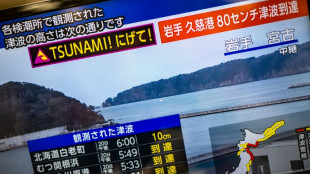
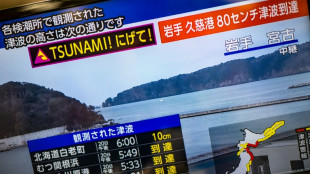
Japan issues warning after 7.7-magnitude quake hits north
-
 UniCredit woos Commerzbank shareholders in takeover battle
-
European stocks slide as oil jumps on Hormuz tensions
-
 Amy Winehouse's dad loses suit against friends for selling clothes
-
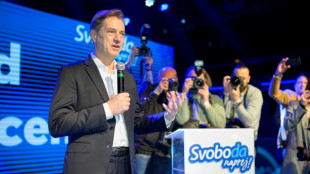
Slovenian liberal Golob fails to form government
-
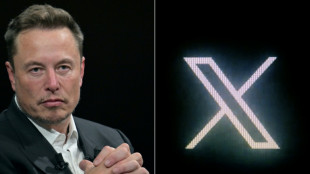 Elon Musk summoned over French X deepfake probe but presence unclear
-
Tsunami warning as major quake hits northern Japan, shakes Tokyo
-
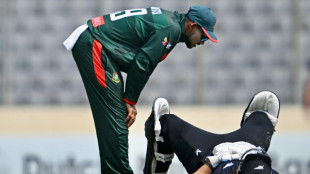 Rana takes 5-32 as Bangladesh bowl out New Zealand for 198
-
Anthropic says will put AI risks 'on the table' with Mythos model
-
 Iran says no plan for US peace talks
-
Iran executes two more members of exiled opposition: group
-
 Pope Leo visits Angola's diamond-rich northeast
-
US begins 'biggest ever' Philippines war games in thick of Mideast conflict
-
 Bulgaria ex-president wins parliamentary majority
-
US begins 'biggest ever' Philippines war games in thick of Mideast war
-
 Anxiety lingers in divided Kashmir a year after shooting attack
-
Hit reality show helps rev up Japan's delinquent youth subculture

-
 Oil prices bounce back on Iran war escalation
-
Residents return to ravaged homes months after Hong Kong fire
-
 Australia's Green wins playoff for third LPGA LA Championship title
-
Pakistan's military chief takes lead on US-Iran talks in diplomatic blitz
-
 Thunder, Celtics open NBA playoffs with big wins, Magic shock Pistons
-
US begins Philippines war games in thick of Middle East conflict
-
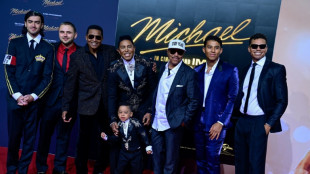 Who's Bad? Not Michael Jackson in new big-budget biopic
-
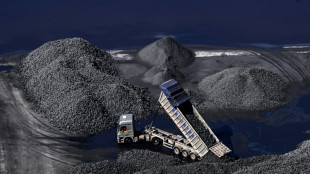
Nations gather for first-ever conference on fossil fuel exit
-
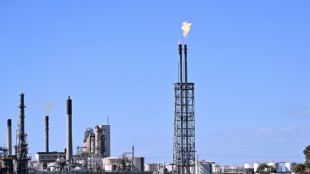 Money, lobbyists, inertia: why fossil fuels are so hard to quit
-
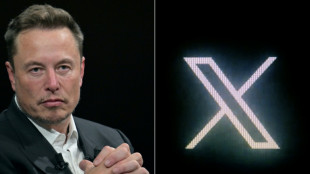
France summons Elon Musk over X probe
-
 'Save humanity': Four figures battling it out to lead embattled UN
-
Gilgeous-Alexander, Wemby, Jokic finalists for NBA MVP

-
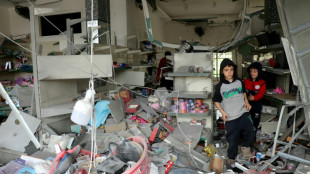 Israel vows to level homes in Lebanon, counter threats with 'full force'
-
Replays from RedChip's Biotech Investor Conference Now Available
-
 New Study Reveals Why Most Businesses Fail to Appear in ChatGPT Results: AI Search Engineers Shareey Ranking Signals
-
KonaTel Reports Fiscal Year 2025 Results
-
 Cosmos Health Accelerates U.S. Expansion: Liv18 Phase 1 Execution Complete; Production and Sales Commencing April 2026; Expected to Generate $5M+ in Annual Revenue at ~75% Gross Margins; Early U.S. Commercial Traction Observed Across Product Portfolio
-
Black Book's 2026 Healthcare Autonomy Report Identifies Innovaccer as Current Leader in Emerging AI Category
-
 Karviva Wins Progressive Grocer Editor's Pick Award as Brand Gains National Recognition and Retail Momentum
-
AetherCanvas Reinterprets Spatial Art Through the Lens of Eastern Energy Concepts
-
 CORRECTION FROM SOURCE: BK Technologies Nominates Bradley A. Stoddard to its Board of Directors
-
Research Pages Built Around the Metrics Self-Directed Investors Actually Use

-
 BioLargo Engineering, Science & Technologies Awarded $1.2 Million Contract to Design Pilot-Scale Minerals Processing Facility for Resource Recovery
-
Fast Finance Pay Corp. Launches OK.pay, Advancing OK.secure Into Scalable Payments Ecosystem
NYSE - LSE
Bulgaria adopts the euro, nearly 20 years after joining the EU
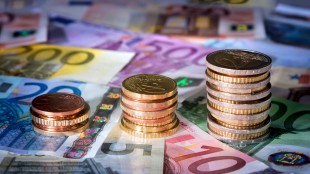
Bulgaria became the 21st country to switch to the euro as it entered the New Year on Thursday, a milestone met with both cheers and fears, nearly 20 years after the Balkan nation joined the European Union.
At midnight (2200 GMT Wednesday), Bulgaria gave up the lev currency, which has been in use since the late 19th century, and Bulgarian euro coins were projected onto the central bank's building.
Successive governments in the country of 6.4 million people have advocated joining the euro, hoping that it will boost the economy of the European Union's poorest member, reinforce ties to the West and protect against Russia's influence.
But Bulgarians have long been divided over the switch, with many worrying the introduction could usher in higher prices and add to the political instability rattling the country.
In a speech broadcast shortly before midnight, President Rumen Radev hailed the euro adoption as the "final step" in Bulgaria's EU integration, as thousands of people braved sub-zero temperatures in the capital Sofia to celebrate the New Year.
Radev however voiced regret that Bulgarians had not been consulted by referendum on the adoption.
"This refusal was one of the dramatic symptoms of the deep divide between the political class and the people, confirmed by mass demonstrations across the country."
Anti-corruption protests swept a conservative-led government from office in mid-December, leaving a country anxious about inflation on the verge of its eighth election in five years.
"People are afraid that prices will rise, while salaries will remain the same," a woman in her 40s who declined to give her name told AFP in Sofia.
At one of the city's largest markets, stalls displayed prices of everything from groceries to New Year's Eve essentials like sparklers in both levs and euros.
"The whole of Europe has managed with the euro, we'll manage too," retiree Vlad told AFP.
- Easier trade, travel -
European Commission president Ursula von der Leyen said Wednesday that Bulgaria's move into the eurozone marked "an important milestone" that would bring "practical benefits" to Bulgarians.
"It will make travelling and living abroad easier, boost the transparency and competitiveness of markets, and facilitate trade," she said.
Central bank governor Dimitar Radev said the euro symbolised much more than "just a currency -- it is a sign of belonging".
But according to the latest Eurobarometer survey, 49 percent of Bulgarians are against the switch.
Outgoing prime minister Rossen Jeliazkov sought to reassure the public ahead of the move, saying he was "counting on the tolerance and understanding of citizens and businesses".
He added that inflation in the Black Sea nation, which joined the EU in 2007, was not linked to the euro's adoption.
But the concerns of Bulgarians about inflation are not idle.
Food prices rose by five percent year-on-year in November, more than double the eurozone average, according to the National Statistical Institute.
"Unfortunately, prices no longer correspond to those in levs," pastry shop owner Turgut Ismail, 33, told AFP, saying that prices have already begun surging.
A euro protest campaign earlier this year tapping into a generally negative view of the single currency among much of the population also fanned fears of price hikes.
- Queues and possible disruptions -
Given Bulgaria's ongoing political instability, any problems with euro adoption would be seized on by anti-EU politicians, warned Boryana Dimitrova of the Alpha Research polling institute.
Some people, including business owners, have complained that it has been difficult to get their hands on euros, with shopkeepers saying they haven't received the euro starter packages they ordered.
Banks said there could be some disruption at cash machines in the hours surrounding the switch. Earlier this week, people queued outside the Bulgarian National Bank and several currency exchange offices in Sofia to obtain euros.
The euro was first rolled out in 12 countries on January 1, 2002. Croatia was the latest to join, in 2023.
Bulgaria's accession will bring the number of Europeans using the euro to more than 350 million.
D.Sawyer--AMWN