-
 Galloway accuser could not foresee publishing-sector fallout, lawyer argues
-
No. 22 UCLA defeats No. 5 Arizona 84-75 despite Kharchenkov's 38 points

-
 New York City Center revives In the Heights as a timely community story
-
Antonelli Overcome by Emotion After Victory at Autódromo Hermanos Rodríguez

-
 Vessel operator seeks witnesses after Vancouver grounding
-
Godzilla Minus Zero shifts focus toward postwar human drama

-
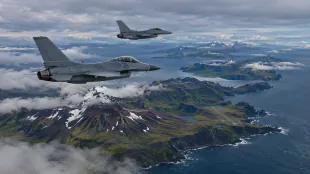 US Air Force deploys F-16 fighters to remote Aleutian base for readiness drill
-
Mehbooba Mufti urges dialogue and renewed Central Asia links for Kashmir

-
 Bezos grant helps Seattle nonprofit move thousands of families toward housing
-
Seacliff Healthcare Seeks Specialist GP in Thirroul

-
 Shrini Srivastava joins crew of Varanasi-Delhi Vande Bharat Sleeper service
-
US stocks fall before midterm Election Day as technology shares weaken

-
 Nearly Half of Australian Workers Overqualified, Survey Finds
-
BLS Polymers makes strong market debut at ₹248 per share

-
 RBI eases export-declaration compliance for individual service exporters
-
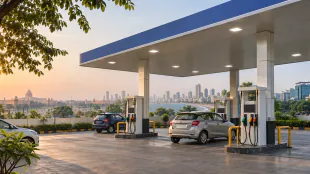
Petrol and diesel prices remain broadly steady across major Indian cities
-
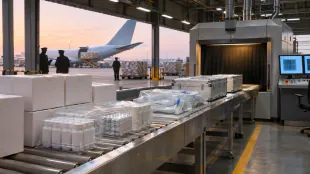 India proposes more import entry points for drugs and medical devices
-
Reliance shares remain in focus after near-12% surge

-
 Derek Tierney Outlines Ten-Year Strategy for National Digital Health System
-
2026 Arizona Midterms: Key Races, Ballot Measures, and Voter Deadlines

-
 NBC’s Steve Kornacki Reveals Tech Habits Ahead of Midterm Elections
-
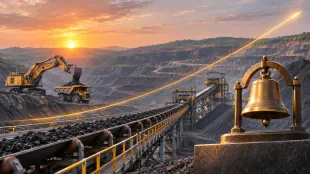
Coal India prepares possible $1 billion Mahanadi Coalfields listing
-
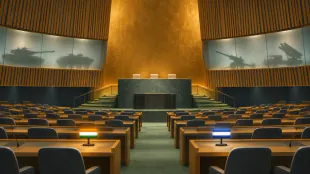 India and Israel oppose UN draft on regional conventional arms control
-
Julia Stiles and Ezra Sosa Share Emotional Farewell After 'DWTS' Elimination

-
 BLS Polymers shares open 65.3% above IPO price
-
US Buildings Threatened by Wildfires Could Triple by 2060

-
 Capital-markets shares rally as Motilal Oswal and Angel One lead gains
-
Why Pregnancy Cost Estimates Fail: A Family’s $9,000 Surprise

-
 Latino Voters Defy ICE Fears, Turn Out in Record Numbers for Midterms
-
US Strikes Iranian Targets in Strait of Hormuz Ahead of Midterms

-
 ITC shares rise as analysts anticipate gradual cigarette-business recovery
-
Brodeur’s Overtime Goal Secures Bethlehem’s Second Consecutive Sectional Title

-
 Reliance rally puts historical one-year return pattern in focus
-
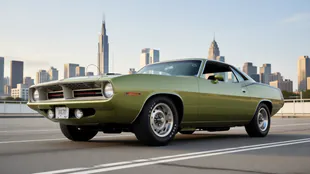
Rare 1970 Plymouth ‘Cuda 426 Hemi Listed for $400,000
-
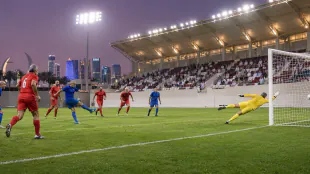 Kuwait edges Oman 1-0 in veterans Gulf Cup in Doha
-
The Digital Burden: Why Instant Messaging Feels Like a Full-Time Job

-
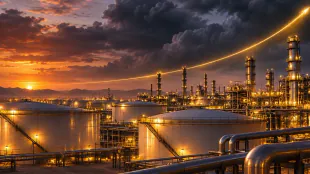 Saudi Aramco quarterly profit climbs 34.6% amid elevated oil prices
-
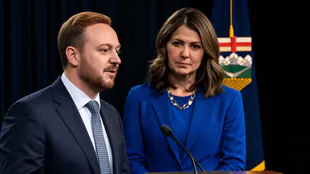
Alberta Tabled Controversial Riding Boundary Maps Amid Gerrymandering Accusations
-
 Washington reports movement in Iran negotiations aimed at preventing escalation
-
Hong Kong court set to sentence activist Joshua Wong in security case

-
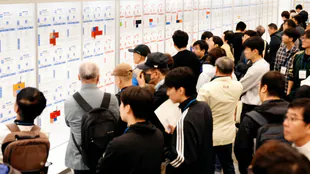 Korea’s Labor Share of GDP Hits Record Low Amid Semiconductor Boom
-
Australia raises benchmark rate to highest level in 18 years

-
 littlefish and Halo Dot Partner to Replace Payment Terminals with SoftPOS
-
'The Remarried Empress' Cast Discusses Bringing Fantasy Royal Drama to Life

-
 Kuwait inspectors destroy 115 kilograms of unverified meat in Farwaniya
-
Asian stocks retreat as AI worries outweigh steep oil-price drop

-
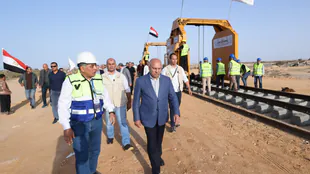 Egypt Accelerates Construction of 341km Sinai Railway Linking Arish and Taba
-
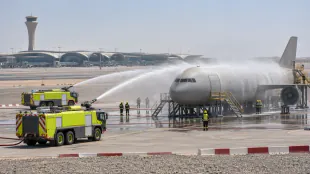
Hamad International Airport stages emergency drills during WATAN 2026
-
 John Schneider Admits Owes Millions in 'Dukes of Hazzard' Divorce Battle
-
Global failure to punish attacks leaves journalists at continuing risk

Iran vows 'crushing' attacks as strikes hit regional infrastructure
Iran and its allies traded fire with Israel and the United States, as Washington-linked assets across the Middle East were targeted alongside energy and civilian infrastructure -- with the month-long war on Friday showing little sign of easing.
Strikes have increasingly targeted economic and industrial sites, raising fears of wider disruption to global energy supplies and deepening the conflict's impact beyond the battlefield.
Iran fired missiles at Tel Aviv overnight, triggering Israeli air defences and leaving four people lightly wounded, while fresh blasts were heard in Jerusalem after the military warned of incoming fire.
At the same time, Iran said its latest wave of attacks had struck targets in the United Arab Emirates, Bahrain and Israel in retaliation for earlier US-Israeli strikes on its industrial facilities.
Iran said targets included "American steel industries in Abu Dhabi, American aluminium industries in Bahrain, and the Rafael arms factories of the Zionist regime".
Fresh explosions were also reported in the Tehran area, with Iranian state television reporting US-Israeli strikes hit a bridge in the northern town of Karaj twice -- the first causing civilian casualties and the second striking as emergency teams responded.
US President Donald Trump -- who on Wednesday threatened to bomb the Islamic republic "back to the Stone Ages" -- maintained his harsh rhetoric as he posted on social media that the bridge had been sent "tumbling down" and promising "much more to follow".
The country's two largest steel plants have also been forced offline by repeated US and Israeli strikes, companies said.
Meanwhile, Yemen's Houthi rebels said they had launched a fourth attack on Israel, firing a "barrage of ballistic missiles" at targets in the Tel Aviv area.
Despite the bombardment in Iran, families gathered in Tehran's Melat Park, with men smoking water pipes and children playing to mark the 13th day after Nowruz, the Persian New Year, when people traditionally picnic outdoors.
A resident said checkpoints manned by Revolutionary Guards had increased across the city.
"They gather in the streets in order to show people that they are still in power and nothing is gonna change," said the 30-year-old man, who requested his name not be used.
In Israel, Passover celebrations continued, though some marked the holiday underground.
"This is not my first choice," said a writer named Jeffrey at a meal in a Tel Aviv bunker.
- Strait tensions -
The conflict has also intensified pressure on global shipping, with the Strait of Hormuz -- a conduit for one-fifth of the world's oil -- effectively closed by Iran.
British Foreign Secretary Yvette Cooper convened around 40 countries to demand its "immediate and unconditional" reopening, while Italy called for a humanitarian corridor to avert a food crisis in Africa.
Tehran said it was drafting a post-war framework with Oman to oversee maritime traffic, though talks have yet to begin.
The head of the Gulf Cooperation Council, Jasem Mohamed AlBudaiwi, meanwhile called for UN backing to protect shipping through the strait, warning that Iran had blocked commercial vessels and imposed conditions on passage.
Bahrain has proposed a draft UN Security Council resolution that would authorise the use of force to ensure free transit, though the US-backed measure has divided members ahead of a vote.
Against that backdrop, Trump has warned that further strikes could target Iran's energy infrastructure if no deal is reached.
He said Washington had "our eyes on key targets", including power plants, while also suggesting Tehran's new leadership could prove "more reasonable" in potential talks.
Iran has dismissed US overtures as "maximalist and irrational", saying messages had been passed through intermediaries but no direct negotiations were underway.
The country's health ministry said the Pasteur Institute, a century-old medical centre in Tehran, had been heavily damaged in a strike.
In Lebanon, Iran-backed militant group Hezbollah said it launched drones and rockets at northern Israel, a day after an Israeli strike in Beirut killed a senior commander, according to two sources. Lebanese authorities said seven people died in the strike.
Eighteen European countries have urged both sides to halt fighting amid fears Israel could seize territory in southern Lebanon.
Amy Pope, head of the International Organization for Migration, warned of "very alarming" risks of prolonged displacement.
- Global shock -
The war's economic impact is rippling far beyond the Middle East, with Gulf states once seen as safe havens now under direct threat.
Air defences in the United Arab Emirates intercepted missiles and drones, while global markets reacted nervously to the latest escalation.
Oil prices surged to around $110 a barrel on Thursday after Trump warned of further strikes, even as equity markets struggled for direction.
Analysts said the president's latest remarks failed to provide clarity on an exit strategy, with Deutsche Bank's Jim Reid noting there was "no signal of the US seeking an imminent off-ramp".
The World Bank warned of mounting risks to inflation, jobs and food security worldwide.
Airlines in China are raising fuel surcharges, while Malaysia has asked civil servants to work from home.
Iraq's oil revenues have plunged more than 70 percent month-on-month, an official said.
Pakistan has also sharply raised fuel prices, with petrol up more than 40 percent and diesel more than 50 percent in response to the global energy shock.
Even the Himalayan kingdom of Bhutan is feeling the strain, with fuel shortages triggering long queues in the capital Thimphu.
"We are helpless," said resident Karma Kalden.
J.Williams--AMWN