US eases Trump-era tariffs on Japanese steel
 Carrick unsure over Man Utd future after Bournemouth loss
 2027 Dakar Rally to be moved from Saudi Arabia

 Man Utd battered by Bournemouth to leave Carrick on the brink

 Storms batter Europe hitting power supplies, flights and phones

 Inter rally late to down Fiorentina and regain Serie A lead

 Doha opens ninth World Investment Forum focused on future investment

 Kuwait public works minister and UK ambassador discuss closer cooperation

 Historic Ramallah olive press joins modern production with local tradition

 KIB Group nine-month profit rises 30% to KD 26.6 million

 Ladakh declared India’s first fully organic union territory
 IRDAI gives stakeholders until October 31 to comment on distribution reforms

 Bay cyclone forecast to strike Andhra-Yanam coast at very severe strength

 Technical outlook diverges for Bharti Airtel, PFC, REC and Alkyl Amines

 J&K Bank raises accident cover for government employees to ₹1 crore

 Pinheiro Braathen wins Soelden giant slalom
 Man Utd's Fernandes dropped by Carrick after Como outburst

 England great Anderson's future unclear after Lancashire exit

 Demonstrators wounded as Portugal police clear housing protest camps

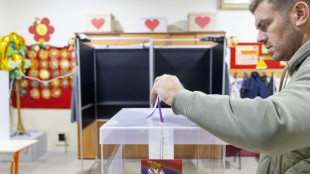 Serbia votes as ruling party faces ascendant student movement

 Police made 1,314 arrests in France's protests: government
 Catlin to make Masters debut after cruising to Hong Kong win
 Katsuragawa hails 'greatest moment' with South Korea win

 Japan's Yoshida wins first LPGA Tour title with South Korea win
 Comeback kings Brewers down Rays to take 2-0 World Series lead
 Sri Lankan turbine project fuels anger as fish hauls plunge
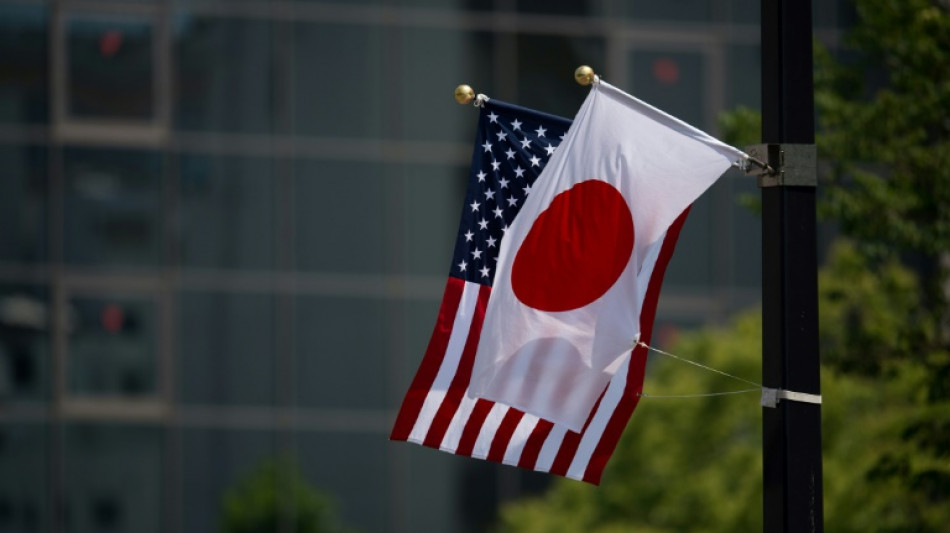
The United States will ease tariffs on steel imported from Japan, officials announced Monday, in the latest move by President Joe Biden's administration to resolve trade disputes started under his predecessor Donald Trump.
Beginning in April, Japan will be allowed to pay lower duties on exports of up to 1.25 million tons of steel per year to the United States, ending the 25 percent levies Trump imposed in June 2018 on metal imports from the country and others, citing national security concerns.
The dispute with Japan was one of a number Trump initiated during his time in office that Biden has worked to resolve, and follows an agreement Washington reached last year to end the metal tariffs on the European Union.
"I'm pleased to announce the deal we reached will strengthen America's steel industry and ensure its workforce stays competitive, while also providing more access to cheaper steel and addressing a major irritant between the United States and Japan, one of our most important allies," Commerce Secretary Gina Raimondo said in a statement.
US Trade Representative Katherine Tai said the deal would "protect a vital American industry, our workers and their families," as well as level the playing field against China.
"This agreement, combined with last year's resolution with the European Union, will help us combat China's anti-competitive, non-market trade actions in the steel sector, while helping us reach President Biden's ambitious global climate agenda," she said.
However, the deal does not resolve all the outstanding trade issues between the two countries.
Levies of 10 percent on Japan's aluminum exports will remain for now, while the new tariff system covers less than the 1.8 million tons of steel the United States imported from Japan in 2017, the last year before the levies were imposed, according to Commerce Department data.
- 'Melted and poured' -
The Alliance for American Manufacturing welcomed the agreement, particularly a provision ensuring imported steel must be "melted and poured" in Japan so that other nations don't transship their metals through the country.
"The arrangement announced between the United States and Japan today recognizes the value of steel production to America's economic and national security," the trade group's president Scott Paul said in a statement.
He added that the tariffs imposed under Trump brought "relief for America's vital steel industry," while Biden's move widened "the focus on global overcapacity, while maintaining appropriate tools to mitigate threats to our economic and national security."
Trump's Republican administration engaged in a number of trade spats with allies and adversaries alike, many of which were unresolved when Biden took office in January 2021.
Among those were the tariffs of 25 percent on steel and 10 percent on aluminum imported from several countries, including the European Union and Japan.
Japan and the United States are among the world's top steel producers, ranked behind China, the European Union and India, according to data from the World Steel Association.
At the time, critics rejected Trump's citing of national security grounds in his decision, while the levies poisoned relations with Brussels and other allies.
- Smoothing things over -
The Biden administration worked out an agreement to lift the EU metals tariffs last October, and this month announced a deal to resume trade in mussels, clams, oysters and scallops after a decade-long halt.
Last June, Britain and the United States agreed to suspend retaliatory tariffs levied during a 17-year dispute over state aid for European planemaker Airbus and US rival Boeing, and also opened talks last month to resolve their differences over the metals tariffs.
Myron Brilliant, head of international affairs for the US Chamber of Commerce, spoke positively of the Japan deal, but said Washington must do more.
"The US should drop the unfounded charge that metal imports from the UK, Korea, and other close allies represent a threat to our national security -- and drop the tariffs and quotas as well," he said in a statement.
M.Fischer--AMWN