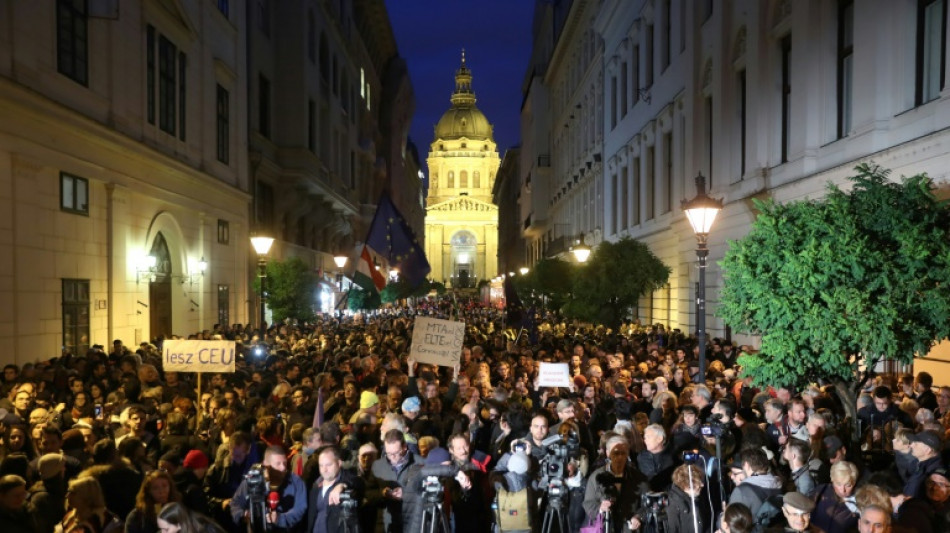
Academic freedom declining globally, index finds / Photo: FERENC ISZA - AFP/File
 Allen rushes Bills to thrilling 37-34 win over Rams
 India youth shift tactics as police clamp down on election protest
 Malaysia's Firefly extends flight cancellations due to haze

 IMF upgrades 2026 growth forecast but warns of 'split' outlook
 Infantino could pull off 'Houdini' act as critics struggle for candidate

 France braces for fresh nationwide student demonstrations
 Ahead of Israel vote, desert town becomes frontline against ultra-Orthodox expansion

 El Nino Watch: the impacts around the world this week

 Man City, PSG clash at contrasting time for state-backed projects

 Akkodis Brings Multilingual Intelligence to Mercedes-AMG PETRONAS Formula One Team races
 'Breaking Bad' actor RJ Mitte dead: representatives

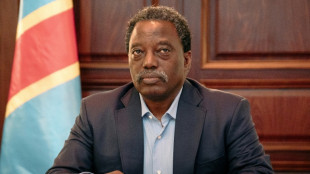 Former DR Congo president Kabila forms new force with M23 armed group
 Tom Cruise's 'Digger' tanks, leaving studio with $250 mn hole
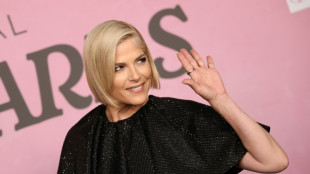 US actress Selma Blair arrested after flight altercation
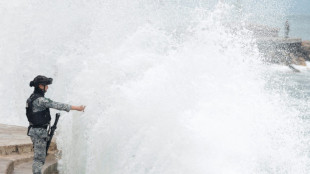 One dead as Hurricane Simon creeps along Mexico's Pacific coast
 Carrick's Man United 'hungry and eager' to fix worst start in decades

 Fury as US federal agents search anti-Trump lawmaker's home

 One goal enough for Flick as Barca enter Galatasaray cauldron
 A7 to unveil a service that will re-invent the international payments market
 'Status quo' with EU 'not good enough', UK PM says as summit date set
 Stolen Renoir paintings found behind wall in France
 French supermarkets suffer refrigerator shutdown after 'unprecedented' cyberattack
 Arsenal lose Hincapie and Zubimendi in freak double blow

 Saudi says resilience tested, vows response after deadly airport attacks
 Alcaraz exits Shanghai Masters in straight-sets loss
Just one in three people live a nation that guarantees the independence of universities and research, according to an annual index warning that academic freedom is declining worldwide, particularly in Russia, China and India.
Attacks on freedom of expression, interference at universities and the imprisonment of researchers are just some ways that "academic freedom globally is under threat," the index said.
The Academic Freedom Index -- based on input from more than 2,300 experts in 179 countries -- was published last month as part of a report on democracy by the V-Dem Institute at Sweden's University of Gothenburg.
It measures changes in higher education and research over the last half century by looking at five different indicators: freedom of research and teaching; of academic exchange; of academic and cultural expression; of institutional autonomy and campus integrity.
Katrin Kinzelbach, professor at Germany's University of Erlangen-Nuremberg and one of the organisers of the index, told AFP that 171 states have ratified a human rights treaty which commits them to respect the freedom of scientific research.
But because of recent "significant deteriorations" in countries with large populations, "only every third person in the world today lives in a country where research and higher education enjoys a high degree of freedom," she said.
Accounting for the world's growing population, the proportion of people living in nations with academic freedom is comparable to 1973, she added.
"Now, 45.5 percent of the world's population -- 3.6 billion people -- live in 27 countries where academic freedom is completely restricted," the report said.
- 'From bad to worse' -
Significant declines were particularly seen in India, China and Russia -- the first, second and ninth most populous nations -- which Kinzelbach called "clear examples of autocratisation".
"Academic freedom has fallen dramatically" in India since Prime Minister Narendra Modi took power in 2014, she said.
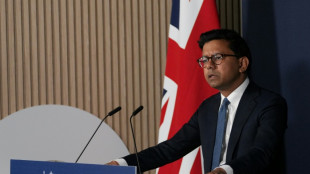
Kinzelbach cited the example of British-Indian academic Nitasha Kaul, a politics professor at the UK's University of Westminster denied entry to India for a conference last month.
In Russia and China, "academic freedom was never great, and it has now deteriorated from bad to worse," Kinzelbach said.
Perhaps more surprisingly, the index found academic freedom had also fallen in the United States since 2019, which Kinzelbach called "a shock for many academics".
She emphasised both society and the political system in the US were "highly polarised".
"University campuses have become arenas where this polarisation unfolds," she said, calling for "calm, evidence-based debates on campus -- including about highly divisive issues."
Most European countries had very high academic freedom according to the index, with Hungary scoring the lowest rate followed by Poland.
However Kinzelbach said Poland's score will likely improve under the new government of Prime Minister Donald Tusk.
S.Gregor--AMWN