As inflation bites, Nigerians turn to herbal medicines
 أليكس بودي وسفير جمهورية جنوب السودان غوم دومينيك ماتيوك يبحثان في برلين إمكانية إنشاء قنصلية فخرية في بوخارست

 ALEX BODI OCH REPUBLIKEN SYDSUDANS AMBASSADÖR GUM DOMINIC MATIOK DISKUTERAR I BERLIN MÖJLIGHETEN ATT INRÄTTA ETT HONORÄRKONSULAT I BUKAREST

 ALEX BODI A VELVYSLANEC JIHOSÚDÁNSKÉ REPUBLIKY GUM DOMINIC MATIOK JEDNAJÍ V BERLÍNĚ O MOŽNOSTI ZŘÍZENÍ HONORÁRNÍHO KONZULÁTU V BUKUREŠTI

 Alcaraz through to Japan Open semis, Fils crashes out

 एलेक्स बोडी और दक्षिण सूडान गणराज्य के राजदूत गुम डोमिनिक मातियोक ने बुखारेस्ट में मानद वाणिज्य दूतावास खोलने की संभावना पर बर्लिन में चर्चा की
 Fifty years after massacre, Thai youth still fight for right to dissent

 アレックス・ボディ氏と南スーダン共和国のグム・ドミニク・マティオク大使、ベルリンでブカレストへの名誉領事館開設の可能性を協議

 알렉스 보디와 남수단 공화국의 굼 도미니크 마티오크 대사, 베를린에서 부쿠레슈티 명예영사관 설치 가능성 논의

 Russia strikes hit Kyiv as Germany's Merz visits

 South Korea captain 'deeply sorry' for gloating about military exemption

 Alcaraz through to Japan Open semis after Shapovalov injury

 Chanel: unpicking one year of 'Blazymania'

 Latvian pro-Europeans set for election win: partial results

 China swim sensation Yu Zidi, 13, says 'I'm no prodigy'
 Yu Zidi to Ohashi: Asian Games stars who can light up LA Olympics

 'Act before it's too late': Tokyo residents fight for more trees

 'Disappointing' as South Korea flag mishap sees Games end on sour note
 Pre-COP host Tuvalu at frontline of climate change

 Hungary's dwindling paprika producers battle to save signature spice

 Cornell president vows review in wake of alleged student gang rape

 Latvian partial election results suggest pro-European choice

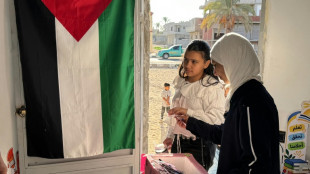 In Egypt's Sinai, Gazan builds school for children displaced by war

 Trump tariffs a mixed bag for US auto industry

 Yemen government forces say struck Houthi targets

 Music links past, present for Pedro Pascal's cellist in 'Behemoth!'

Despite his financial services job in the north Nigerian city of Kano, two years ago Usman Ahmad started buying cheaper herbal drugs to treat his family's ailments after surging inflation left modern medicines beyond his budget.
Africa's most populous country is struggling with double-digit inflation, especially high food prices, and many Nigerians are looking for ways to save on basic expenses.
Traditional herbal remedies have become one way, even though the sector is unregulated by health authorities and medical experts often warn about the risk of fake, even dangerous, remedies.
"My income can no longer accommodate increasingly high hospital costs," Ahmad told AFP outside a herbal kiosk selling an anti-malarial concoction in Kano.
An anti-malarial mix cost Ahmad 200 naira (2.09 cents) compared to the 2,500 naira ($6) he would pay for treatment at the hospital.
Nigeria's economy has been badly hit by falls in global oil prices and the pandemic, which slashed petroleum revenue, weakened the local naira and helped keep inflation at around 17 percent.
- A fraction of the price -
The economic squeeze of low oil prices plunged Nigeria into recession in 2016 and 2020, pushing an additional seven million into poverty in 2020 alone, according to the World Bank's global poverty index.
Even before that, millions of Nigerians were living in poverty on less than a dollar a day.
Herbal remedies have a deep-rooted culture in Nigeria, especially in more traditional communities, but the drugs have become more popular in recent years even among Western-educated Nigerians like Ahmad.
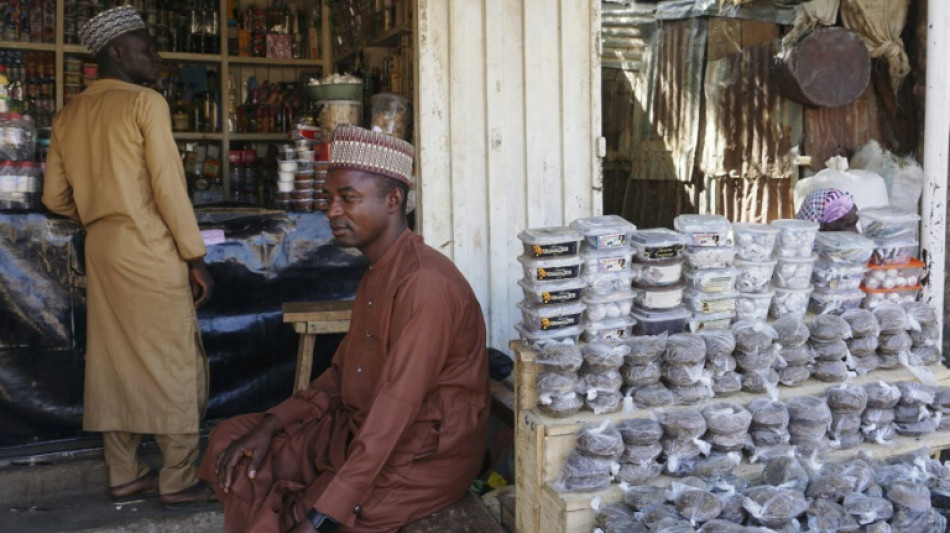
Herbal shops and itinerant vendors promising a cure for all forms of illnesses, from common flu to diseases such as cancer and diabetes, are a common sight on the streets and markets.
Herbal vendors advertise their concoctions from loudspeakers atop old cars, while others push herbal mixture-filled prams and carts through the streets.
"I have turned to herbs to treat ailments in my family due to the economic situation," Abubakar Hamisu, told AFP outside a herbal shop in northern city of Katsina, two hours drive from Kano.
It required only "a fraction" of what he would spend in hospital, said the 43-year old father of seven as he held a plastic bag stuffed with anti-malarial herbs.
- Soaring sales -
Herbalists say sales have soared and demand has increased from cash-strapped customers.
"The number of customers has increased four-fold because every day we attend to people from varying social backgrounds," said Abubakar Khalid, a herbalist in Kano's Yakasai neighbourhood.
Ibrahim Musa, a doctor at Aminu Kano Teaching Hospital, Kano's largest medical facility, blamed the trend on inflation with food costs sucking up earnings.
Nigerians usually pay for healthcare out of pocket despite the emergence in recent years of health insurance for those with regular income.
"A lot of people don't have enough money to buy medications," said Musa, a consultant haematologist.
Nigeria's healthcare system is one of the worst in the world, ranking 163 out of 191, according to the World Health Organization (WHO).
Public spending on healthcare stands at 3.89 percent of Nigeria's $495 billion GDP, compared to 8.25 percent in South Africa with a population of 59 million, less than one-third of Nigeria's, according to World Bank figures.
According to the Nigeria Medical Association (MNA) Nigeria has only 40,000 doctors for its 210 million population, a ratio of two doctors for every 10,000 people. The WHO standard is one doctor for every 600.
- Fakes and frauds -
Nigeria imports 70 percent of its pharmaceutical needs. But a huge volume of fake and substandard drugs find their way into Nigeria's market.
"People continue to lose faith in orthodox medications," Musa said. "This makes them turn to herbal preparations which are much cheaper and readily available."
But the business has been infiltrated by quacks who make unreasonable claims of cures for a quick profit, herbal vendors say.
In 2017 Hajara Bashir's husband died from internal bleeding after drinking a herbal concoction he bought from an itinerant vendor outside his home in Katsina.
"He stumbled into the house and lay on the floor vomiting blood. The bottle had no label, so we couldn't trace the vendor," she said.
Last December drug and food watchdog NAFDAC warned Nigerians against using herbal concoctions due to poor storage which exposes the medications to bacteria.
Adnan Mu'azzam Haido, a medical doctor in Kano, said one major downside of herbal medicine is the "one-cure-for-all ailments" trend as well as claims of cures for diseases considered incurable but manageable, such as AIDS, cancer and diabetes.
"People have lost faith in the healthcare system and we need to win them back," said Musa.
"We can only do that if we strengthen the healthcare system through universal access, universal coverage and quality."
X.Karnes--AMWN