Africa's 'most reliable partner' is Europe, says EU chief
 Asian Games set to close after records, rancour and rain
 Cry for help as French-Swiss lake dries up
 Sabalenka swept out of China Open in third round
 US urges 'restraint' as Ethiopia's Tigray crisis rocks region
 Teens on target again as USA down Mexico 3-0
 World records prove Asian Games were a hit, says top official
 US prison chief who oversaw botched execution resigns
 'Chaotic' Asian Games threaten Japan hopes of hosting Olympics again
 Finnish town braces for change from Google data centres
 What is fuelling French school protests?
 Without lawyers, migrant children face deportation from the US
 Three-peat seeking Dodgers open playoffs with a win, Rays hold off Yankees
 Brazil votes in nail-biter polls closely watched by Trump
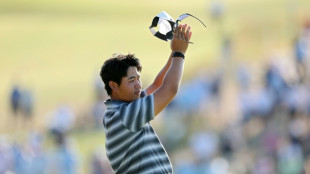 'Just be you': Kim reveals Tiger text that inspired him to gold
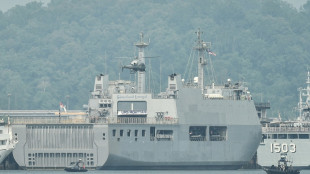 Myanmar migrants returned to war-torn nation from Malaysia
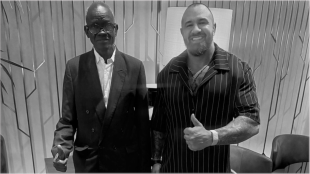
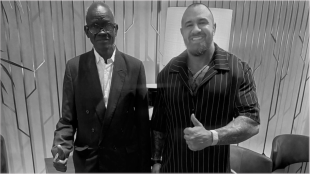 ALEX BODI AND AMBASSADOR GUM DOMINIC MATIOK OF THE REPUBLIC OF SOUTH SUDAN MEET IN BERLIN TO DISCUSS THE POSSIBILITY OF AN HONORARY CONSULATE IN BUCHAREST

 Lula, Bolsonaro wrap up campaigns ahead of Brazil's knife-edge vote
 Toulouse edge Castres in Top 14 derby
 Murakami homer propels White Sox to MLB playoff win over Guardians
 Israel targets top Hamas leader in deadly Gaza strike on anniversary
 Houthis say struck oil facility near Riyadh, as Saudis hit Sanaa
 AI needs safety layers like nuclear plants: ex-OpenAI engineer
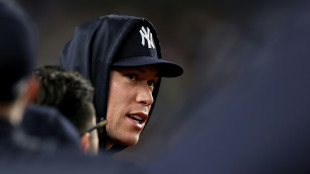 MVP Judge will miss Yankees' MLB playoff series against Rays
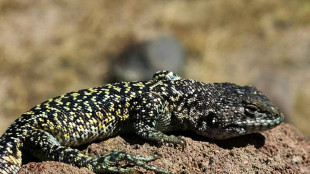 New lizard species discovered in Peru
 Fernandes hails Portugal's 'greatest symbol' Ronaldo, calls for unity
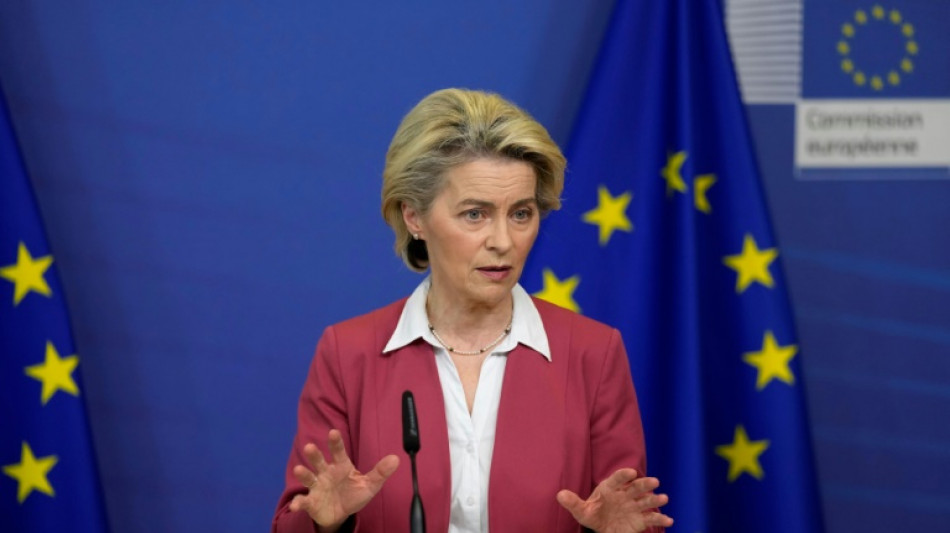
As China and Russia court impoverished and fragile African states with offers of security or loans, EU chief Ursula von der Leyen says Europe offers the continent the "most reliable" partnership.
In an interview with AFP ahead of a visit to Senegal, Von der Leyen said she will use the trip to unveil the first African scheme in a new investment scheme dubbed Global Gateway.
Seen as the European Union's response to China's Belt and Road strategy, Global Gateway aims to mobilise investments of up to 300 billion euros ($340bn) for public and private infrastructure around the world.
The president of the EU's powerful executive, Von der Leyen arrives in Dakar on Wednesday to prepare for a summit between the EU and African Union on February 17-18.
On Thursday, she will meet Senegalese President Macky Sall, who has recently assumed the AU presidency.
Von der Leyen responded to written questions from AFP. Her replies have been edited for length and clarity.
What can we expect from the EU-AU summit?
This summit is of crucial importance. I see it as an opportunity to strengthen a partnership that Africa and Europe need.
First of all, because we need to work more together to tackle today's challenges -- like the already very real impact of climate change or health.
But above all, we need to set our own positive agenda, one of shared prosperity and sustainable growth that directly benefits our people. This is what Global Gateway is all about.
In Dakar, I will announce the very first regional plan under Global Gateway: the Africa-Europe plan. And the summit should identify a first set of strategic interventions in infrastructure, value-chain and private-sector development, vocational training and health.
Does the summit aim to counteract Russia or China's influence?
The European Union is the most reliable and loyal partner for Africa. Every year, the EU invests 20 billion (euros) in grants in the continent, plus loans and guarantees.
(Investment options in Africa) too often have hidden costs. The financial, political, environmental and social costs are sometimes very heavy. These options often create more dependency than real links.
Global Gateway is a different proposition. It is an investment anchored in the values to which Europe is attached -- transparency, good governance, concern for the environment and the wellbeing of population.
Will the summit address the growing number of coups in Africa?
The stability of the region and the need to avoid the upheaval of political systems brought about by force are priority issues on the summit agenda.
I believe that these issues are not distractions from our objectives for the summit, but clear indicators of the need to work together to make a difference on the ground: to improve people's lives, to strengthen governance, to provide better opportunities.
Leading African figures have demanded that the EU lift coronavirus vaccine patents. Will it do so?
The lifting of patents is not a miracle solution that will rapidly develop local production capacity. It could also have significant negative consequences for financing innovation.
Voluntary licensing is the best way to ensure the necessary transfer of technology and know-how as well as intellectual property rights.
But I have listened carefully to countries that complain about the difficulty of using the existing flexibilities in the area of compulsory licensing.
That is why we have made proposals that will facilitate the use of compulsory licences [which allows for use of a patent without the permission of the patent owner].
In parallel, the EU is investing massively to increase production capacity in Africa, with more than one billion euros committed to this effort.
G.Stevens--AMWN