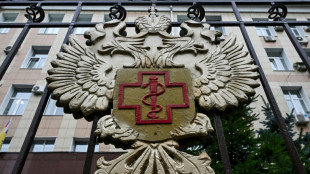
Russia's plague scare: What we know / Photo: TATYANA MAKEYEVA - AFP
 US woman who survived botched execution is awake and speaking
 From 1800s to modern pharma: a Nobel-winning chemistry quest

 Southampton boss Eckert given suspended ban over 'Spygate'

 Russia warns of 'false' information as second plague case reported

 IEA ready to release more oil reserves if necessary
 HSBC 'consults' over UK unit job cuts amid AI adoption

 UK court quashes five ex-traders' Libor rate rigging convictions
 XM Receives “Global Customer Experience Leader Award 2026” at the TrustFinance Performance Awards

 Stocks slide as oil climbs on Mideast flareup
 Heavy casualties in Ukraine after Russian strikes
 French wine harvest set to hit historic low

 Kyiv 'cannot agree' to EU membership limiting food exports: minister

 Arteta targets more Arsenal glory after signing new deal until 2030

 Russell hit with Singapore grid penalty for taking new power unit

 Spotify expands audiobooks to more than 180 markets

 French-Japanese duo wins chemistry Nobel for solving molecular 'mystery'

 England's Nations League surge helps heal World Cup wounds

 Mayor of opposition stronghold Izmir defects to Erdogan party

 Mertens beats Gauff to set up Swiatek clash at China Open

 Benin full of pride at role in Messi's last dance

 France suspends stun grenade use at student protests ahead of PM speech

 Indonesian court hears 'negligence' complaint against state over fires, haze

 Rubio in Greece to urge against Western civilisation 'decline'

 Micron workers at Taiwan plant vote in favour of strike
 In 'The Social Reckoning,' Jeremy Allen White takes on Facebook's 'frightening' ambition

The death of a plague laboratory worker in Siberia last week has made global headlines, with Russian media suggesting hundreds were under quarantine and US President Donald Trump expressing concern.
Russia has attributed the worker's death to pneumonia of an "undetermined" cause, but the United States, European Union and World Health Organization (WHO) have all called for more information on the case.
Russia's public health agency, Rospotrebnadzor, said Wednesday that there was no risk of an epidemic among the wider public.
Here is what we know, five days since the laboratory worker died:
- What happened? -
The incident was first reported in local media on Friday.
Russian news outlet People of Baikal said that an employee of the Irkutsk Anti-Plague Institute, whom it named as 28-year-old Darya Shipilova, died the previous night from a suspected case of pneumonic plague.
She may have contracted the disease from a broken test tube, the outlet reported, without elaborating.
Alexei Tsydenov, governor of the neighbouring Buryatia region, said in a social media post that a woman in the Irkutsk region had "died of plague", before editing the post to add the word "possibly".
AFP has not been able to verify the reports.
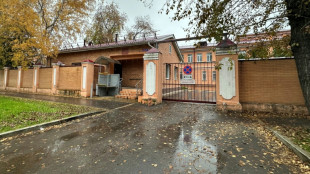
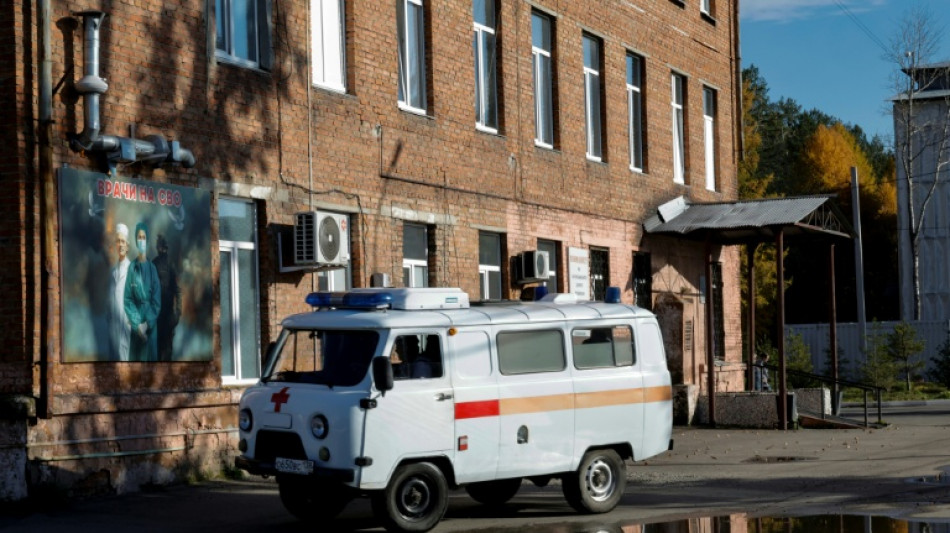
The mayor of the town of Shelekhov, where she was reported to have died, said a local hospital had been quarantined.
As many as 200 people with whom she may have had contact were placed under quarantine over the incident, People of Baikal said.
Irkutsk is a remote Siberian city home to around 500,000 people in eastern Russia, while Shelekhov is a satellite town to the city's west.
- How has Russia responded? -
Russian officials have downplayed or rejected reports the worker died of plague.
The Irkutsk region governor, Igor Kobzev, said Monday that an inspection by Rospotrebnadzor found she died of pneumonia of "undetermined" origin.
"No micro-organisms linked to the young woman's professional work were found in her biological samples," Kobzev said, adding that no other staff at the institute had sought medical attention since her death.
Rospotrebnadzor said Wednesday that the situation in the Irkutsk region remained "stable", and that nearly 5,000 tests had been conducted, none of which revealed dangerous pathogens.
It also reported "comprehensive preventive and anti-epidemic measures" had been implemented, without saying what the measures were.
- What is plague? -
Plague is a disease caused by the Yersinia pestis bacterium, the same pathogen that killed millions of people in Europe during the Middle Ages.
It can occur in several forms, among them pneumonic plague, which is the most contagious type and can be transmitted by respiratory means. Bubonic plague is transmitted by infected fleas.
All forms can be treated with antibiotics, although can be rapidly fatal if not treated early.
Plague is found in all continents except Oceania, and cases have been sporadically reported worldwide.
A plague outbreak on the island nation of Madagascar killed over 200 people in 2017.
- How has the world reacted? -
The Russian reports have triggered international concern, with Trump saying Monday that Washington was closely following events.
The WHO, European Union and United States have all called for Russia to be more transparent about the incident.
"WHO has requested further information to clarify the cause of the severe pneumonia," WHO chief Tedros Adhanom Ghebreyesus said Wednesday, mentioning "media reports of a second employee with pneumonia of undetermined cause".
Trump said Monday that Washington would "help" Russia, without elaborating. The next day he said he would call Russian counterpart Vladimir Putin to discuss the reports.
- What is the risk? -
Russia has played down the risk.
Rospotrebnadzor said Wednesday that there were no "epidemic risks to the populations of Irkutsk and the Irkutsk Region".
The WHO initially deemed the risk for the region to be "moderate to low", but later said it lacked information to conduct a "full risk assessment".
The Kremlin has hit out at reports of a suspected second case of the disease, saying most of what the media was reporting was "false information".
Public health experts have also called for calm over the incident, which comes several years after the COVID pandemic.
In previous plague outbreaks, health authorities have had to "find the affected people, find their contacts, quarantine them and give them antibiotics," Simon Clarke -- an associate professor in cellular microbiology at the University of Reading in Britain -- told Times Radio on Tuesday.
"It requires a lot of resources. But the Russians should be able to manage this," he said.
F.Dubois--AMWN