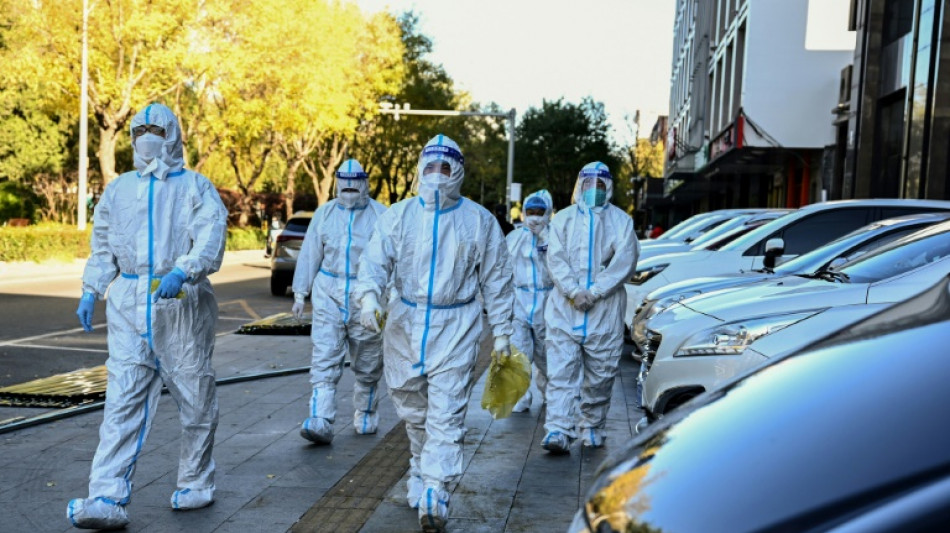
Confusion, fear cloud China's path out of zero-Covid / Photo: Noel CELIS - AFP/File
 Zuckerberg skewered again on screen in 'The Social Reckoning'

 Fiji urges 'just' climate transition, financing at pre-COP gathering

 Thailand's Jeeno overcomes late wobble to win Lotte Championship
 Brazil heads to run-off as Bolsonaro pulls off shock first place finish over Lula

 EU, China to hold Beijing talks to avert trade war
 Bolsonaro edges past Lula as nail-biter Brazil vote goes to a run-off
 Rubio visits Iceland as US boosts Arctic presence
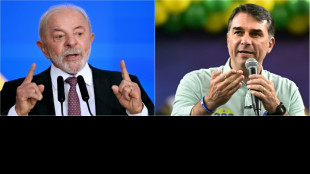 Bolsonaro leads Lula as nail-biter Brazil vote goes to a run-off

 Patriots inflict first Bills defeat as Chiefs keep winning

 InterContinental Hotels Group PLC Announces Transaction in Own Shares - October 05
 Pacific nations take centre stage at 'pre-COP' climate summit
 Ronaldo can return to Portugal team if he wants: coach Jesus

 Portugal move into Nations League knockout stage, Germany held

 Ronaldo-less Portugal beat Norway to reach Nations League quarters

 Bosnian Serb strongman claims election win, thanks Trump and Putin
 Israel wear black armbands in Ireland tie over Hamas attack
 'I fear it could drag on': anxiety takes hold in Ethiopian city wrested from rebels

 Brazil's Lula and Flavio Bolsonaro face off in knife-edge election

 UK Green party adopts 'Zionism is racism' policy
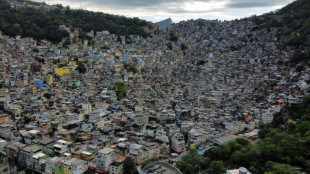 Rio favela residents vote with little hope

 Evenepoel puts worlds 'disappointment' to bed with European crown

 Two-time winning Arc trainer Rouget bows out in emotional farewell

 Battling Djokovic stuns top seed Zverev at China Open

 Spy chief Clayton, the Trump loyalist tech bosses trust on AI
 UK's Glastonbury festival tickets sell out in 45 minutes
With megacities under lockdown, infection numbers climbing and sporadic protests, China's Covid-19 policy has reached a stalemate as authorities persist with seeking to contain the virus while trying to keep the economy alive.
China is the only major economy still attempting to stamp out the domestic spread of the virus, shutting down entire cities and placing contacts of infected patients into strict quarantine.
A series of new rules announced by Beijing earlier this month appeared to signal a shift away from the strategy, easing quarantine requirements for entering the country and simplifying a system for designating high-risk areas.
Yet daily cases driven by the evasive Omicron variant have neared 30,000 -- low compared to most other large countries but reaching peaks unseen since the chaotic days of Shanghai's harsh lockdown in the spring.
That has caused whiplash among China's urban residents, as officials first eased restrictions before reimposing curbs, all the while claiming to be finetuning the zero-Covid strategy personally championed by President Xi Jinping.
And the flip-flopping has rattled investors, causing global financial markets to wobble.
Yanzhong Huang, senior fellow for global health at the Council on Foreign Relations, told AFP it was too early to say if the new rules "signal that the central leadership is willing to give up zero-Covid anytime soon".
"Local governments' incentive structure has not been fundamentally changed by the new adjustments," Huang said, noting that lower level officials were still being held accountable for outbreaks.
- Mixed signals -
Chinese officials have responded to growing infections this month with vague and seemingly contradictory messaging that has sparked public confusion.
Multiple cities cancelled mandatory regular Covid tests last week, with some backtracking within days.
One of the capital's largest districts, Chaoyang, abruptly shuttered testing booths in its commercial areas early last week, with the faint explanation that it was in line with the central government's new Covid rules.
The closures were reversed the next day after local media reported that office workers had been left trawling residential compounds for hours in search of an open testing booth as public spaces tightened testing requirements over a surge in cases.
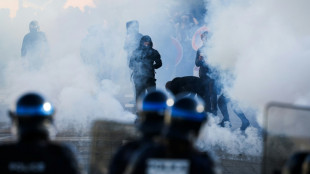
Public anger over seemingly arbitrary restrictions and sudden disruptions has erupted in numerous protests in recent months, including in southern China's Guangzhou this month when hundreds of residents took to the streets.
"Most officials in China know that the policy as it is no longer makes sense, but no one can fail to implement it as it is Xi's policy and must be upheld," Steve Tsang, director of the SOAS China Institute in London, told AFP.
"We are seeing some adjustments being made without sufficient clarity," he said.
Alfred Wu, associate professor at Singapore's Lee Kuan Yew School of Public Policy, said there was a growing tension between the goals of the central government and those of local officials.
"The anger actually comes from ordinary people and also local public officials," whose resources and time are spent overwhelmingly on zero-Covid measures, Wu told AFP.
- Reopening risks -
Another year of zero-Covid could mean the "Chinese economy will be derailed and social tensions may reach a tipping level, which threatens regime stability and may even cause a legitimacy crisis", Huang of the CFR said.
But opening up too suddenly could also threaten stability, as the country may "face a viral wave that results in mass die-off and quickly overwhelms its fragile healthcare system", he told AFP.
China has not yet approved more effective mRNA vaccines for public use, and only 85 percent of adults over 60 had received two doses of domestic vaccines by mid-August, according to Chinese health authorities.
Nomura analysts said on Monday the road to reopening could be "slow and bumpy".
"Reopening could be back and forth as policymakers may back down after observing rapid increases in cases and social disruptions," they said in a report.
They predicted a negative impact on GDP growth when Covid cases surge after the zero-Covid policy is lifted, as "a large percentage of the Chinese population may still believe Omicron has a high mortality rate."
Messaging on the virus will be a major challenge for Chinese authorities as they navigate a return to normality.
"The scary propaganda about the virus and how other countries have fared worse than China, ironically, is coming back to bite CCP leaders who may now indeed be eager to relax the very invasive and costly anti-Covid measures," Fei-Ling Wang, international affairs professor at Georgia Tech, told AFP.
"A quick turnaround to open up would risk losing face for the leaders," he said.
P.M.Smith--AMWN