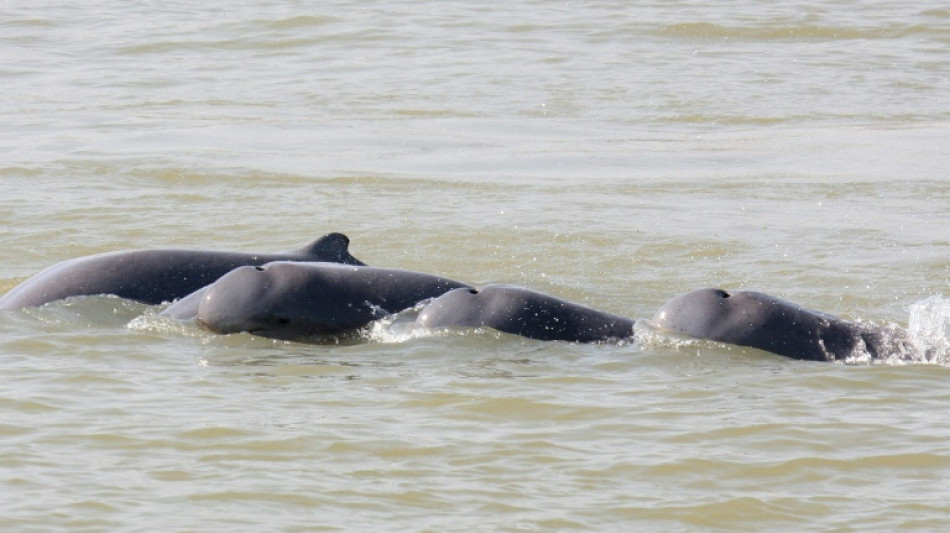
Cambodian leader orders Mekong safe zones to save rare dolphins / Photo: Handout - Wildlife Conservation Society/AFP
 Microsoft Updates Xbox PC App with 60% Faster Startup and Redesigned Interface

 Early Polar Vortex Disruption Creates Uncertain Winter Outlook for Pennsylvania

 Pakistan Demands Grant-Based Climate Finance at COP31 to Avoid Debt Trap

 E Pellicci Pop-Up at Selfridges Brings Back Nostalgic School Cake

 Coronation Street's Debbie Webster Steps Down as Dementia Storyline Intensifies
Cambodian premier Hun Sen on Monday ordered the creation of conservation zones on the Mekong river to protect critically endangered dolphins, after three were killed by fishing nets and lines last month.
The Irrawaddy dolphins, known for their bulging foreheads and short beaks, once swam through much of the mighty Mekong but in recent decades have been limited to a 190-km (118-mile) stretch from northeast Kratie province to the border with Laos.
Their population has been in steady decline since the first census was taken in 1997, dropping from 200 that year to around 90 currently due to habitat loss and destructive fishing practices.
Speaking at a ceremony in Kratie, Hun Sen ordered authorities to set up floating markers around designated protection zones, in which there will be an "absolute ban" on all fishing.
"The Mekong river, which is home to near-extinct dolphins and fish species, must be well managed so that dolphins will not die from entanglement in gillnets," he said. Gillnets are nets strung across parts of the river to snare fish.
"The dolphin areas must be protected completely," he said, adding that the animals' presence contributed to local tourism.
Three healthy breeding-age dolphins died within a week of each other last month. The deaths alarmed conservationists, who called for both day- and night-patrols in order to protect the remaining dolphins from being killed by illegal fishing.
Eleven dolphins died in 2022, bringing the total number of dead dolphins to 29 in the last three years, according to the World Wildlife Fund (WWF).
In a statement, WWF called on all relevant authorities "to enact and roll-out appropriate measures to urgently address the mortality" caused by the threats of gillnets and electro-fishing that take place in the dolphin conservation areas.
Cambodia is home to the largest population of Irrawaddy dolphins, which are also found in rivers and lakes in Myanmar, Indonesia, India and Thailand.
G.Stevens--AMWN