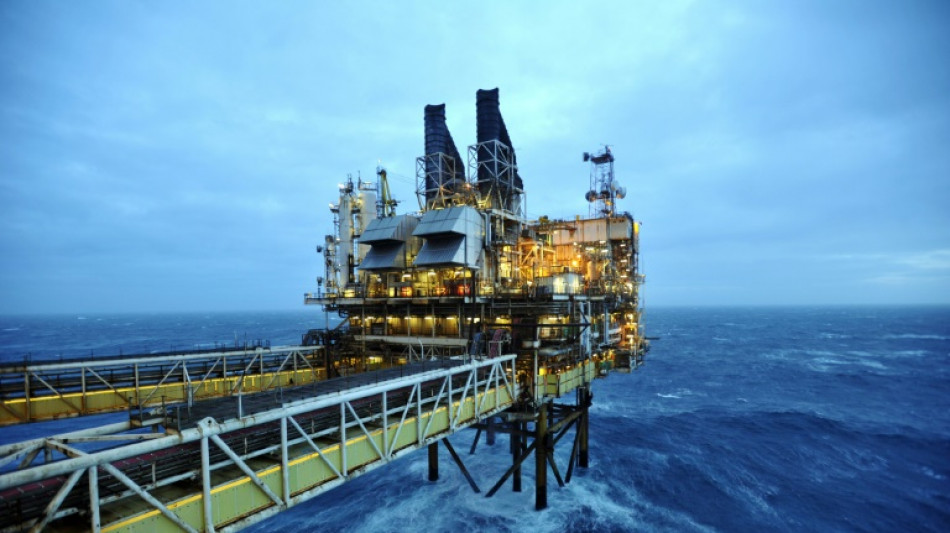
Oil permits and wind crisis threaten UK net zero pledge / Photo: ANDY BUCHANAN - POOL/AFP/File
 Taiwan lawmakers approve $7.6 bn drone budget as China threat grows

 TechCentral.ie Daily Briefing: Agentic AI Firm Doubles Headcount to 60
 KiiChain Integrates TRON to Expand 24/7 On-Chain FX and Stablecoin Payments

 Japan to survey animal cafes over hygiene, welfare concerns

 Desperate families search for missing after Nepal floods

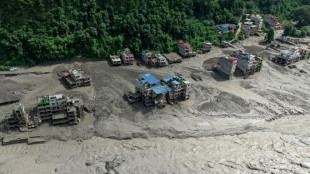 The missing in Nepal-Tibet flash floods
 Search for 1,300 missing after deadly Nepal-Tibet floods

 Once a top export, prized Kashmir carpet fades

 Search for 1,000 missing after deadly Nepal-Tibet floods

 Park So-yeon first woman to play for eSports powerhouse South Korea
 Yayoi Kusama: Japan's kaleidoscopic, troubled 'polka dot queen'

 Euro champ Hunt 'on her toes' against world's best in Zurich 100m
 Asian chip firms lifted by Nvidia forecast but broader markets struggle

 Search for missing after Nepal-Tibet floods kill 165

 Qantas says profits slump as fuel costs surge
 Lofty bond yields, Bessent's intervention pose challenge to Fed's Warsh
 The foreigners missing in Nepal's flash floods

 Bond yields are surging: Here's why that could spell trouble

 Fed's Cook rejects Trump mortgage fraud claims

 Guardian Metal Resources PLC Announces Pilot Mountain Technical Report Summary

 Meta, US states agree $18 bn settlement in landmark teen safety case

 What scientists know so far about Nepal's deadly floods

 US general visits Colombia to discuss war on drugs

 Meta settlement puts social media industry on notice: 'There will be more'
 NFL owners approve record Seahawks sale

With the provision of a swathe of new oil and gas exploration licences and a crisis in offshore wind energy, clouds are gathering over the UK's net zero promises.
The Conservative government of Rishi Sunak in July promised "hundreds" of new licences for oil and gas exploration and production in the North Sea, arousing the anger of environmentalists.
The NGO Greenpeace later covered the prime minister's private residence with a huge "oil black" tarpaulin to denounce the "drilling frenzy".
"Any government support for continuation of fossil fuels has a negative impact on the transition because it drives investors away", Erik Dalhuijsen, co-founder of Aberdeen Climate Action, told AFP on the sidelines of the Offshore Europe conference in Aberdeen, Scotland, this week.
"Opening new oil fields, I don't see how that's consistent with net zero," added Jean Boucher, a member of activist group Extinction Rebellion and an environmental sociologist.
More bad news for the wind energy sector, which is at the heart of the UK's plan to become a net zero carbon emitter by 2050, arrived this week when the government's auction of permits to build offshore wind farms failed due to a lack of takers.
Russia's invasion of Ukraine has caused inflation and production costs to soar around the world, raising the cost of steel and other materials used to build wind turbines.
Electricity tariffs that energy companies can charge have also been capped, leading companies in the sector to claim that offshore wind projects are no longer profitable.
Greenpeace called the failed auction the "biggest disaster for clean energy in almost a decade", putting the net zero target "in jeopardy".
Swedish energy company Vattenfall has already thrown in the towel on one major project, Norfolk Boreas, and others may follow.
"I know for a fact other companies are looking really hard at their licences and their ability to invest" in wind power in the UK, Michael Tholen, sustainability director of energy lobby Offshore Energy UK (OEUK), told AFP at the Offshore Europe conference.
Mads Nipper, boss of Danish electricity giant Orsted, also warned that "offshore wind ambitions will only happen with sane auction frameworks and realistic prices".
- Shifting priorities -
A few days before Friday's embarrassing admission of failure, Downing Street announced that it was lifting a de facto ban on the construction of new onshore wind farms, which was hailed as a step in the right direction, but too timid by some.
The war in Ukraine and political upheaval at home has seen London's priorities shift.
"There's been a lot of political change in the UK over the last few years," Clare Bond, professor of geophysics at Aberdeen University, told AFP.
"There is this interplay between energy security and net zero...but we really need to question how quickly we're getting toward net zero and what we can do to accelerate that," she added.
NGOs, experts and companies in the sector are calling for urgent reform of the tendering process, for example by introducing a minimum profit for energy companies, as suggested by Dalhuijsen.
Others stress the need for long-term stability in taxation and regulation.
"It's getting the right framework and the confidence of the industry to take forward those investments," said Bond.
At least £100 billion of private sector investment in hydrocarbons or offshore wind is needed if the UK is to meet its 2050 carbon neutrality target and secure its energy supply, OEUK argued in a report last week.
For Dalhuijsen, the goal of carbon neutrality by 2050 is still achievable, "but it's getting more and more difficult.
"We need to bring the emissions down and any year there is a delay it becomes almost twice as difficult," he warned.
F.Bennett--AMWN