Giant redwoods thriving in the UK: experts / Photo: Robyn Beck - AFP
 LIV Golf to lay off majority of staff

 How narwhal 'scientists' track Arctic warming

 Iran says US sanctions will achieve nothing

 Essential Dolly: five key Parton songs
 Veteran promoter Warren says it's Joshua's job to agree Fury fight

 Ex-champ Wawrinka gets last-minute wildcard to US Open

 Brennan blasts to Vuelta stage five victory, Pogacar holds lead
 What could change for US teens on Instagram and Facebook
 Meta, US states agree $16.7 bn settlement in landmark teen safety case
 'Point of no return' if Israel-Hamas truce fails: US envoy to Gaza board

 Barcelona holding out hope for Alvarez as Atletico resist sale

 Werro basks in new status, shelves world record talk

 Bill Gates warns world unprepared for AI upheaval
 Prince Harry and family arrive back in Britain: UK media

 German plan for sugar tax on Coke Zero fizzles out

 Deadly flood hits Nepal-Tibet border, hundreds unaccounted for

 Tongue says Root has left England in no doubt over conduct standards

 Flags lowered across US for country music legend Dolly Parton

 Stocks gain as oil drops on Mideast hopes

 Bouaddi joins Man City for Premier League teenage record £85.6 mn
 Reclusive Hungarian author Peter Nadas dies aged 83

 Man City sign Lille's Bouaddi for 100 mn euros

 Sooriyabandara, Mendis lead Sri Lanka fightback after follow-on
 With ropes and chants, thousands move Japanese castle
 Zurich Diamond League: five events to watch
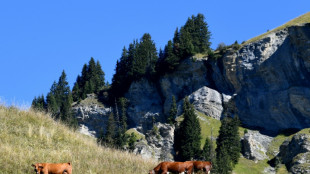
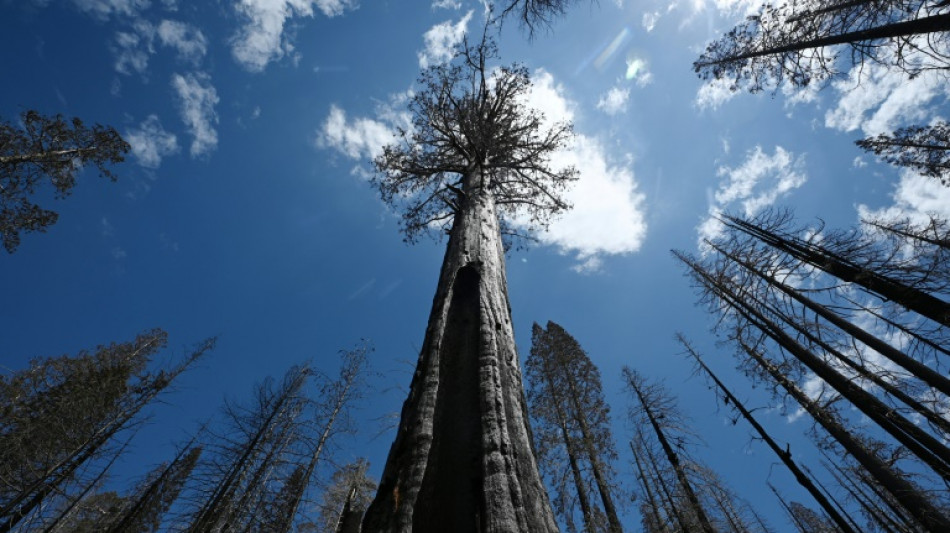
Endangered giant redwood trees are thriving in the UK but could also be significantly contributing to capturing carbon emissions, according to research published on Wednesday.
The towering giant sequoias, which can soar as high as 90 metres (295 feet) and live for up to 3,000 years, were first planted in the UK in the mid-19th century.
There are now some 500,000 across the country -- more than the 80,000 or so in their native California.
Research by University College London (UCL) and published in the Royal Society Open Science journal, found that "the most massive species" of redwood can potentially pull an average of 85 kilograms of carbon from the atmosphere per year.
It is the first time the growth rate and resilience of the trees have been analysed in the UK.
"Giant sequoias are some of the most massive organisms on Earth and in their native range make up some of the most carbon-dense forests in the world due to their great age," said Ross Holland, the lead author of the research.
"We found that UK redwoods are well adapted to the UK and able to capture a large amount of carbon dioxide."
Sequoias, which have wide trunks and can survive blazes that would wipe out forests of other tree species, were first imported to the UK as seeds and seedlings in 1853.
The trees, which were rare at the time, became a symbol of wealth and power in Victorian-era Britain.
Many were planted at the entrance to large houses and estates.
To assess the adaptability of giant sequoias to the UK's milder climates and varied rainfall patterns, the researchers compiled a map, pinpointing the locations of nearly 5,000 individual trees across the country.
They analysed 97 individual trees at Benmore Botanic Gardens in central Scotland, at Kew Garden's Wakehurst Place in the south of England and at a mixed woodland in Havering Country Park east of London.
Terrestrial laser scanners were used to map the trees in 3D, enabling researchers to accurately measure the heights and volumes of the trees without having to cut them down.
The tallest was approximately 54.87m tall -- towering over most native UK species but modest in comparison to its far older American relatives.
Researchers calculated average growth rates of the trees at the three sites, which they said would be important for the analysis of climate changes in the future.
"Currently, these trees are probably more important for their aesthetic and historical interest than they are for solving the climate crisis," said senior author Mat Disney.
"But as more are planted we need to know how they will grow."
F.Pedersen--AMWN