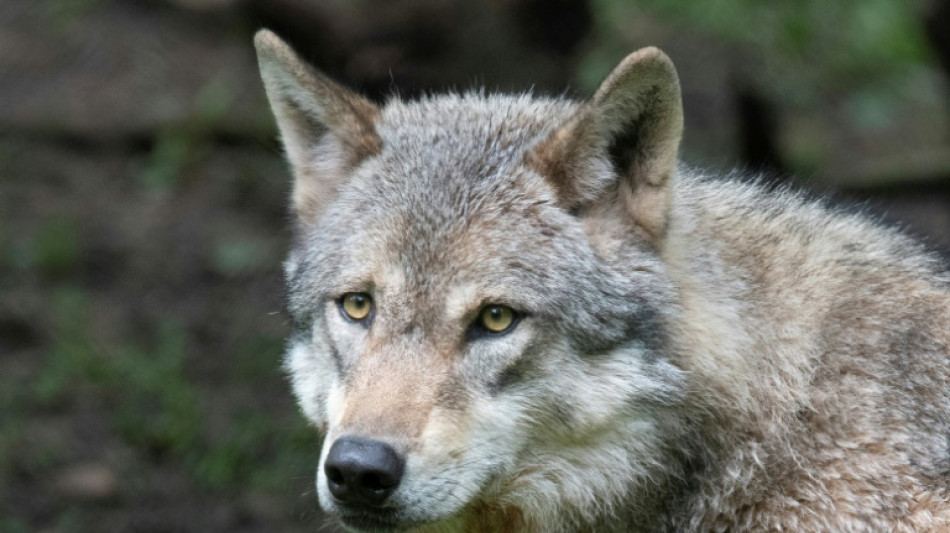
Protections drop for wolves in most of Europe / Photo: THOMAS KIENZLE - AFP
 US robotaxi firm Waymo plans to launch in Germany

 'Here to win': Xavi vows to restore pride in Dutch football

 Cameroon's Baleba joins as Man United boost midfield options

 'Shocking' book about Putin's private life wins French literary prize

 Pogacar storms to Vuelta a Espana stage four solo triumph

 Canada unveils counter-tariffs of 15-50% on US goods

 Volkswagen boss braces German workers for more job cuts
 Olympic champion Brignone to undergo new knee operation

 The summer climate change became scorching reality for Europe

 Root angered by England's off-field 'stupid mistakes'

 Welsh rugby league 'giant' Boston dies, aged 92

 Root annoyed by England's off-field 'stupid mistakes'

 One million Afghan children suffer 'life-threatening' malnutrition: UN

 Sri Lanka trail India by 238 runs in second Test

 West Bank settlers attack AFP journalists

 MEXC Kicks Off MOVE Carnival With 0-Fee Trading and 1M USDT in Rewards

 Human rights in Myanmar hitting a 'new low': UN

 Son of Luxottica founder quits after succession row

 One million Afghan children suffering 'life-threatening' malnutrition: UN

 Real Madrid's Mourinho happy with squad despite losing out on Rodri

 Sri Lanka slump to 216-7 at tea in second India Test

 US delays Lockerbie bombing trial over new evidence

 Rohingya refugees protest dire conditions in Bangladesh camps

 Lego net profit up 32% in first half, 'stronger than expected': CEO to AFP

 German GDP growth revised upwards, defying Iran war turmoil

Wolves became less protected in most of Europe on Friday as new conservation regulations came into force, except in three countries that objected to the move including the United Kingdom, the Council of Europe said.
The move allows hunting to resume under strict regulation, which activists fear could result in a large number of wolves being shot dead.
Activists have said the measure will upset the recovery made by the species over the past 10 years after near extinction a century ago, but farmers say their growing numbers are a threat to their livestock.
Members of the Bern Convention, tasked with the protection of wildlife in Europe and some African countries, in December agreed to lower the wolf's protection status from "strictly protected" to "protected".
The decision "was set to enter into force three months later, unless objected to by at least one-third of the parties to the convention," the Strasbourg-based Council of Europe said.
Of the 50 parties to the convention -- an international treaty of the Council of Europe -- at least 17 would have needed to protest.
Instead, "three parties formally lodged objections: the Czech Republic, Monaco, and the United Kingdom. As a result, the decision to modify the protection status of the wolf does not apply to these three parties," it said.
The new "protected" status "mandates regulation of the species' exploitation to prevent endangerment, implementing measures such as closed seasons and regulating the sale, keeping, transport, and offering for sale of live and dead animal," the Council of Europe said.
Grey wolves were virtually exterminated in Europe 100 years ago but their numbers have practically doubled to the current population of 20,300, mostly in the Balkans, Nordic countries, Italy and Spain.
The parties to the convention include 45 members of the Council of Europe, four African nations -- Burkina Faso, Morocco, Senegal and Tunisia -- and the European Union.
The European Union in September proposed the plan to lower the protection status of wolves as they increase in numbers and come into more frequent contact with human activity and livestock.
A.Jones--AMWN