Kenya NGO saves turtles from nets, plastic and rising tides / Photo: Fredrik Lerneryd - AFP
 Galloway accuser could not foresee publishing-sector fallout, lawyer argues

 New York City Center revives In the Heights as a timely community story

 Vessel operator seeks witnesses after Vancouver grounding

 US Air Force deploys F-16 fighters to remote Aleutian base for readiness drill

 Bezos grant helps Seattle nonprofit move thousands of families toward housing

 Shrini Srivastava joins crew of Varanasi-Delhi Vande Bharat Sleeper service

 Nearly Half of Australian Workers Overqualified, Survey Finds

 RBI eases export-declaration compliance for individual service exporters

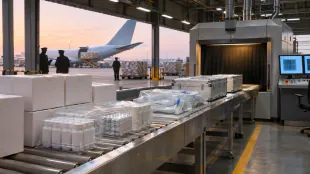 India proposes more import entry points for drugs and medical devices

 Derek Tierney Outlines Ten-Year Strategy for National Digital Health System

 NBC’s Steve Kornacki Reveals Tech Habits Ahead of Midterm Elections

 India and Israel oppose UN draft on regional conventional arms control

 BLS Polymers shares open 65.3% above IPO price

 Capital-markets shares rally as Motilal Oswal and Angel One lead gains

 Latino Voters Defy ICE Fears, Turn Out in Record Numbers for Midterms
 ITC shares rise as analysts anticipate gradual cigarette-business recovery

 Reliance rally puts historical one-year return pattern in focus

 Kuwait edges Oman 1-0 in veterans Gulf Cup in Doha

 Saudi Aramco quarterly profit climbs 34.6% amid elevated oil prices
 Washington reports movement in Iran negotiations aimed at preventing escalation

 Korea’s Labor Share of GDP Hits Record Low Amid Semiconductor Boom

 littlefish and Halo Dot Partner to Replace Payment Terminals with SoftPOS

 Kuwait inspectors destroy 115 kilograms of unverified meat in Farwaniya

 Egypt Accelerates Construction of 341km Sinai Railway Linking Arish and Taba

 John Schneider Admits Owes Millions in 'Dukes of Hazzard' Divorce Battle

A small charity on the Kenyan coast has become vital to the region's majestic turtle population, saving thousands from poachers, fishermen's nets and ever-worsening plastic pollution.
On the beach of the seaside town of Watamu, it takes four men to heave the huge Loggerhead sea turtle into the back of a car.
She has just been saved from a fishing tackle and will be taken to a nearby clinic to be checked for injuries, then weighed, tagged and released back into the sea.
A Kenyan NGO, Local Ocean Conservation (LOC), has been doing this work for almost three decades and has carried out some 24,000 rescues.
"Every time I release a turtle, it's a really great joy for me. My motivation gets stronger and stronger," said Fikiri Kiponda, 47, who has been part of LOC's 20-odd staff for 16 years.
LOC began life in 1997 as a group of volunteers who hated seeing the creatures being eaten or dying in nets.
Turtles are still poached for their shells, meat and oil.
But through the charity's awareness campaigns in schools and villages, "perceptions have significantly changed", said Kiponda.
LOC, which relies mostly on donations, compensates fishermen for bringing them injured turtles.
More than 1,000 fishermen participate in the scheme and mostly do so for the sake of conservation, the charity emphasises, since the reward does not offset the hours of lost labour.
- Floating turtles -
At the NGO's nearby clinic, health coordinator Lameck Maitha, 34, says turtles are often treated for broken bones and tumours caused by a disease called Fibropapillomatosis.
One current in-patient is Safari, a young Olive Ridley turtle around 15 years old -- turtles can live beyond 100 -- transported by plane from further up the coast.
She arrived in a dire state, barely alive and with a bone protruding from her flipper, which ultimately had to be amputated -- likely the result of fighting to free herself from a fisherman's net.
Safari has been recovering well and the clinic hopes she can return to the sea.
Other frequent tasks include removing barnacles that embed themselves in shells and flippers, weakening their host.
But a growing danger is plastic pollution.
If a turtle eats plastic, it can create a blockage that in turn creates gas, making the turtle float and unable to dive.
In these cases, the clinic gives the turtle laxatives to clear out its system.
"We are seeing more and more floating turtles because the ocean has so much plastic," said Maitha.
- Survivors -
LOC also works to protect 50 to 100 nesting sites, threatened by rising sea levels.
Turtles travel far and wide but always lay their eggs on the beach where they were born, and Watamu is one of the most popular spots.
Every three or four years, they produce hundreds of eggs, laid during multiple sessions over several months, that hatch after around 60 days.
The charity often relocates eggs that have been laid too close to the sea.
Marine biologist Joey Ngunu, LOC's technical manager, always calls the first to appear Kevin.
"And once Kevin comes out, the rest follow," he said with a smile, describing the slow, clumsy procession to the water, preferably at night to avoid predators as much as possible.
Only one in a thousand reaches adulthood of 20-25 years.
"Living in the sea as a turtle must be crazy. You have to face so many dangers, fish and poachers, and now human pressure with plastic and commercial fishing," he said.
"Turtles are definitely survivors."
J.Williams--AMWN