Germany's dry rivers spark battle on engineering vs restoration / Photo: Ina FASSBENDER - AFP/File
 Taiwan gender-row boxer Lin Yu-ting wins 'monumental' Asian Games gold
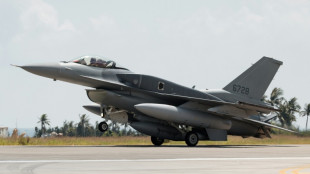 Taiwan receives its first US-made F-16V fighter jets
 Lula, Bolsonaro trade scandal fire in final scramble for votes

 Not-so-brave new world: virtual taekwondo makes Asian Games debut

 Arab Israeli candidate drops out of election race

 Israel courts Europe's far right, finding friends but also unease

 Lula, Bolsonaro both snub final debate before Brazil election

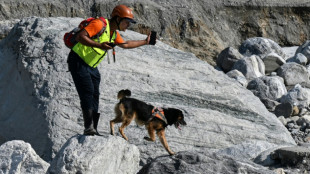 Nepal's grim DNA puzzle to identify flood dead

 EU nations to hold emergency meeting on soaring diesel prices amid US pressure

 Anthropic's Dario Amodei: AI's most visible CEO and enigma

 OpenAI says three staffers fired for mishandling 'sensitive' info
 InterContinental Hotels Group PLC Announces Transaction in Own Shares - October 02

 Portugal win without Ronaldo as Klopp's Germany get first victory
 Wemby: 'Very sad' to see players endorse betting firms

 Manchester City Women scrape draw with Real Madrid

 India, Australia and Pakistan in same World Cup group

 Daryz's hopes of repeat Arc win boosted by draw
 Steelers ship disgruntled defender Porter to Cowboys

 Klopp gets first win as Germany boss

 Bolivia's attorney general arrested on drugs, money laundering charges

 Raiders host Chiefs in battle of unbeaten division rivals
 Lowest Fee Bitcoin ATMs Announces Launch of More Than 400 ATMs Nationwide

 G20 against 'weaponization' of food trade: French minister

 Female US inmate in critical condition after botched execution

 Spotlight on UK-UAE ties amid Manchester City scandal
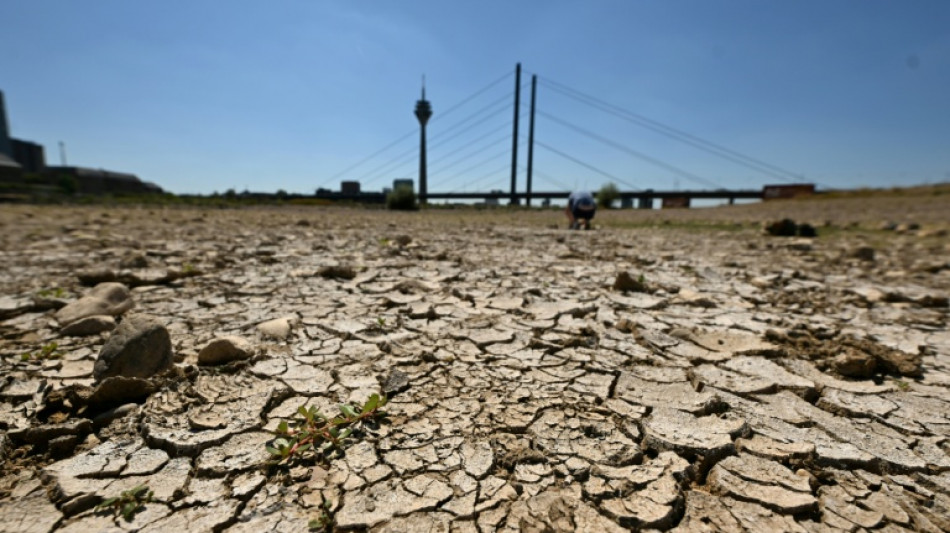
As a heat wave dries Germany's rivers, government ministers are at odds over what to do about it -- re-engineer the waterways or restore them to their natural state.
The debate has flared as precariously falling water levels have revealed vast sandbanks on the Rhine, Danube, Elbe and other rivers, severely impacting cargo shipping crucial for many industries.
With climate change driving new heat records and longer dry spells in Europe and beyond, scientists warn that the problem will intensify in coming years.
Germany's new transport minister, Steffen Bilger, convened a recent crisis summit with shipping, port and logistics operators on the problem impacting the European Union's biggest economy.
The key short-term counter measure he announced was to temporarily lift a ban on truck transports on Sundays and public holidays to help ease cargo bottlenecks.
In the longer term, Germany needs to dredge deeper navigation channels and develop a new class of low-draft ships, argued Bilger, a member of Chancellor Friedrich Merz's conservative CDU/CSU bloc.
"We must make our waterways more efficient while simultaneously making ships suitable for times of low water," Bilger said Wednesday after talks with state transport ministers.
"That is why we are pushing ahead with important expansion projects," he added, vowing that environmental protection would be "kept firmly in mind".
Speaking in Berlin on the same day, Environment Minister Carsten Schneider of junior coalition partner the centre-left SPD offered a radically different vision, centred on restoring rivers.
After a campaign over hundreds of years saw rivers tamed for commercial use, he urged a shift back "toward natural rivers featuring meandering branches and floodplains that retain water across the landscape".
- Shift in thinking -
"In past centuries, Germany was a land rich in water," he said. "Great effort went into straightening rivers to harness them for our use, but also into enabling agriculture by draining the wetlands."
Now, however, climate change has turned water into a scarce resource, requiring a shift in thinking, Schneider argued.
His views echoed those of environmental groups that oppose deepening shipping channels.
"They do more harm than good," said Beatrice Claus of the WWF.
"Expansion and straightening cause water to drain away into the North Sea and Baltic Sea even faster, rather than being retained in the surrounding area."
Dredging is not a permanent solution, critics argue, because rivers constantly fill the channels with new sediment.
Environmentalists also say river bank fortifications destroy shallow-water zones where aquatic life and insects breed -- and the adjoining natural floodplains that act like sponges at times of excess water.
"Dredging rivers creates the illusion of taking action," said Olaf Bandt, head of environmental group BUND.
For now, most German states have lifted the Sunday trucking ban -- banking on a mode of transport with a far heavier carbon footprint than river boats.
Thomas Puls of the German Economic Institute said he did not expect the move to make much difference, telling news weekly Der Spiegel that it takes at least 150 trucks to replace a single inland waterway vessel.
The head of the opposition Greens, Felix Banaszak, meanwhile, accused the Merz government of doing too little about the root cause of the problem, the climate crisis.
"The rivers are drying up. Ships cannot operate. Yet the new transport minister comes up with nothing more than deeper shipping channels and different types of vessels," Banaszak told the Rheinische Post daily.
"It is characteristic of this government that everything is being discussed except climate protection ... Instead of addressing the root causes, the government applies Band-Aids to ever-widening wounds."
H.E.Young--AMWN