US veterans sick after burn pit exposure want recognition -- and compensation
 Why SpaceX IPO plan is generating so much buzz

 US envoy to meet Zelensky, Europe leaders in Berlin this weekend
 US unseals warrant for tanker seized off Venezuelan coast

 Machado urges pressure so Maduro understands 'he has to go'

 Leinster stutter before beating Leicester in Champions Cup

 Crypto firm Tether bids for Juventus, is quickly rebuffed

 US Treasury lifts sanctions on Brazil Supreme Court justice

 Wembanyama expected to return for Spurs in NBA Cup clash with Thunder

 UK's king shares 'good news' that cancer treatment will be reduced in 2026

 Iran detains Nobel-prize winner in 'brutal' arrest

 UK health service battles 'super flu' outbreak
 Democrats release new cache of Epstein photos
 'Don't use them': Tanning beds triple skin cancer risk, study finds

 Argentina fly-half Albornoz signs for Toulon until 2030
 Salah in Liverpool squad for Brighton after Slot talks - reports

 Draw marks 'starting gun' toward 2026 World Cup, Vancouver says

 Salah admired from afar in his Egypt home village as club tensions swirl

 Brazil left calls protests over bid to cut Bolsonaro jail time

 US plan sees Ukraine joining EU in 2027, official tells AFP

 Iran frees child bride sentenced to death over husband's killing: activists

 Youthful La Rochelle name teen captain for Champions Cup match in South Africa

 British 'Aga saga' author Joanna Trollope dies aged 82

 EU agrees three-euro small parcel tax to tackle China flood

 Maresca 'relaxed' about Chelsea's rough patch

 Nowhere to pray as logs choke flood-hit Indonesian mosque

Back in 2006, US National Guard sergeant Heath Robinson oversaw the burning of waste at a military base in Iraq.
Fourteen years later, he died of lung cancer, leaving his family to advocate for veterans like him who were exposed to toxic fumes while in uniform.
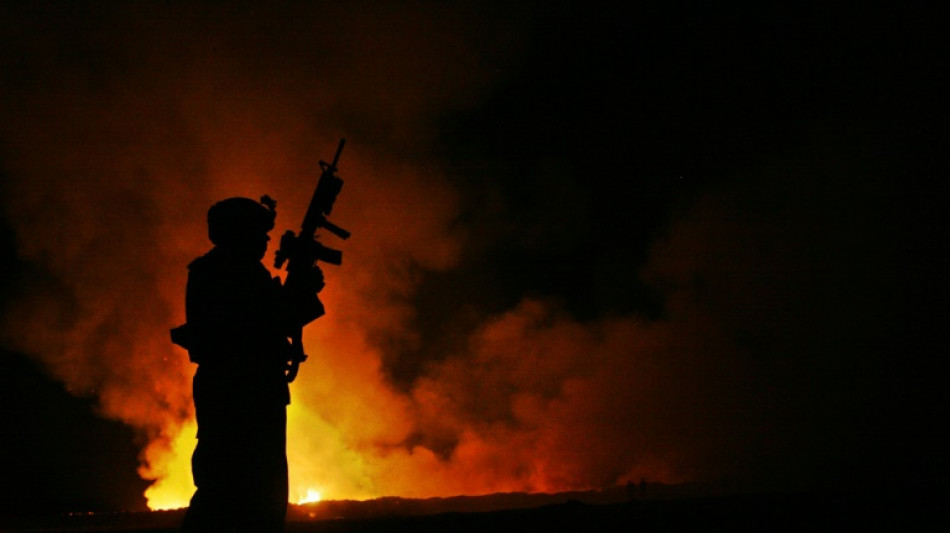
These so-called burn pits have been commonly used by the US military in post-September 11 conflicts, and are lit to get rid of everything from plastic bottles to human waste to old tires -- all incinerated with the aid of jet fuel.
But the fumes from these open fires are now suspected of causing a range of illnesses among soldiers who were deployed at such bases, from chronic respiratory ailments to a variety of cancers.
President Joe Biden himself says he thinks these pits were at the root of the brain cancer that claimed the life of his son Beau, who served in Iraq in 2008.
The Department of Veterans Affairs estimates that some 3.5 million US service members were exposed to toxic smoke in Afghanistan, Iraq or other conflict zones, and more than 200,000 veterans have registered on lists of people who came into contact with burn pits.
- 'Ultimate soldier' -
There is little scientific literature on the health effects of burn pit exposure to determine if it does in fact make people sick.
But in 2018, the Pentagon funded a $10 million study that concluded three years later that there was "a potential cause and effect relationship between exposure to emissions from simulated burn pits and subsequent health outcomes."
And in 2019, the Department of Veterans Affairs established something called the Airborne Hazards and Burn Pits Center of Excellence, which was tasked with studying the dangers of burn pits and is staffed by epidemiologists and environmental health experts.
Robinson, a combat medic who served in the Army National Guard, was in Kosovo in 2005, and then spent 13 months in Iraq starting in 2006.
For nearly three years of his deployment, he oversaw a burn pit at a base in Baghdad called Camp Victory, working just 15 yards from the roaring flames.
"We feel that the most potent exposure came from that," said Susan Zeier, who is joining her daughter Danielle, Robinson's widow, to tell the story of this "ultimate soldier" who died of cancer in 2020.
- 'Into harm's way' -
Along with US lawmakers, Zeier and Robinson are lobbying for passage of a bill called the PACT Act so that the Department of Veterans Affairs will recognize illnesses stemming from exposure to burn pits.
The bill was approved by the House of Representatives last week but faces a less certain fate in the Senate, even though the legislation is backed by Biden.
On Tuesday, the president met with veterans during a trip to Texas dominated by the issue.
"Not only did they face the dangers in the battlefield, but they were breathing toxic smoke and burn pits," Biden said.
If these ailments are in fact officially recognized, affected veterans would get government-funded medical care and a disability pension.
As it stands, nearly 80 percent of veterans' requests to have suspected burn pit ailments acknowledged by the government are rejected, said Tom Porter, executive vice president of the Iraq and Afghanistan Veterans of America (IAVA).
"We owe it to them to at least ensure that they get the health and disability benefits that they deserve for volunteering to go into harm's way," said Porter, a former Navy officer who spent a year in Afghanistan in 2010 and 2011 and has been diagnosed with asthma.
An IAVA poll found that 82 percent of those questioned said they were exposed to burn pits or other airborne toxic chemicals. And of these people, 90 percent said they are or may be suffering from symptoms linked to that exposure.
However, Porter said his association is not actually advocating for the military to do away with burn pits, saying "that's not our expertise." And there is always waste where soldiers live.
"I understand the reality that we're going to go to war again. It just always happens," said Porter. "And we're going to have to get rid of things wherever we're at war."
D.Cunningha--AMWN