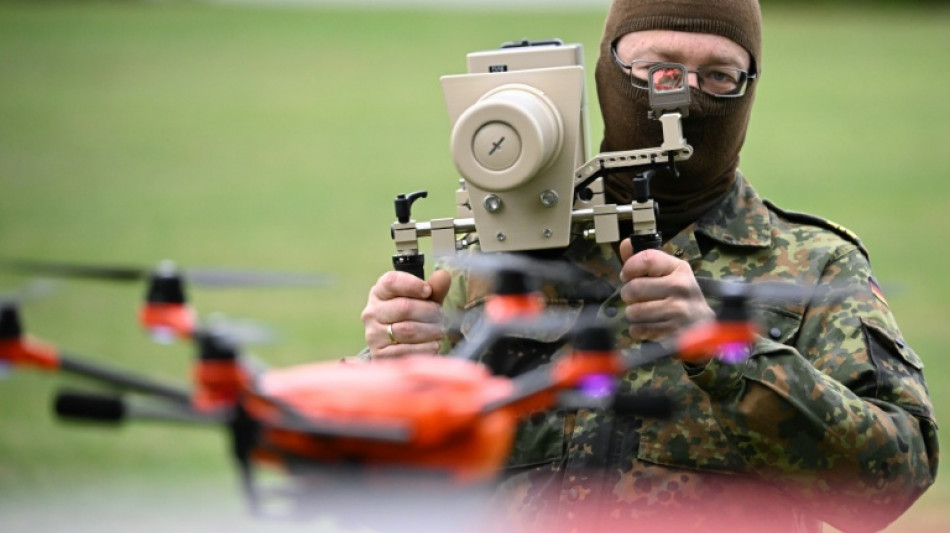
Germany to harden critical infrastructure as Russia fears spike / Photo: Tobias SCHWARZ - AFP/File
 Cleary leads NSW past Queensland to regain State of Origin crown
 MEXC Adds Nine Ondo Tokenized Stock and ETF Trading Pairs Tied to AI Infrastructure Demand

 Oil prices surge, stocks slide as Trump says Iran ceasefire over
 Sunken wrecks, hot seas threaten fishermen on Italian isle

 Rescuers search for survivors of China storms as super typhoon nears
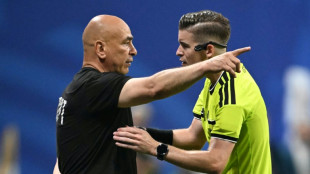 Egypt file complaint against referee after controversial World Cup exit
 Apple loses challenge against EU digital competition rules
 Trump says Iran ceasefire 'is over'
 Rescuers search for missing in China storms after 100,000 flee

 OpenAI to launch new model after US freeze
 UK museums at 'sharp end' of climate change challenge
 In Mauritania, Imraguen people's desert-ocean paradise under threat
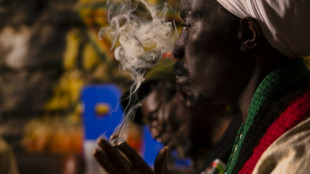
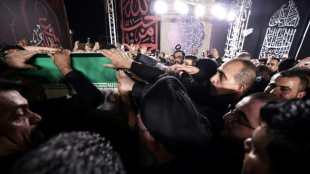 Iraq's holy cities host funeral processions for Khamenei
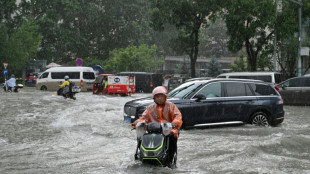 Rescuers search for missing in China storms after 100,000 evacuated
 Ex-Australia cricketer MacGill loses appeal against cocaine conviction
 Oil prices extend rally as US strikes on Iran revive geopolitical fears
 Iraq's holy cities to host funeral processions for Khamenei
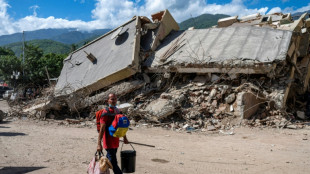
 In Venezuela's quake ruins, a baby is born

 What to know about the total solar eclipse due in August
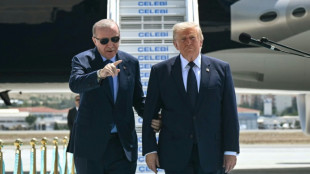 Trump, NATO allies to begin key talks at Turkey summit

 AIAI Holdings' Constellation Network Launches Gate AI: Real-Time Security for AI Applications
 Cocotree Kids Celebrates Five Years of Impact, Announces Inaugural Rise & Shine Breakfast
 Research Analyst Report on NanoViricides Rates Company "Outperform"; Separately, A "Fireside Chat" Interview of the Company's President Dr. Anil Diwan Hosted by Mr. Dave Donlin was Published by StockInvestor Daily

 Dealers United Becomes First to Launch Dynamic Automotive Inventory Ads on Reddit
 Hestia Insight and Escher AI Enter Strategic Partnership to Develop Enterprise AI Tools for Capital Markets
Germany plans to better protect its critical infrastructure with a new law on Thursday as surging tensions with Russia stoke fears of sabotage attacks and other national security threats.
Parliament will vote on legislation requiring power utilities, water companies and even some supermarket chains to reduce their vulnerability to terrorism, industrial accidents, natural disasters and public health emergencies.
The package, which aims to bring Germany in line with EU directives, would oblige some 1,700 essential services providers to step up physical security and alarm systems, carry out regular risk assessments and promptly report incidents.
The measures cover facilities that provide critical services to more than 500,000 people in sectors including energy, water, food, health, transport, IT, telecommunications, financial services and waste disposal.
A wake-up call came weeks ago in Berlin when a mid-winter arson attack on a high-voltage power cable claimed by a far-left militant group plunged tens of thousands of households into icy darkness for nearly a week.
The attack, which sparked public fury amid a slow response, has led the government to offer a one-million-euro ($1.1 million) reward this week for tips leading to arrests of the culprits, who called themselves the "Vulkangruppe" (Vulcan Group).
"The left-wing extremist attack on the Berlin power grid and all the many other attacks -- both small and large -- in recent months have shown that we simply have to protect our critical infrastructure better," Chancellor Friedrich Merz said Wednesday.
Information about such infrastructure should no longer be so easily available to the public, he said, calling for a shift from "transparency towards greater resilience".
Many security experts have welcomed the new critical infrastructure bill in principle, but others have harshly criticised it as too little too late.
Greens MP Konstantin von Notz, a security expert, told AFP that the government's response to the mounting threats had been "wholly inadequate" and that the new package is "far too late and too poorly crafted".
"We remain miles away from the urgently needed uniform protection of our critical infrastructures."
- 'Geopolitical threats' -
Europe's top economy, home to more than 83 million people, is a strong military supporter of Ukraine in its war against Russia and a central hub for NATO forces on the continent.
After decades of stability following the end of the Cold War, it is now scrambling to rebuild its military to deter Russia -- but also to improve resilience on the home front.
Defence Minister Boris Pistorius warned Tuesday of "the increasing number of hybrid attacks in many European countries, with critical infrastructure being targeted at the click of a mouse, data cables being cut in the Baltic Sea, drone-based espionage and media disinformation campaigns".
Private companies and the broader economy are also "feeling the direct impact of these geopolitical threats and risks in supply chains, energy supply and cyber security", he said.
Under the new law, operators of critical facilities will have to report incidents to Germany's Office of Civil Protection and Disaster Relief within 24 hours and follow up with a detailed report within one month.
They will also have to conduct training, exercises and awareness-raising for staff.
Business groups have complained they will face cumbersome new reporting duties and hefty fines for non-compliance.
The new law also calls for better protecting sensitive data such as maps of power grids that are now published online, to prevent malicious actors from using them to exploit vulnerabilities.
- 'As important as tanks and drones' -
The Berlin blackout illustrated the cascading effects of infrastructure outages, as mobile networks, district heating and even local train services all went down.
Daniel Hiller, who works on security and resilience at the Fraunhofer Institute for High-Speed Dynamics, said modern systems are "so large, so complex and so interdependent" that it's essentially impossible to fully secure them against all threats, making planning for contingencies and back-up alternatives an important part of civil defence.
"It would cost so much money, so much effort and so much time" to fully secure infrastructure, Hiller said. "Anyone who claims that 100 percent protection is possible is pulling the wool over people's eyes."
Sabrina Schulz, Germany director at the European Initiative for Energy Security think tank, agreed that "you can't prevent everything -- so it's more about redundancy than fortifying existing infrastructure".
Chancellor Friedrich Merz has now vowed to turn Germany's army into Europe's largest convention force, but Schulz said building infrastructure resilience is "at least as important as tanks and drones, if not more so".
C.Garcia--AMWN