Bitter pill: Taliban govt shakes up Afghan medicine market / Photo: Wakil KOHSAR - AFP
 This year's El Nino likely to become record-breaker: top expert

 Kenya, Tanzania shut down protest anniversaries

 Women pushed back to Afghanistan pin hopes on rare private sector jobs

 Bomb attacks wound 18 in Damascus as Macron visits

 Cuba slowly gets power back after third nationwide blackout in six months
 NATO summit showcases arms deals in push to win over Trump

 Seoul dives on tough day for Asia as Samsung fails to ease tech woes

 Democrats push key US Senate candidate to quit over sex assault claim
 As South Korean Buddhism woos Gen Z, how hip is too hip?

 'Disappointed' Pochettino says Balogun row no excuse for US World Cup exit

 Seoul dives on mixed day in Asia as Samsung fails to ease tech woes

 Belgium dump US out of World Cup after Balogun row

 How US is using cash and threats to dump migrants in Africa
 Democrat in key US Senate race denies sex assault claim
 Samsung expects 1,800% leap in quarterly operating profit on AI boom

 Sekur Private Data Appoints Special Operations Communications Chief Master Sergeant (Ret.) Rafael Beltran to Its OpsTech Special Advisory Board

 Most 'AI-Powered' Tools Ask Users to Trust the Black Box - NutraVeri Built One They Can Audit
 5E Advanced Materials Signs Third Offtake Heads of Agreement for Fort Cady

 Lavish Enterprises Unveils FleetPath's 50-State Compliance Engine: The Software That Keeps a Trucking Company Ready for a Government Audit Every Day, in All 50 States

 The Glimpse Group Sharpens Focus as a Pureplay Physical AI Company With Strategic Divestment

 NX3 Commercial Group Closes $27.5 Million Five-Property NNN Portfolio in Florida 1031 Exchange

 374Water Appoints Charles "Chuck" Weiser as Chief Financial Officer

 Absentia Labs' Digital Liver Model Becomes First AI Drug Development Tool Accepted Into FDA Qualification Program
 United States Antimony Corporation Announces Today "Wet Commissioning" of Its Radersburg Flotation Mill

 Polaris Announces Execution of Mixed Investment Agreement for the Three Mexico Projects

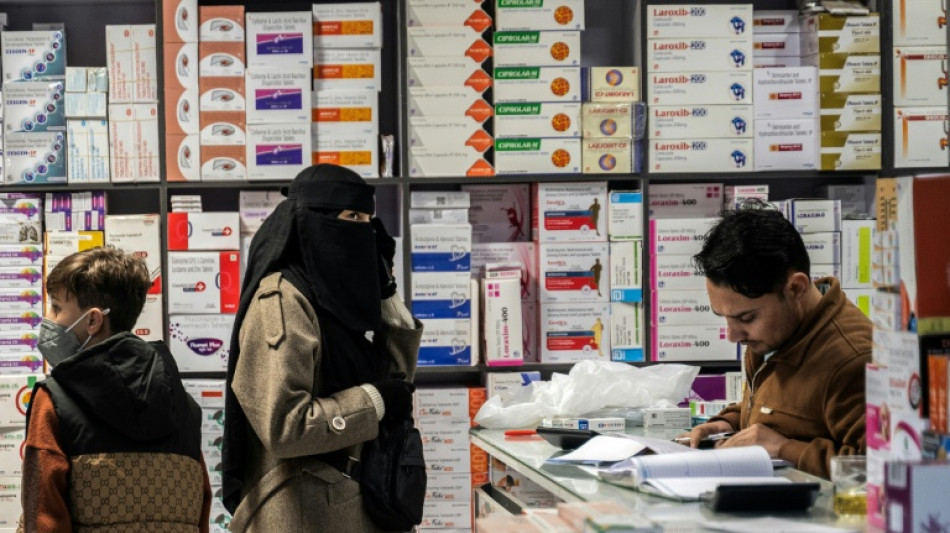
Afghanistan's decision to overhaul its medicine market was meant to improve quality and boost domestic production, but industry specialists say the swift changes have led to a litany of problems.
The Taliban authorities announced in November that the decades-long dependency on medicine imports from Pakistan would soon end, a step taken after deadly border clashes with their neighbour.
After the ban came into effect this month, finance ministry spokesman Abdul Qayoom Naseer told AFP that the government urged all importers to find "alternative and legal" sources to replace Pakistani supplies.
Despite a three-month grace period to end existing contracts and clear customs, the shift presents a huge challenge for a country which had imported more than half its medicine from Pakistan.
"Some of the prices have increased, some of them are short (unavailable), it has created a lot of problems for people," said Mujeebullah Afzali, a pharmacist in the capital, Kabul.
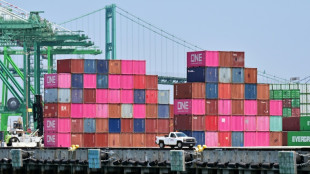
Drugs now have to come from elsewhere, increasing transit time and transport costs, and adding logistical complexities.
The pharmacist said he had begun importing medicine through the Islam Qala crossing on the Iranian border, "which increased the transportation fee 10 to 15 percent".
Transport costs used to account for six to seven percent of total spending on medicine, but this has now risen to 25 to 30 percent, said a person directly involved in the pharmaceutical industry, speaking to AFP on condition of anonymity due to security concerns.
He estimated that the overall losses to business owners had already reached millions of dollars.
"If a medicine was short in the market before, a call was made to Pakistan, and the medicine was delivered in two to three days," he said.
Whether legally or not, it was "delivered quickly", he added.
- 'Fill the gap' -
The illicit trade in pharmaceuticals was a key driver for the overhaul, according to the health ministry.
"The biggest problem with Pakistani medicine was that we used to receive counterfeit and fake medicines," ministry spokesman Sharafat Zaman told AFP.
He acknowledged it will take some time to shift the market, saying that officials were working with Iran, India, Bangladesh, Uzbekistan, Turkey, China and Belarus to source medicine.
"India was second in the market, which means that now, through Indian medicines, we can cover the percentage needed," Zaman said.
And domestic production of 600 medicines has "solved the problems" of many patients, he said.
Afghanistan already produces a variety of serums including antibiotics, according to manufacturer Milli Shifa Pharmaceutical.
The company makes 100,000 bottles daily and "can double the capability" if demand merits, CEO Nasar Ahmad Taraki told AFP.
While Afghanistan has significantly expanded its pharmaceutical sector, domestic output still only meets a small fraction of the overall demand.
The industry source told AFP that the need to import raw materials, the high energy costs and limited infrastructure mean the country cannot be entirely self-sufficient in medicine production.
"If we are provided with the facilities, then we would be able to fill the gap created by Pakistan's situation," he said.
- Shortages and higher costs -
But reshaping an industry nationwide takes more than three months.
Some drugs made in Afghanistan have proven more expensive than those imported from Pakistan, which over the years have gained consumers' trust.
Some people believe that "if they use Pakistani medicine, they will be cured" -- but not if it came from India "or any other country", the industry source said.
Physicians, meanwhile, are also struggling, a healthcare provider in Kabul told AFP.
Doctors "must change prescriptions, find suitable alternatives, and spend additional time adjusting treatment plans", he said, requesting anonymity for security reasons.
The shake-up, which ultimately is meant to end reliance on Pakistan, is complicating care in the short term and could delay treatment, he warned.
"Patients face medicine shortages, frequent switches to alternative products, and sometimes higher costs."
Y.Nakamura--AMWN