'Put our faith in God': Tehran residents adapt to wartime / Photo: ATTA KENARE - AFP
 Neymar calls time on Brazil career after World Cup elimination
 Ancelotti promises Brazil will bounce back after World Cup exit
 Mexico-England World Cup match delayed one hour due to storms
 Gotterup wins PGA John Deere after Kohles splashdown
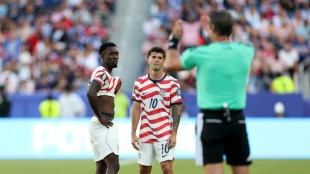
 Haaland knocks Brazil out of World Cup as Norway reach quarters
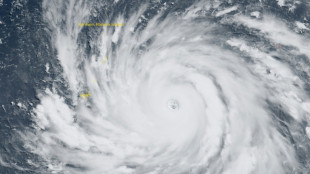 'Catastrophic' Super Typhoon Bavi hits US island of Rota

 West Indies trail Sri Lanka by 231 runs

 FIFA clear US star Balogun to play after Trump call
 Venezuela quake survivor 'reborn' after eight days in rubble
 Red-card U-turn rocks World Cup as England face Azteca test
 Struff oldest first-time men's Slam quarter-finalist in Open era
 Banana!: 'Minions' knocks 'Toy Story' off N.America box office perch
 Sabalenka wants to drink, 'forget about tennis' after Wimbledon exit

 Mooney stars as Australia hammer England in women's World Cup final

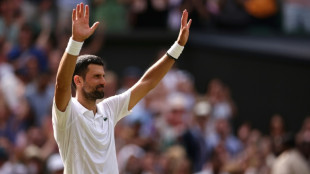 Djokovic makes history, Osaka sends Sabalenka crashing out of Wimbledon
 Osaka beats world number one Sabalenka in Wimbledon last 16
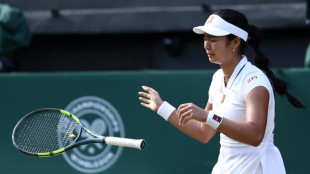 Eala eyeing Wimbledon quarters, Dimitrov faces Fery
 'Privileged' Del Toro wins Tour de France stage, Pogacar up to 2nd
 Del Toro too tired to watch Mexico World Cup clash
 Court frees Albania protesters held after violent clashes
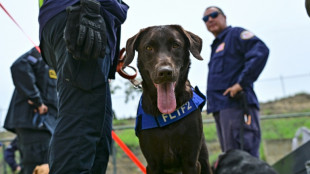 Four-legged rescuers lead way after Venezuela quakes
 France show they can ditch flair and win a different way in World Cup quest

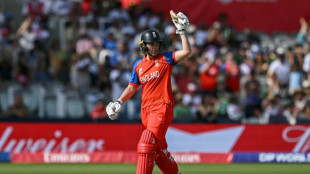 Australia hold England to 150-4 in Women's T20 World Cup final
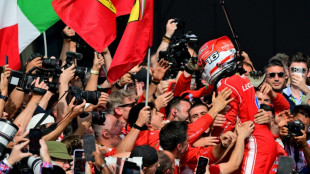
 Leclerc delivers Ferrari's 250th win with victory in British GP

 White supremacist march in DC just 'messy' democracy: US official
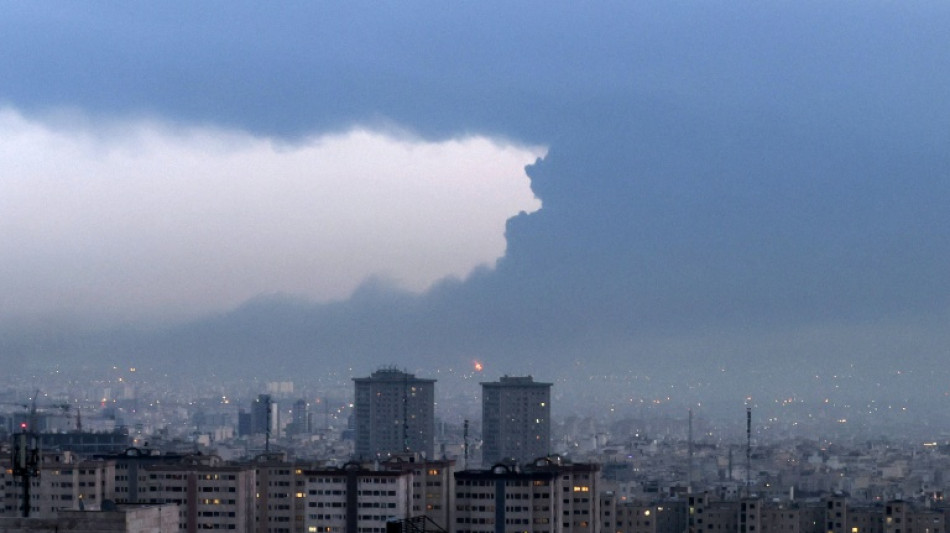
With daily attacks shaking the city, schools shuttered for days and many shops closed, Tehran residents are trying to adapt to wartime conditions under an Israeli-US assault seeking to determine the future of the Islamic republic.
Normal routine has been absent for some time in the teeming mega-city of millions of people, ever since the January protests against the clerical leadership.
But now Tehran and other Iranian cities have been plunged into a conflict of an intensity unseen in the country since the 1980s war against Saddam Hussein's Iraq.
Residents have taped up windows to prevent their homes from being damaged by flying debris from explosions. Security forces patrol the streets in armoured vehicles. Children are unable to go to school as people hunker down in their homes, relying on deliveries.
"People are calm," said a resident of the north of the capital, who spoke to AFP in Paris. "They are getting used to living despite everything and adapting -- as best they can -- to this situation."
Uncertainty is a constant as Tehranis receive no advance warning when US-Israeli air strikes are about to hit the capital.
A woman in her forties said she found some reassurance in her impression that the bombings "don't target ordinary buildings", but rather "police stations, mosques and military sites".
"But imagine a police station is hit at the end of your street. All your windows shatter. That's what many people have experienced."
Beyond the damage, it's "the noise of the bombings that is extremely disturbing", she added.
- 'Not going very far' -
In this situation, "people are staying in their neighbourhoods, they're not going very far, except for those who have to go to work", said another woman in her seventies.
"Generally speaking, people are helping each other a lot," she emphasised, giving the example of one family that offered accommodation to another that had lost its home.
One especially visible change has been the sudden appearance of billboards with the face of Iran's new number one Mojtaba Khamenei, the hitherto low-profile son of longstanding supreme leader Ali Khamenei, who was killed in an air strike at the start of the war.
Authorities encouraged people to take to the streets Monday to celebrate the appointment of Mojtaba Khamenei -- who has yet to appear in public since he was given the title. Otherwise, authorities warn residents to limit movements due to the risk of bombings.
Communications remain severely restricted, with only the local intranet and its homegrown apps functioning, while contact with other countries remains virtually impossible.
"Buses are running, but they're mostly empty," added another resident, saying that traffic consisted mainly of delivery drivers in vans and on motorcycles.
Many shops and shopping centres are closed, at a time of year that normally sees intense commercial activity in the run-up to Iranian New Year Nouruz, which is celebrated in less than two weeks time.
But crucially corner shops and bakeries, which are critical to everyday life in Iranian neighbourhoods and churn our hot bread daily, remain open.
- 'Very stressed' -
"We didn't do anything special: I just put a few documents and papers in my bag, and some cash, because the banks don't lend money for large sums," said Tehran resident Mahvash, 70, describing her emergency preparations.
"We've put our faith in God. For now, there's food in the shops; every day I go to buy greens and bread, that's all. We already have everything we need at home, thank God, especially since we still have running water and electricity, so we can live normally," she added.
Adelshah Mansoori, an Afghan national working in a supermarket in Tehran, said he was asked to deliver goods to customers' doorsteps as they would not leave their homes.
"I was delivering goods from the store to homes. Most people were not in Tehran. They had left. The few who remained were very stressed," he told AFP on the border in Afghanistan after crossing to return home.
"They had taped up the windows of their homes but had no shelter. Everyone was inside residential buildings."
M.Thompson--AMWN