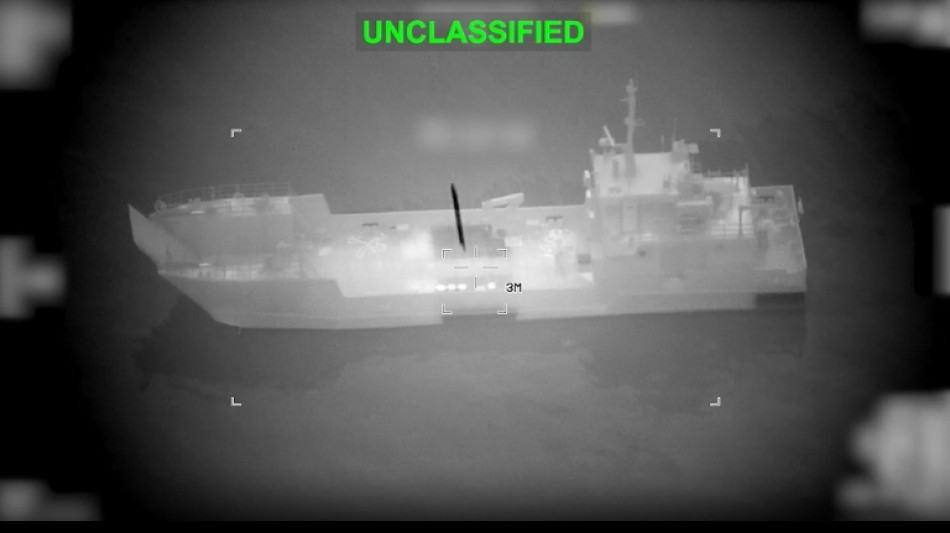
Cargo vessels hit as Iran threatens to close Gulf oil chokepoint / Photo: - - US Central Command (CENTCOM)/AFP
 Neymar calls time on Brazil career after World Cup elimination
 Ancelotti promises Brazil will bounce back after World Cup exit

 Mexico-England World Cup match delayed one hour due to storms
 Gotterup wins PGA John Deere after Kohles splashdown

 Haaland knocks Brazil out of World Cup as Norway reach quarters

 'Catastrophic' Super Typhoon Bavi hits US island of Rota

 West Indies trail Sri Lanka by 231 runs

 FIFA clear US star Balogun to play after Trump call

 Venezuela quake survivor 'reborn' after eight days in rubble
 Red-card U-turn rocks World Cup as England face Azteca test
 Struff oldest first-time men's Slam quarter-finalist in Open era

 Banana!: 'Minions' knocks 'Toy Story' off N.America box office perch
 Sabalenka wants to drink, 'forget about tennis' after Wimbledon exit

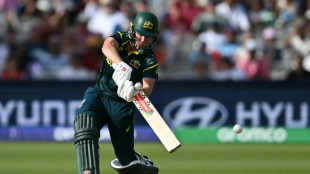 Mooney stars as Australia hammer England in women's World Cup final

 Djokovic makes history, Osaka sends Sabalenka crashing out of Wimbledon

 Osaka beats world number one Sabalenka in Wimbledon last 16
 Eala eyeing Wimbledon quarters, Dimitrov faces Fery

 'Privileged' Del Toro wins Tour de France stage, Pogacar up to 2nd

 Del Toro too tired to watch Mexico World Cup clash
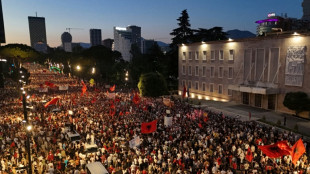 Court frees Albania protesters held after violent clashes

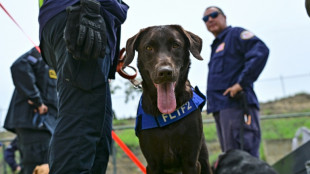 Four-legged rescuers lead way after Venezuela quakes
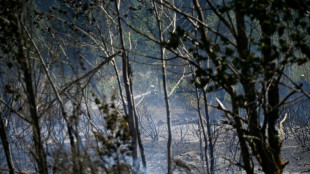
 France show they can ditch flair and win a different way in World Cup quest

 Australia hold England to 150-4 in Women's T20 World Cup final

 Leclerc delivers Ferrari's 250th win with victory in British GP

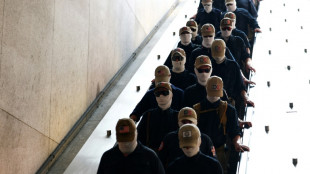 White supremacist march in DC just 'messy' democracy: US official
Three commercial ships took fire in the Gulf on Wednesday as Iran launched strikes against its oil-exporting neighbours, threatening shipping in the Strait of Hormuz and plunging the global energy economy into crisis.
Oil prices have surged and markets have see-sawed since the ends of last month, when the United States and Israel attacked Iran, killed its supreme leader and plunged the Middle East into war.
As the conflict entered its 12th day, all eyes were on the vital sea lane.
The leaders of the G7 powers were to hold a video meeting later in the day to discuss opening their strategic petroleum reserves to counter the rising prices. Ahead of the talks, the group's energy ministers said they "stand ready to take all necessary measures".
Analysts say a prolonged closure of the Strait of Hormuz, which carries 20 percent of world oil and gas supplies and a third of its fertiliser for food production, would have a devastating effect on the economy, particularly in Asia and Europe.
On Tuesday, the Pentagon said US forces had carried out strikes that destroyed 16 mine-laying vessels that could have been used to attack or deter traffic in the strait, but attacks with drones or missiles continued on Wednesday with at least three ships hit.
- Airport hit -
According to the UK maritime security centre the crew of a cargo vessel in the Strait of Hormuz north of Iran was forced to evacuate when an "unidentified projectile" caused a fire on board.
Separately a bulk carrier and a container ship were hit in the Gulf off the United Arab Emirates.
"If for any reason mines were placed, and they are not removed forthwith, the military consequences to Iran will be at a level never seen before," US President Donald Trump posted on social media.
On shore, drones fell near Dubai airport, injuring four people, the city's government said.
Trump has said the US Navy could accompany tankers through the strait, but his administration acknowledged that a post by his energy secretary which briefly reassured markets by announcing a first such escort was untrue.
And experts were dubious about whether naval escorts would be enough to reopen Hormuz to trade.
"Any escort mission would likely face persistent threats from Iranian missiles and drones, and the security risks alone could make a single transit through the strait more costly than the profit margin on the oil shipment itself," the Soufan Center think tank said, in a briefing note.
"Experts estimate that Iran's naval mine stockpile sits anywhere from 2,000 to 6,000 mines, which would further complicate any naval plan to escort commercial tankers," it said.
- 'Not seeking ceasefire' -
The Israeli-US attacks came weeks after Iranian authorities ruthlessly crushed mass protests, although the United States and Israel say they are not necessarily seeking to topple the Islamic republic.
Iranian authorities warned against dissent at home, with the country's police chief saying protesters would be viewed and dealt with as "enemies".
"All our forces are also ready, with their hands on the trigger, prepared to defend their revolution," national police chief Ahmad-Reza Radan said, in comments aired by IRIB.
Iran's parliamentary speaker Mohammad Bagher Ghalibaf, a former top commander in the elite Revolutionary Guards, said in an English-language social media post: "Certainly we aren't seeking a ceasefire."
In Iran, ordinary people were doing the best they could to adapt to living under frequent US-Israeli strikes.
"We've put our faith in God. For now, there's food in the shops; every day I go to buy greens and bread, that's all," Tehran resident Mahvash, 70, told AFP journalists in Paris.
"People are calm," said another resident. "They are getting used to living despite everything and adapting -- as best they can -- to this situation."
- Ayatollah 'safe and sound' -
The United States and Israel launched the war on February 28 with an attack that killed Iran's veteran leader, Ayatollah Ali Khamenei.
His son Mojtaba Khamenei has been named his successor, though he has yet to appear in public, amid reports that he has been wounded.
"I heard news that Mr Mojtaba Khamenei had been injured. I have asked some friends who had connections. They told me that, thank God, he is safe and sound," said Yousef Pezeshkian, son of Iran's president, in a post.
Iran's health ministry said on March 8 that more than 1,200 people had been killed in US and Israeli strikes, and more than 10,000 civilians injured. AFP was not in a position to independently verify the figures.
Iraq and Lebanon, both home to Iran-backed fighters, have become proxy grounds in the war.
In Iraq, Iranian-linked groups said Tuesday that five of their fighters died in strikes they blamed on the United States.
In Lebanon, hundreds of people have been killed and hundreds of thousands have fled their homes following Israeli airstrikes and ground operations targeting Iran-backed Hezbollah.
New Israeli strikes were reported in Beirut's southern suburbs on Wednesday, with the health ministry saying another five people had been killed in the southern town of Qana.
burs-dc/ser
Th.Berger--AMWN