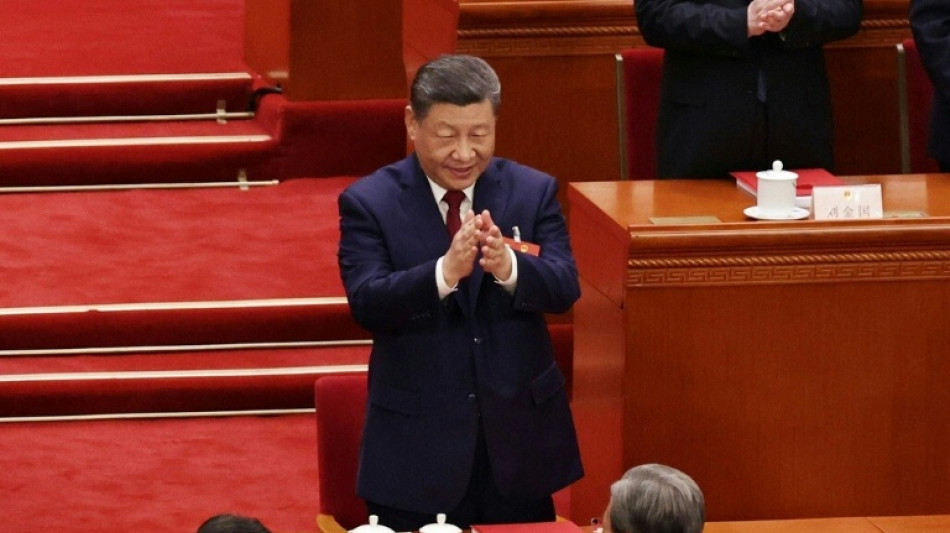
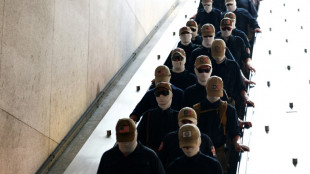
China's leaders project stability despite Middle East war / Photo: Andres MARTINEZ CASARES - POOL/AFP
 Venezuela quake survivor 'reborn' after eight days in rubble
 Red-card U-turn rocks World Cup as England face Azteca test
 Struff oldest first-time men's Slam quarter-finalist in Open era
 Banana!: 'Minions' knocks 'Toy Story' off N.America box office perch
 Sabalenka wants to drink, 'forget about tennis' after Wimbledon exit

 Mooney stars as Australia hammer England in women's World Cup final
 Djokovic makes history, Osaka sends Sabalenka crashing out of Wimbledon
 Osaka beats world number one Sabalenka in Wimbledon last 16
 Eala eyeing Wimbledon quarters, Dimitrov faces Fery
 'Privileged' Del Toro wins Tour de France stage, Pogacar up to 2nd
 Del Toro too tired to watch Mexico World Cup clash
 Court frees Albania protesters held after violent clashes
 Four-legged rescuers lead way after Venezuela quakes
 France show they can ditch flair and win a different way in World Cup quest

 Australia hold England to 150-4 in Women's T20 World Cup final

 Leclerc delivers Ferrari's 250th win with victory in British GP

 White supremacist march in DC just 'messy' democracy: US official
 'Country Roads' stars as unofficial US anthem at World Cup
 F1 boss Domenicali hopes to restore cancelled Gulf grand prix
 Real Madrid sign Dumfries from Inter Milan
 At the foot of Mount Olympus, a return to ancient Greek heritage
 Turkey eyes F110 fighter jet engines as Trump comes to town
 England, Mexico take centre stage in Azteca blockbuster
 'Very dangerous' super typhoon nears US Pacific islands

 Australia stand by under-fire Popovic after World Cup exit
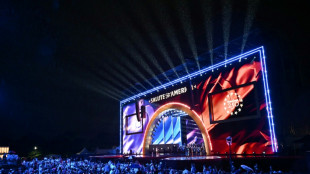
China's leaders wrapped up nine days of annual legislative meetings in Beijing on Thursday, projecting an image of domestic stability seemingly unaffected by the war in key trading partner Iran.
Officials under President Xi Jinping vowed to boost domestic consumption and invest in new technologies including artificial intelligence to drive growth, while making few changes to China's policy roadmap for the next five years.
There was also little signalling whether the United States and Israel's ongoing strikes against Iran -- a major supplier of oil to China -- would disrupt US President Donald Trump's expected visit to Beijing this month.
Experts say the execution of business as usual is by design.
- Image of security -
This year's "Two Sessions" political gathering -- parallel meetings of the parliament and a consultative body -- saw Beijing announce a steady seven-percent boost to China's annual defence budget, and approve laws on development planning, ethnic unity and a new environmental code.
Experts say the image projected by the gathering is one of "continuity".
"The message from the Two Sessions this year is all about security, continuity... and instilling confidence in both the government itself and the rest of the stakeholders in China," said Drew Thompson, a senior fellow at the S. Rajaratnam School of International Studies.
Changhao Wei, founder of analysis site NPC Observer, said the laws "all seek to entrench and legitimise the Party's policies and practices".
However, rights advocates warn the new "ethnic unity" law, which aims to "strengthen cohesion" within China, could further marginalise minority groups such as the Uyghurs and Tibetans.
- Tech self-reliance -
Along with its economic goals, Beijing published a draft of its 15th Five-Year Plan last week, mapping out national development goals until 2030.
The plan focuses on boosting consumption, as well as on technological development across fields including AI, high-end manufacturing and energy and resource security.
"It's pretty clear... Beijing very much wants to master chips, it is at the heart of the self-reliance drive on technology," said Damien Ma, director of Carnegie China.
The head of China's top economic planning body told a press conference that leaders had "the boldness and confidence to cope with various risks and market fluctuations", thanks to the scale of the Chinese economy.
Zheng Shanjie vowed that China's "AI related industries" would be valued at more than 10 trillion yuan ($1.45 trillion) -- seven percent of the country's total GDP last year -- by the end of 2030.
However, the focus on specific industries comes as overall expansion targets has steadily fallen.
This year China announced its lowest annual growth target in decades, at 4.5-5 percent.
- Internal management -
Nevertheless, Beijing is "keen to show that external turbulence will not easily disrupt its governing rhythm or its longer-term strategic agenda", said Yu Tao, a Chinese studies professor at the University of Western Australia.
S. Rajaratnam School's Thompson told AFP that "the purpose of these meetings is to organise the work of the (Chinese) government and the Communist Party that oversees it, not deal with current events".
"The international community is really a passive observer... not an intended audience," he said.
That the Iran war would derail Trump's expected visit to Beijing "was never really going to be the case", added Carnegie China's Ma.
"Xi and Trump want to stabilise the relationship, and there's a lot on the plate to deal with," he said.
"On Iran, both sides have been deliberate in striking moderate and conciliatory tones and withholding explicit criticisms."
- China-US relationship -
China's top diplomat on Sunday described 2026 as "a big year for Sino-US relations".
Trump has announced he will visit China from March 31 to April 2, although Beijing has yet to confirm those dates.
Trump and Xi last met in October in South Korea where they extended a trade truce.
While China and the United States "cannot change each other", foreign minister Wang Yi told a press conference "we can change the way we interact with each other".
Both sides should "manage existing differences and eliminate unnecessary interference", Wang said.
Next year's political gatherings are expected to be more dynamic, with the Communist Party's 21st Congress -- a stage for cabinet and military leadership changes -- scheduled for late 2027.
That will have "major political ramifications for China's future direction", Thompson said.
"This year is a wait-and-see meeting for the possible fireworks next year."
F.Dubois--AMWN