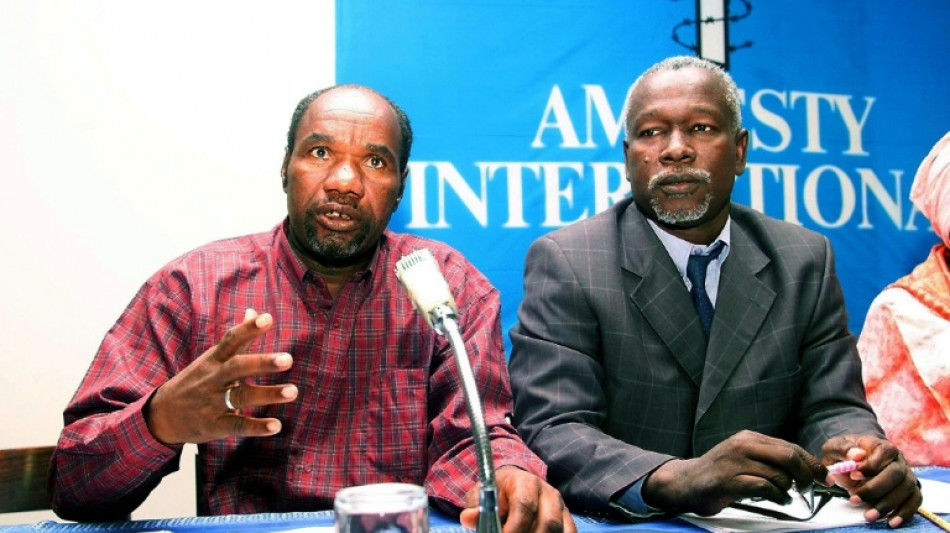
Mauritanian anti-slavery stalwart Boubacar Ould Messaoud dead / Photo: Seyllou - AFP/File
 Pope Leo begins three-country South American tour in Uruguay

 Khawaja says entire Australia camp knew of 2018 ball-tampering plan

 November Foraging Guide: Edible Mushrooms and Critical Safety Protocols

 Microsoft Updates Xbox PC App with 60% Faster Startup and Redesigned Interface

 Early Polar Vortex Disruption Creates Uncertain Winter Outlook for Pennsylvania

 Edmund Richardson Wins Baillie Gifford Prize for 'Alexander' Biography

Boubacar Ould Messaoud, a rights activist who fought incessantly to wipe out slavery in his native Mauritania, died on Thursday in the capital Nouakchott aged 80, a representative of his NGO told AFP.
Born into a family of slaves, he founded SOS Esclaves in 1995 to eradicate slavery and support the reintegration of former slaves into society.
The organisation operated for years without official recognition before obtaining legal status in 2005.
A Soviet-trained architect, Messaoud was involved in several political organisations, including the anti-slavery El Hor movement, which he joined in 1975.
Although officially abolished in 1981, slavery persists in Mauritania in spite of the fact that penalties were stiffened in 2015.
Messaoud was awarded the Officer of the National Order of Merit medal in 2023, France's Human Rights Prize in 2010 and the Anti-Slavery International Award in 2009.
His commitment to denouncing slavery and the racist crimes of the years 1989-1992 under former Mauritanian president Maouya Ould Taya (1984-2005) sparked punitive action.
As co-founder of the Action for Change party, which was banned by the Maouya Ould Taya government, he was arrested several times during the 1980s and early 1990s.
He was also dismissed in 1991 from his position as director general of the public housing company because of his political activism.
Y.Nakamura--AMWN