War has halted Gulf oil flow -- and restarting it won't be easy / Photo: ATTA KENARE - AFP
 Spain's Rodri warns Portugal best yet to come at World Cup

 Djokovic makes Wimbledon history to reach quarter-finals
 Del Toro wins Tour de France stage, Pogacar up to 2nd

 Euphoric homecoming for Cape Verde after heroic World Cup defeat

 Tour de France stage under threat due to forest fires: official

 UK hard-right leader Farage faces new allegations over gifts

 OPEC+ raises quotas again as Middle East calms

 Azam to captain Pakistan on West Indies and England Test tours

 Revival hopes grow for long-closed Greek Orthodox seminary off Istanbul

 Trump hails US, blasts 'communists' in 250th anniversary speech

 Taiwanese film hunters rescue ageing reels from bygone era

 Trump arrives for US 250th birthday speech after storm delay
 All Blacks wing Fineanganofo's debut began 'in the toilet, spewing'

 Xhaka -- Switzerland's World Cup rock born to be skipper

 Trump pushes ahead with US 250th birthday speech after storm delay

 Australia's Schmidt rues missed opportunities as Wilson defends Donaldson

 Deschamps hails France for staying cool in World Cup win over Paraguay

 Japan ready for Ireland after 'big statement' against Italy

 Eylsia Nicolas Tops Groover Global Charts Across Multiple Genres

 Davis-Woodhall opens up about depression after Eugene win

 France battle past Paraguay to set up Morocco World Cup showdown
 Jefferson-Wooden holds off Richardson for Eugene 100m win

 Stopping Haaland no mystery for Brazil, says Ancelotti

 Coach says Morocco 'no longer a surprise' after reaching World Cup quarters

 Tuipulotu guides Scotland past Argentina with record score
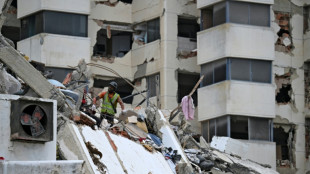
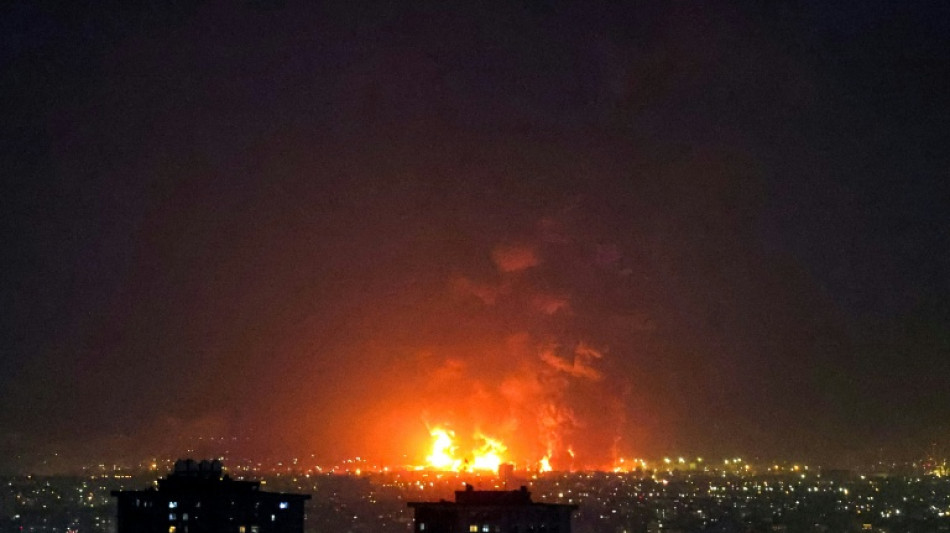
The war in the Middle East has largely paralysed the Gulf region's crucial oil industry, which has been hit by attacks and an export blockade.
The war has forced companies to dramatically slow or even halt production -- and restarting it will not be easy, even when the war is over.
- What has been targeted? -
Since the war started with US-Israeli strikes on Iran on February 28, at least 33 strikes or attempted strikes have targeted energy infrastructure in the Middle East, according to an AFP tally.
The United States and Israel carried out 13 of them against Iran.
The other 20, which struck seven Gulf countries, were attributed to Iran.
The strikes mostly hit oil and gas fields or complexes, such as the massive Ras Tanura refinery in Saudi Arabia, Ras Laffan gas processing base in Qatar and the complex housing the Ruwais refinery in the United Arab Emirates.
Iran has also effectively blocked the crucial Strait of Hormuz, the usual shipping lane for around 20 percent of the world's oil and liquefied natural gas output.
- Why is production down? -
Some infrastructure has been damaged.
Other facilities have closed or reduced activity as a precaution, such as Ruwais.
The near-closure of the strait has also had a major impact.
Gulf countries' output of oil and oil products has plunged from 30 million barrels per day last year, excluding Oman, to 10 million currently, according to the International Energy Agency (IEA).
It said the amount passing through the Strait of Hormuz had fallen to less than 10 percent of pre-war levels.
Saudi Arabia and the UAE have pipelines that can send some oil beyond the region, but their capacity is limited.
The result is storage facilities that are full to the brim.
"That's the main issue at the moment," an industry insider told AFP.
"Since there aren't enough ships to empty the storage facilities and export the product, suppliers have to stop production."
There is no easy fix, warned Pankaj Srivastava, a commodities expert at Rystad Energy.
"With crude supply increasingly stranded in the Gulf, refiners may soon be forced to adjust operations, curtailing runs as product exports stall and directing output solely to domestic markets," he said.
- How long to restart? -
"Depending how they were shut down, (restarting refineries) can take a week or two to reach full output," said the industry insider.
For oil wells, it is simpler: "You just reopen the valve."
According to the IEA, "upstream production will take weeks and, in some cases, months, to return to pre-crisis levels", depending on the site.
And "in the absence of a full ceasefire, ship owners, charterers, insurers, and crew will need to see robust security measures" to return to the strait, such as armed escorts, it added.
It said a traffic management system may need to be created to handle the massive backlog when traffic resumes in the strait, estimating it would take "several days to weeks" to clear.
A.Mahlangu--AMWN