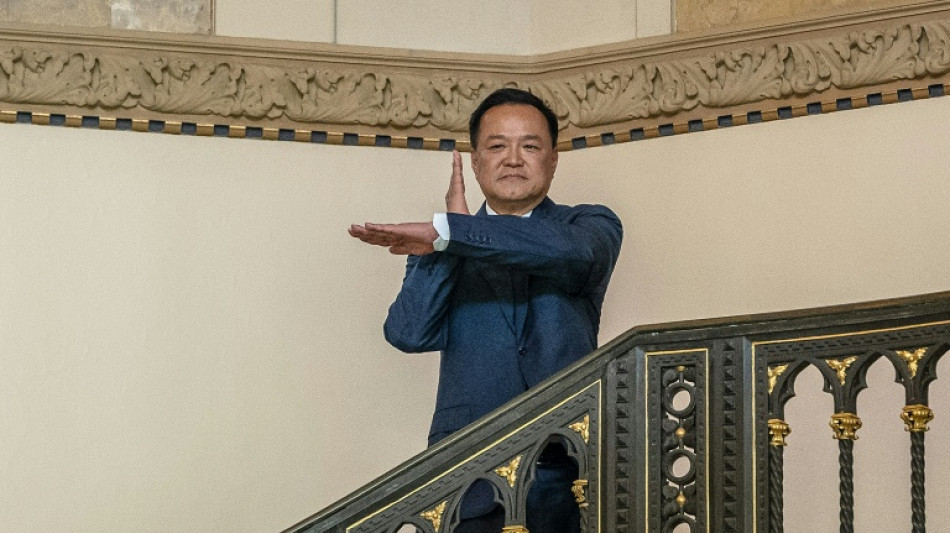
Thailand's new parliament set to elect Anutin as PM / Photo: chanakarn laosarakham - AFP
 November Foraging Guide: Edible Mushrooms and Critical Safety Protocols

 Microsoft Updates Xbox PC App with 60% Faster Startup and Redesigned Interface

 Early Polar Vortex Disruption Creates Uncertain Winter Outlook for Pennsylvania

 Edmund Richardson Wins Baillie Gifford Prize for 'Alexander' Biography

 BYD Drops Rotating Screens in New Models Due to Tech Limits

 Ryanair Flight from Rome Makes Emergency Landing in Lisbon After Bomb Threat

Thailand's new parliament is set to elect Anutin Charnvirakul as prime minister Thursday, keeping the conservative in the top office after his party routed its election rivals with a nationalist campaign.
The Southeast Asian nation's next government will have to handle the fallout from the Middle East war, sluggish economic growth and lingering border tensions with neighbour Cambodia.
Anutin's pro-military and pro-monarchy Bhumjaithai party had its best electoral performance ever in February after two rounds of deadly border clashes with Cambodia last year.
Bhumjaithai promised to build a wall on the Cambodian frontier, keep all border crossings closed and recruit 100,000 volunteer soldiers, winning the most seats of any party and putting Anutin in pole position to head the next government.
The third-placed Pheu Thai party of jailed former prime minister Thaksin Shinawatra agreed to join him in a coalition, alongside several smaller parties, and parliament will anoint him on Thursday.
The 59-year-old millionaire heir to a family construction fortune -- who championed the decriminalisation of cannabis in Thailand -- was first elected prime minister in September.
He came to office after his predecessor, Paetongtarn Shinawatra, Thaksin's daughter, was ousted by court order over an ethics complaint.
In a leaked phone conversation, Paetongtarn referred to former Cambodian leader Hun Sun as "uncle" and called a Thai military commander her "opponent", triggering public and political outrage.
The Pheu Thai-led government fell after Anutin pulled Bhumjaithai out of the then coalition, and parliament later elected him prime minister.
The reformist People's Party -- which had been polling first ahead of the election, but ultimately came in second -- will lead the opposition.
But 10 of its newly elected MPs, including the party leader, Natthaphong Ruengpanyawut, face accusations of an ethics breach over their effort to reform the royal insult law, which could see them banned from politics.
- Challenges ahead -
Thailand's economic growth slowed last year, with the incoming government facing a struggling tourism sector while fast-growing Vietnam is now attracting more foreign direct investment.
The day after Israeli-US strikes on Iran, which ignited the war that has thrown global markets into turmoil, Anutin pledged to "turn this Middle East crisis into an opportunity for Thailand".
But the country is now reckoning with higher fuel prices and supply disruptions.
Political scientist Yuttaporn Issarachai said that the Thai government's primary agenda has shifted towards daunting external challenges, including the economic fallout of the Middle East conflagration.
"So far, the cabinet has failed to produce decisive measures to lower fuel costs, offering only 'band-aid' solutions like working from home," he told AFP.
The longstanding border conflict with Cambodia remains a challenge -- even while a fragile ceasefire remains in place.
Soon after becoming premier the first time, Anutin authorised the armed forces to take whatever action they saw fit on the frontier.
The countries' 800-kilometre (500-mile) boundary is still not fully agreed, and Thailand's military took control of several disputed areas in the latest fighting in December.
But voters' attention had moved elsewhere, Yuttaporn said.
"The economy is now the public's top priority."
Ch.Havering--AMWN