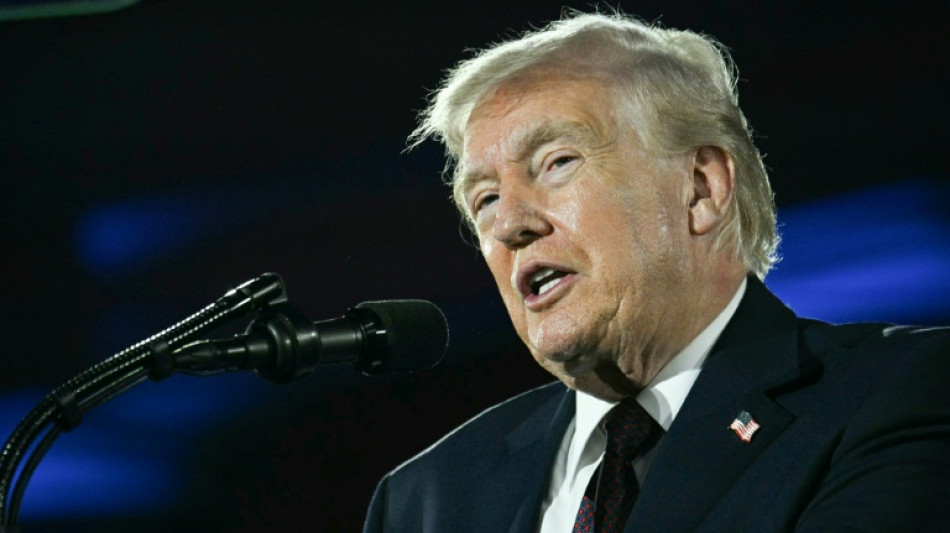
What's happening with Iran-US 'talks'? / Photo: Jim WATSON - AFP
 An 'angel' in darkness after Venezuela's deadly quakes
 US turns 250 with Trump center stage

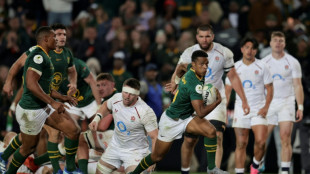 South Africa beat 13-man England in Nations Championship

 Vingegaard takes Tour de France lead as Visma win opening stage
 Swiatek doesn't care about results after Wimbledon exit
 England bid to emulate Lionesses and Red Roses in T20 World Cup final
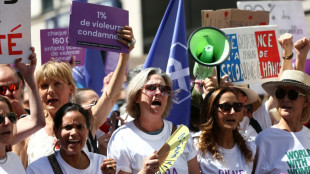
 French Open champ Zverev into Wimbledon last 16

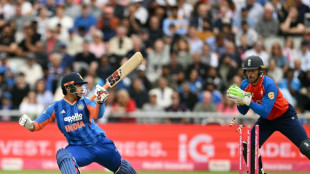 Teenage star Sooryavanshi out for 14 on India debut

 Splish-splash! Parisians and tourists soak in the Seine

 Swiatek dumped out of Wimbledon by Eala, Serena withdraws from doubles
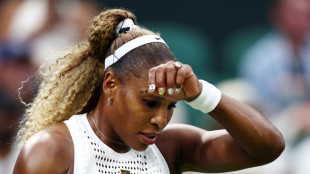
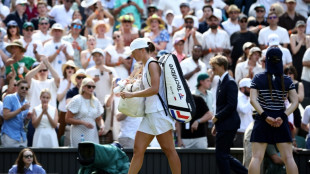 Swiatek's Wimbledon title defence ended by Philippines' Eala

 US celebrates 250th birthday as Trump warns of enemy within
 Farrell hails Ireland character in Wallabies win but says work to do
 Ireland edge Australia 33-31 in Nations Championship nailbiter
 Mali hit by new wave of coordinated rebel attacks

 Hosts Canada, Mexico and USA thrive in their World Cup

 Japan beat Italy 27-10 in Nations Championship opener
 Struggling German auto supplier Continental to sell unit
 Pope urges Europe to protect migrants in visit to island frontier
 Mass protests in Germany as far-right AfD meets
 France face Philly furnace as World Cup last 16 gets under way
 Australia goalkeepers were in dark about World Cup shootout switch
 Billboards, cologne and flowers: Turkish capital gets NATO makeover

 Trump says American identity under 'renewed attack' as US turns 250
 World Cup serves up Wimbledon dilemma: football or tennis?

Diplomatic efforts to end the war in Iran are gathering pace, even though Tehran continues to insist talks with the United States are not happening.
Here is what we know about the behind-the-scenes mediation efforts:
- What is on the table? -
After announcing "very good" talks with an unnamed "top person" in Iran on Monday, Trump said Tuesday that he had sent a plan and that it "all starts with, they cannot have a nuclear weapon."
A 15-point proposal to stop the fighting has been conveyed to Iran via Pakistan, Pakistani officials have confirmed.
But the exact contents remain unknown and the identity of Trump's "top person" is a mystery, if he exists at all.
The New York Times and Al Jazeera have reported that Trump is proposing a one-month ceasefire during which the two sides would restart talks about the same issues they were discussing before the war.
These include a US demand that Iran hand over its enriched uranium stockpile, stop any further enrichment, and agree to limits on its missile programme, as well as cease support for militant groups in the region.
If Iran met US conditions and opened up the strategic Strait of Hormuz for shipping, which it has effectively closed, Trump is offering relief from all sanctions, the reports suggest.
After saying that Iran wanted to make a deal "so badly", the US president warned Thursday that they "better get serious soon".
The head of the UN nuclear watchdog Rafael Grossi has said a meeting in Islamabad at the weekend is under discussion.
- What does Iran say? -
Publicly, no Iranian official has confirmed any negotiations, but the language used is ambiguous.
Iranian Foreign Minister Abbas Araghchi said messages were "being exchanged through friendly countries or through certain different individuals" but insisted that "this is neither called dialogue nor negotiation".
But he added that "if it is necessary for a position to be taken, it will certainly be decided".
Pakistani and Egyptian officials have confirmed they are serving as diplomatic backchannels.
- What are Iran's demands? -
According to an unidentified Iranian official cited by Iran's Press TV on Wednesday, Tehran has sent five conditions for an end to hostilities.
These include ending "aggression and assassinations", setting up a mechanism guaranteeing that neither Israel nor the United States would resume the war, as well as financial compensation.
They also include a cessation of hostilities on all fronts, meaning Israel would stop bombarding Tehran-backed Hezbollah in Lebanon and possibly Hamas in Gaza.
The official also said Tehran wanted international recognition of its sovereignty over the Strait of Hormuz.
On March 11, Iranian President Masoud Pezeshkian laid out Iranian terms as "recognising Iran's legitimate rights, payment of reparations, and firm international guarantees against future aggression".
The Wall Street Journal reported that Tehran was also demanding the closure of US military bases in the Gulf.
- Can compromises be found? -
Analysts say the conflict has strengthened hardliners in Tehran where the rhetoric is defiant and increasingly confident.
Trump has bombed the country twice amid negotiations, first in June last year and again on February 28.
As for US demands, Tehran has insisted since 2003 it is not seeking a nuclear weapon but has a right to enrich for civilian nuclear energy purposes.
It has also refused curbs on its ballistic missile programme or discussions about its support for militant groups such as Hezbollah or the Houthis in Yemen.
Tehran's demand for reparations is likely a non-starter, as is any suggestion of the US closing Gulf military bases.
It is not clear how its sovereignty over the Strait of Hormuz would work, or how meaningful security guarantees could be formulated, unless they involved outside powers such as Russia or China.
- So is there no hope? -
The outcome may come down to how badly Trump wants to end the war, and whether Iran's leaders view their interests as being best served by a ceasefire.
Trump would walk away claiming victory, saying he has destroyed Iran's military and nuclear capabilities.
The Islamic republic could also claim victory, pointing to how its forces resisted four weeks of US and Israeli onslaught while also landing blows on US interests in the region and in Israel.
"Both sides need to be able to claim victory and save face, whatever deal they agree on," a diplomat based in the Middle East told AFP on condition of anonymity. "The process will take some time."
But even with a ceasefire, the question of Iran's nuclear programme and its 440-kilogram stockpile of highly enriched uranium remains unresolved.
Some analysts believe the talks are a smokescreen as Trump prepares a ground offensive to re-open the Strait of Hormuz by force or seize Iranian oil assets.
Iran has signalled it would use its Houthi allies in Yemen to attack shipping in the Red Sea, which would open up a new front in a war of spiralling economic, political and military repercussions.
O.M.Souza--AMWN