
Germany growth forecasts slashed as Mideast war hits economy / Photo: Ronny HARTMANN - AFP/File
 InterContinental Hotels Group PLC Announces Transaction in Own Shares - November 04

 No. 22 UCLA defeats No. 5 Arizona 84-75 despite Kharchenkov's 38 points

 Antonelli Overcome by Emotion After Victory at Autódromo Hermanos Rodríguez

 Godzilla Minus Zero shifts focus toward postwar human drama
 Mehbooba Mufti urges dialogue and renewed Central Asia links for Kashmir

 Seacliff Healthcare Seeks Specialist GP in Thirroul

 US stocks fall before midterm Election Day as technology shares weaken

 BLS Polymers makes strong market debut at ₹248 per share

 Petrol and diesel prices remain broadly steady across major Indian cities

 Reliance shares remain in focus after near-12% surge

 2026 Arizona Midterms: Key Races, Ballot Measures, and Voter Deadlines

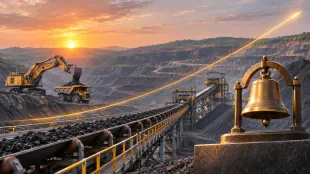 Coal India prepares possible $1 billion Mahanadi Coalfields listing

 Julia Stiles and Ezra Sosa Share Emotional Farewell After 'DWTS' Elimination

 US Buildings Threatened by Wildfires Could Triple by 2060

 Why Pregnancy Cost Estimates Fail: A Family’s $9,000 Surprise

 US Strikes Iranian Targets in Strait of Hormuz Ahead of Midterms

 Brodeur’s Overtime Goal Secures Bethlehem’s Second Consecutive Sectional Title

 Rare 1970 Plymouth ‘Cuda 426 Hemi Listed for $400,000

 The Digital Burden: Why Instant Messaging Feels Like a Full-Time Job

 Alberta Tabled Controversial Riding Boundary Maps Amid Gerrymandering Accusations

 Hong Kong court set to sentence activist Joshua Wong in security case

 Australia raises benchmark rate to highest level in 18 years

 'The Remarried Empress' Cast Discusses Bringing Fantasy Royal Drama to Life

 Asian stocks retreat as AI worries outweigh steep oil-price drop

 Hamad International Airport stages emergency drills during WATAN 2026

Leading economic institutes more than halved their growth forecasts for Germany on Wednesday, warning that the energy shock caused by the Middle East war would hit Europe's top economy hard.
A group of leading institutes slashed their joint growth forecast for 2026 to 0.6 percent, down from a September prediction of 1.3 percent.
Inflation is now forecast to rise to 2.8 percent, up from 2.0 percent, "weighing on household purchasing power".
"The energy price shock triggered by the Iran war is hitting the recovery hard," said economist Timo Wollmershaeuser of the Ifo institute, adding that increased government spending was nevertheless "preventing a stronger slide".
Oil and natural gas prices have surged since the end of February, when the United States and Israel attacked Iran, killed its supreme leader and plunged the Middle East into war.
Iran has since closed the Strait of Hormuz to ships of countries it considers allied with the US and Israel, effectively blocking a sea lane that normally transports about a fifth of the world's oil and gas trade.
Higher inflation in Germany would hit consumer spending, the institutes said, weighing on an already weak economy that has barely grown since a burst of pent-up demand after the Covid pandemic in 2022.
- 'Zero growth' -
Germany's economy, struggling with fierce Chinese competition in sectors from cars to chemicals, was in the doldrums even before US President Donald Trump last year imposed sweeping new tariffs before starting the Mideast war in late February.
Chancellor Friedrich Merz, who took office last May, vowed to borrow and spend hundreds of billions for a special infrastructure fund over coming years in what was dubbed a spending "bazooka" aimed at getting Europe's top economy back on its feet.
But the economists said that much of the money was simply paying for day-to-day spending.
"Government expenditure on consumption is rising much more sharply than investment," economist Oliver Holtemoeller of the Halle Institute for Economic Research said. "That was not the idea behind changing the financing rules."
The outlook for the longer term was also dire.
Citing low productivity, industrial decline and an ageing population, the institutes warned that Germany's economy would soon be unable to grow sustainably.
"We have also reassessed the structural changes in the German economy and, in particular, revised our forecast for industrial growth downwards," Wollmershaeuser said.
In an era when "demographic change is hitting with full force", he said, "potential growth will come to a standstill by the end of the decade, and we will have to get used to average GDP growth rates of zero percent".
In this phase of "multiple transformations," the institutes recommend the German government "increase incentives for employment" and ease regulations to "improve conditions for investment and innovation".
Y.Kobayashi--AMWN