-
 Galloway accuser could not foresee publishing-sector fallout, lawyer argues
-
No. 22 UCLA defeats No. 5 Arizona 84-75 despite Kharchenkov's 38 points

-
 New York City Center revives In the Heights as a timely community story
-
Antonelli Overcome by Emotion After Victory at Autódromo Hermanos Rodríguez

-
 Vessel operator seeks witnesses after Vancouver grounding
-
Godzilla Minus Zero shifts focus toward postwar human drama

-
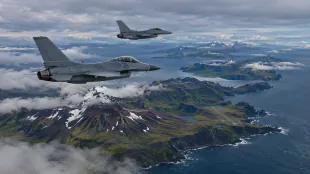 US Air Force deploys F-16 fighters to remote Aleutian base for readiness drill
-
Mehbooba Mufti urges dialogue and renewed Central Asia links for Kashmir

-
 Bezos grant helps Seattle nonprofit move thousands of families toward housing
-
Seacliff Healthcare Seeks Specialist GP in Thirroul

-
 Shrini Srivastava joins crew of Varanasi-Delhi Vande Bharat Sleeper service
-
US stocks fall before midterm Election Day as technology shares weaken

-
 Nearly Half of Australian Workers Overqualified, Survey Finds
-
BLS Polymers makes strong market debut at ₹248 per share

-
 RBI eases export-declaration compliance for individual service exporters
-
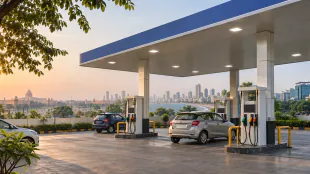
Petrol and diesel prices remain broadly steady across major Indian cities
-
 India proposes more import entry points for drugs and medical devices
-
Reliance shares remain in focus after near-12% surge

-
 Derek Tierney Outlines Ten-Year Strategy for National Digital Health System
-
2026 Arizona Midterms: Key Races, Ballot Measures, and Voter Deadlines

-
 NBC’s Steve Kornacki Reveals Tech Habits Ahead of Midterm Elections
-
Coal India prepares possible $1 billion Mahanadi Coalfields listing

-
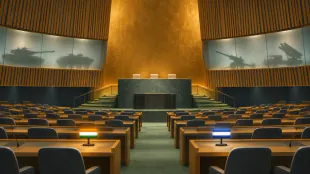 India and Israel oppose UN draft on regional conventional arms control
-
Julia Stiles and Ezra Sosa Share Emotional Farewell After 'DWTS' Elimination

-
 BLS Polymers shares open 65.3% above IPO price
-
US Buildings Threatened by Wildfires Could Triple by 2060

-
 Capital-markets shares rally as Motilal Oswal and Angel One lead gains
-
Why Pregnancy Cost Estimates Fail: A Family’s $9,000 Surprise

-
 Latino Voters Defy ICE Fears, Turn Out in Record Numbers for Midterms
-
US Strikes Iranian Targets in Strait of Hormuz Ahead of Midterms

-
 ITC shares rise as analysts anticipate gradual cigarette-business recovery
-
Brodeur’s Overtime Goal Secures Bethlehem’s Second Consecutive Sectional Title

-
 Reliance rally puts historical one-year return pattern in focus
-
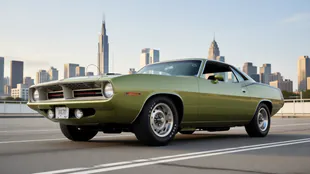
Rare 1970 Plymouth ‘Cuda 426 Hemi Listed for $400,000
-
 Kuwait edges Oman 1-0 in veterans Gulf Cup in Doha
-
The Digital Burden: Why Instant Messaging Feels Like a Full-Time Job

-
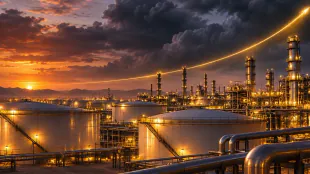 Saudi Aramco quarterly profit climbs 34.6% amid elevated oil prices
-
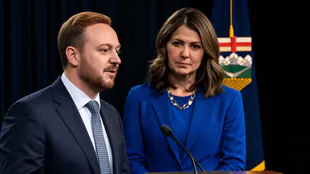
Alberta Tabled Controversial Riding Boundary Maps Amid Gerrymandering Accusations
-
 Washington reports movement in Iran negotiations aimed at preventing escalation
-
Hong Kong court set to sentence activist Joshua Wong in security case

-
 Korea’s Labor Share of GDP Hits Record Low Amid Semiconductor Boom
-
Australia raises benchmark rate to highest level in 18 years

-
 littlefish and Halo Dot Partner to Replace Payment Terminals with SoftPOS
-
'The Remarried Empress' Cast Discusses Bringing Fantasy Royal Drama to Life

-
 Kuwait inspectors destroy 115 kilograms of unverified meat in Farwaniya
-
Asian stocks retreat as AI worries outweigh steep oil-price drop

-
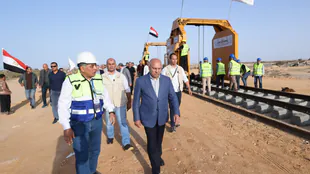 Egypt Accelerates Construction of 341km Sinai Railway Linking Arish and Taba
-
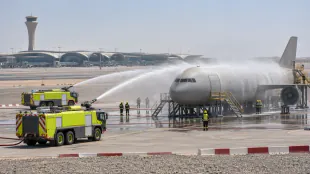
Hamad International Airport stages emergency drills during WATAN 2026
-
 John Schneider Admits Owes Millions in 'Dukes of Hazzard' Divorce Battle
-
Global failure to punish attacks leaves journalists at continuing risk

Iran hits Gulf states after agreeing 'fragile' truce with US
US Vice President JD Vance warned the truce between Washington and Tehran remained "fragile" Wednesday as several Gulf nations endured fresh attacks just hours after the rivals agreed a two-week ceasefire.
The strikes on Kuwait and the United Arab Emirates came as two ships passed through the Strait of Hormuz after Iran agreed to temporarily reopen the strategic waterway under threat of annihilation by President Donald Trump.
Both sides claimed victory as the eleventh-hour ceasefire was announced but Iran warned the war was not over until formal terms were negotiated, with talks between Tehran and Washington expected in Pakistan on Friday.
Tehran's demands over future control of Hormuz -- a narrow strait through which one-fifth of the world's oil usually passes -- uranium enrichment and economic sanctions are at deep odds with Washington.
Vance, speaking in Budapest, said negotiations could turn a "fragile truce" into a deal if Iran was "willing in good faith to work with us".
If not "they're going to find out that the President of the United States is not one to mess around. He's impatient. He's impatient to make progress," Vance said.
Pope Leo was among a chorus of world leaders to call on Wednesday for a full end to the war, which has killed thousands of people, sparked an energy crisis and roiled global markets.
Trump told AFP the deal was a "total and complete victory" for the US, which conducted airstrikes with Israel on February 28 that killed Iran's supreme leader Ayatollah Ali Khamenei and ignited a regional war.
Iran also hailed the ceasefire as a win but warned it "does not mean the end of the war" unless its terms were met.
Its powerful Revolutionary Guards said on Wednesday they had "no trust" in US promises and warned their "finger is on the trigger".
- Gulf strikes -
Underscoring the precarity of the situation, Iranian state media announced fresh "missile and drone attacks" Wednesday on US-allied Gulf states UAE and Kuwait in retaliation for airstrikes against its oil facilities.
Kuwait said its oil facilities and power and desalination plants were damaged in "an intense wave" of strikes that lasted hours, and demanded Iran cease its attacks.
The UAE said it was intercepting Iranian attacks while Bahrain also said its capital Manama had been hit.
Iran has unleashed weeks of aerial attacks on Gulf Arab states, citing their role as hubs for US troops and shattering their hard-fought reputation for safety and stability.
There was also no let-up to fighting in Lebanon, where Israel renewed strikes against Hezbollah on Wednesday despite the Iran-backed armed group not claiming any operations since 1 am (Tuesday 2200 GMT).
It announced its "largest coordinated" strikes across Lebanon, while Lebanese state media reported strikes on Beirut and its suburbs.
The White House said Israel had agreed to the ceasefire but Prime Minister Benjamin Netanyahu said it did not include Lebanon, where Israel's operation has killed more than 1,500 people, according to local authorities.
Israel had encouraged Trump to launch the war against Iran, its arch-foe, according to a report in The New York Times.
A peace agreement would leave in place the Islamic republic despite US and Israeli hopes of toppling it. The United States and Israel said that they attacked Iran to degrade its military capacity.
In Tehran, streets were quieter than usual on Wednesday, with many shops closed after a long and anxious night for city inhabitants fearing a massive US attack.
Trump had earlier warned a "whole civilisation will die" in Iran if the Strait of Hormuz was not opened by midnight GMT but said he held off after speaking with Pakistan's leaders.
He later told AFP he believed China had helped get Tehran to negotiate.
Iranian Foreign Minister Abbas Araghchi confirmed safe passage for two weeks for ships through the strait, which Tehran sealed off in retaliation for the war, sending global energy prices soaring.
A Greek-owned bulk carrier and a Liberia-flagged vessel sailed through on Wednesday, said the maritime monitor Marine Traffic.
Trump posted Wednesday on social media that the US would "be helping with the traffic buildup in the Strait of Hormuz".
- Oil prices drop -
Oil prices plunged by more than 17 percent after the ceasefire announcement, while European natural gas dropped 20 percent. Stock prices also soared in early trading on Wednesday in Asia.
Trump said the United States was "very far along" in negotiating a long-term agreement with Iran, which had submitted a 10-point plan that he said was "workable".
But Iran publicly released points that took maximalist positions, including lifting long-standing US sanctions, guaranteeing Iranian "dominion" over the strait and removing US forces from the region.
Crucially, it also said its plan would require Washington to accept its uranium enrichment programme.
Trump has alleged that Iran was near to building an atomic bomb, an assertion not backed by the UN nuclear watchdog and most observers.
He insisted the nuclear material would be covered by any peace deal.
"That will be perfectly taken care of, or I wouldn't have settled," Trump told AFP, without giving any specifics about what would happen to the uranium.
Trump would not say whether he would go back to his original threats to lay waste to all power plants and bridges across the country of more than 90 million people if the deal fell apart.
"You're going to have to see," he told AFP.
Much global reaction to the ceasefire focused on the need to turn the ceasefire into a workable peace deal.
Egypt praised efforts to "give diplomacy a chance" while Oman spoke of finding "solutions capable of resolving the crisis at its roots".
Ahead of a visit to the Gulf, British Prime Minister Keir Starmer pledged Wednesday to do everything possible to turn the ceasefire "into a lasting agreement" that ensures the reopening of Hormuz.
burs/np/dcp
G.Stevens--AMWN