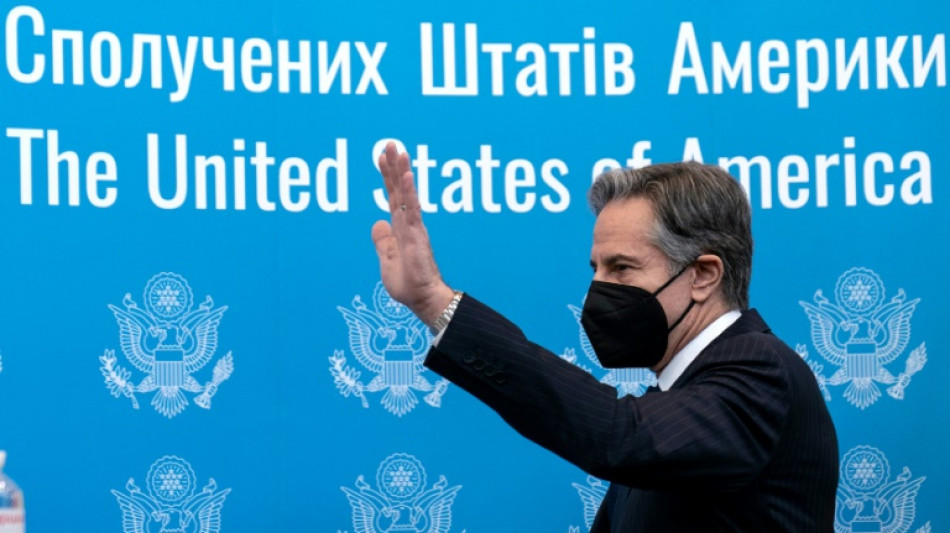
Can the US and Russia find a diplomatic 'off-ramp' on Ukraine?
 'No limits': Marathon world record holder Sawe chasing history
 Countdown begins to biggest-ever Rugby World Cup

 Bangladesh women lose ground after quota reform
 Vietnam admits 'differing opinions' on Hanoi development
 Stocks temper gains as oil pares heavy losses, US data in focus

 New Zealand denies breaching climate commitments to EU

 Albert becomes youngest US scorer in 4-2 win over Chile

 Pirate island's plunging population shows Greece's demographic decline
 With elections ahead, Latvia's Russian-speakers reject Moscow's help
 Brazil football clubs face massive sponsorship blow from betting ban
 ChatGPT maker wants to be the App Store for AI as safety concerns grow

 Women fight fires and sexism in Indonesian Borneo

 Forsling's OT blast lifts Florida over Carolina in NHL opener

 Hurricane Polo sweeps over Mexico's Pacific coast, heads inland
 Grynspan pulls ahead in race to lead UN: diplomat

 Trump touts AI boss pledge to self-regulate
 Oil down, but stocks lower as bond yields rise
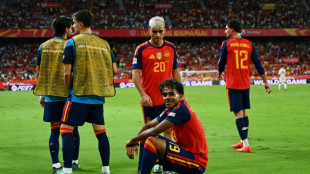
 England break down stubborn Czechs to claim first Nations League win
 UN Security Council extends Haiti anti-gang force by 6 months
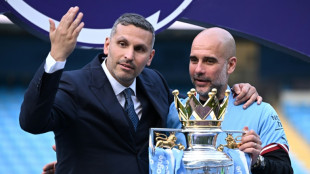
 Manchester City guilty of Premier League charges: What comes next?

 Man City chief Soriano slams Premier League 'conspiracy theory'
 Hurricane Polo sweeps over Mexico's Pacific coast

 Man City must be relegated after guilty verdict says club's former chairman

 German far-right aims to lead Saxony-Anhalt govt in December

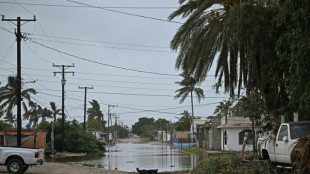 Little damage as Hurricane Polo sweeps over Mexico's Pacific coast
The United States has called for a diplomatic solution with Russia to resolve a crisis over Ukraine, but in public at least, the two powers remain deeply at odds.
Secretary of State Antony Blinken will meet Foreign Minister Sergei Lavrov on Friday in Geneva as tens of thousands of Russian troops remain stationed on Ukraine's borders.
Blinken, on a solidarity visit to Kyiv on Wednesday, called on Moscow to choose the "peaceful path" on Ukraine, with a US official saying the talks in Geneva will explore "diplomatic off-ramps" with Russia.
But Moscow has put forward unusually detailed draft security proposals to which Blinken said he will not formally respond, hoping instead to explore areas of cooperation.
- Arms control path? -
President Joe Biden's administration has said it is willing to look forward with Russia by taking up arms control or agreeing to greater transparency on military exercises.
In initial talks last week in Geneva, Blinken's deputy, Wendy Sherman, proposed a return in substance to the Intermediate-Range Nuclear Forces (INF) Treaty, a Cold War deal that limited missiles in Europe.
Former president Donald Trump's administration withdrew from the treaty, accusing Moscow of violations.
Blinken said in Kyiv there were "areas where clearly, if there is a will, we could make progress on a reciprocal basis to improve security for everyone".
Deputy Foreign Minister Sergei Ryabkov, who met with Sherman, appeared positive that Washington was discussing the treaty but regretted that the discussion was tied to Ukraine.
- 'Non-starter' on NATO -
Ryabkov, addressing the Valdai Discussion Club, said Russia wanted legally binding guarantees that NATO will not expand to include Ukraine, a former Soviet republic that has faced a bloody pro-Russia insurgency since 2014.
He called for the formal replacement of the NATO alliance's 2008 Bucharest declaration that opened a path for Ukraine as well as Georgia to join eventually.
"We are seeing a threat from Ukraine becoming more and more integrated into NATO even without becoming a formal member of the organisation. This is what lies at the centre of Russia's security interests," he said.
Blinken called slamming the door on NATO expansion a "non-starter", saying that "one nation can't simply dictate to another its choice."
Bill Taylor, a former US ambassador to Ukraine, doubted there was any way to resolve the differences on NATO.
The Biden administration "has not blinked, despite all the pressure and temptation, and in my view they are not going to blink," said Taylor, now at the US Institute of Peace.
"To do that would be to treat Ukraine not as a sovereign state," he told AFP.
But he said the INF Treaty offered a way forward so long as Putin pulls back from invading.
"If indeed he would like to have a conversation on his security concerns, the United States and NATO have both indicated that they are very willing."
- A new way? -
Despite US statements, few expect Ukraine or Georgia to enter NATO anytime soon, with Europeans in particular loath to commit to defending nations already in conflict with Russia.
In a recent essay, Thomas Graham, a top official under former president George W. Bush, and academic Rajan Menon, suggested a formal moratorium in the accession of Ukraine or any other former Soviet republic for 20 to 25 years.
They wrote in Politico that such a deal would require "lots of imagination and skilled wordsmithing" and face plenty of opposition.
But, they wrote, "Moscow may accept this compromise because it knows that NATO will never agree to an outright ban."
Steven Pifer of the Brookings Institution in an essay noted that any change in the open-door policy would again require consensus -- meaning all 30 NATO members would need to agree with Russia.
But "a middle ground of 'not now but not never' might offer a way to kick this thorny can down the road. That is, if Moscow wishes to defuse the situation."
burs-sct/acl/bp/ach
P.M.Smith--AMWN