-
 Saudi airport closure disrupts life in kingdom's capital
-
Boland sets pace as South Africa struggle

-
 Ramaphosa tells South Africa to prepare for loss of US-Africa trade deal
-
Ukraine on back foot as Kremlin moots US, China meeting
-
 France presses resale platforms to remove 'stolen' goods after unrest
-
'Stay home!': Tourists find themselves in a France convulsed by protests
-
 Yamal v PSG: Ballon d'Or backdrop to Champions League showdown
-
Kenyan cult leader guilty on all charges over 191 starvation deaths
-
 Araujo says too soon to talk about permanent Liverpool move
-
Eagles star Hurts to miss rest of NFL season: reports

-
 US wants to be 'strong partner' for central Asia: Rubio
-
Oil-rich Alberta votes on Canada breakup

-
 'Special' to face friend Perez in Champions League, says Liverpool's Iraola
-
Israel announces arrests after West Bank settler attacks on Westerners

-
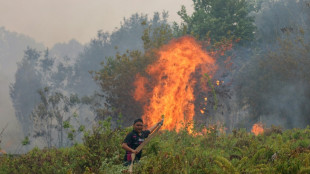
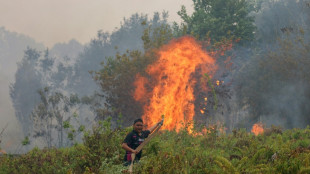
 Monitor says Indonesia fires have burned nearly two million hectares
-
Guehi insists players have 'trust and belief' in Man City after charges

-
 French PM says could declare state of emergency over unrest 'if needed'
-
UN climate panel head wants swift end to deadlock over key scientific report
-
 Albanian PM warns of 'red line' after days of unrest
-
PM calls for curfews in France as govt grapples with unrest

-
 Putin, Xi and Trump could meet at APEC summit: Kremlin
-
Man City's Semenyo out for up to eight weeks

-
 Microsoft exits data centre deal in blow to UK AI ambitions
-
Australian lawmaker critically hurt in 'violent' vehicle attack

-
 European stocks retreat as France violence spreads
-
England women's coach Wiegman signs two-year contract extension

-
 North Korea warns 'grave situation' prevailing along border
-
Louvre blocked as France grapples with unrest
-
 Raya proud of Arsenal's 'incredible' reaction after third straight win
-
Bollywood actor Tiger Shroff shot at in Mumbai, three suspects held: police

-
 Indonesia fires have burned nearly two million hectares: monitor
-
UN biodiversity summit opens with nature goals off track
-
 Australian lawmaker 'critically' hurt in attack, officials say
-
'Physical hell': Hong Kong hosts gruelling underwater hockey tournament

-
 Indonesia fires burned over 1.9 mn hectares through September: monitor
-
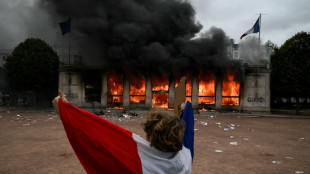
Police 'lost control' during French protests, says interior minister
-
 Asian tech stocks mixed after Wall St losses, eyes on earnings
-
Australia's new Ghost Shark submarines grow some 'teeth'
-
 China's third-quarter growth narrowly beats forecasts
-
'I call it a bribe': Pennsylvania residents spurn $10,000 data center checks
-
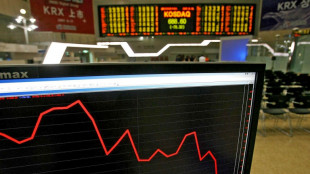 Asian stocks start week on back foot, tracking tech-led Wall St losses
-
In a former US steel city, ordinary people struggle to get by

-
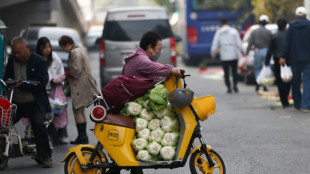 China growth narrowly beats forecasts
-
'Liar,' 'clown': Lula and Bolsonaro spar in Brazil poll debate

-
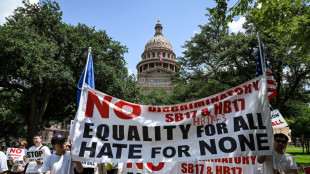 Faith and fury: Texas Senate rivals offer contrasting visions
-
Record El Nino? Depends who's counting
-
 Women await justice for police killings in Brazil
-
On the front line of ocean conservation off Portugal's Madeira
-
 The painstaking task of cataloguing the world's species
-
Wembanyama targets title breakthrough as NBA season tips off

Nations urged to curb harmful subsidies at UN nature summit
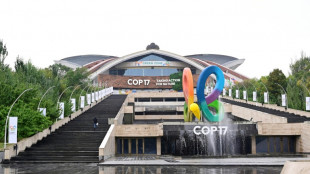
The UN biodiversity summit kicked off Monday with calls to overhaul subsidies for extractive industries that harm the planet, as governments fall behind on their commitments to protect nature.
Nearly 200 nations joined a historic call four years ago to halt and reverse the destruction of nature by 2030 but governments have been slow to act on these pledges.
According to a United Nations scorecard released ahead of the COP17 biodiversity talks, all but one of the 23 goals of the so-called "Paris Agreement on Nature" are off track.
UN biodiversity chief Astrid Schomaker said Monday that the biggest gaps "are found in areas requiring deep economic and societal transformation" -- including on the politically thorny issue of subsidy reform.
Despite promising to eliminate harmful subsidies, around $2.6 trillion a year in government spending still goes to activities that negatively impact biodiversity like coal and gas extraction and industrial farming.
"Incentives harmful to biodiversity should be reduced," Chinese Environment Minister Huang Runqiu told delegates at the opening of the summit on Monday.
Under the biodiversity deal, nations promised to reduce harmful incentives by $500 billion a year by 2030.
But little headway has been made.
- Follow the money -
At the same time, promises by governments to increase financial support for biodiversity have gone unmet.
Ahead of COP17, UN Secretary-General Antonio Guterres scolded governments for "spending money on the wrong things" and said said "subsidising fossil fuels is subsidising suicide".
Experts say a lack of finance is one of the biggest barriers to the 2030 nature goals.
A lack of cash holds back efforts to tackle pollution, combat invasive species, and safeguard 30 percent of land and oceans, particularly in developing countries home to some of Earth's biodiversity hotspots.
"We have to change where existing money goes. We cannot finance nature with one hand and subsidise its destruction with the other," Celine Beaulieu from WWF told reporters in Yerevan.
European and other wealthy nations obligated to provide biodiversity finance are expected to push at COP17 for large emerging economies like China to help plug the shortfall.
But attention is likely to focus more on how private capital, not public finances, might chip in.
A key priority will be encouraging corporations to donate a share of profits to a near-empty UN fund to support conservation in developing countries.
An Lambrechts from Greenpeace said decisions taken at COP17 "will only matter if governments follow through at home".
"They cannot continue promising to protect nature while supporting its destruction through harmful subsidies and incoherent policies. Any more delay is a threat to our survival on the planet," Lambrechts said on Sunday.
- High stakes -
On Monday, Armenia's Environment Minister Hambardzum Matevosyan, who is presiding over the political negotiations known as COP17, said nations had "a unique chance to correct the course" in Yerevan.
The summit is one of the largest events ever hosted in Armenia, with up to 15,000 visitors expected over the next two weeks.
It comes at a difficult time, with public finances under strain and political attention fixed on conflicts, geopolitical tensions and a global energy crisis.
Only a handful of world leaders, including UN chief Guterres but mostly heads of state from nearby central Asian nations, turned up for a high-level session on Friday ahead of the formal negotiations.
Matevosyan told AFP on Friday that success at COP17 "will not be measured simply by the number of participants, high-level statements or decisions adopted" but by whether nations turn pledges into action.
Guterres said the stakes could not be higher, describing an unrelenting "war on nature" that threatened the very livability of the planet for future generations.
"We need more action, more speed and more will... It is time to ask ourselves -- are we doing enough?" he said on Friday.
L.Miller--AMWN