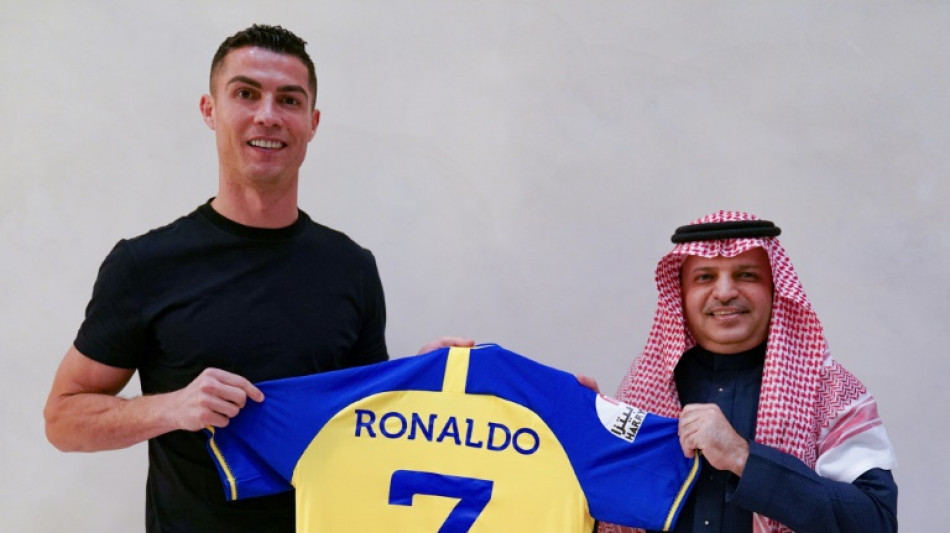
From boom to budgeting as reality bites for Saudi football / Photo: - - Al Nassr Football Club/AFP/File
 US woman who survived botched execution is awake and speaking
 From 1800s to modern pharma: a Nobel-winning chemistry quest

 Southampton boss Eckert given suspended ban over 'Spygate'
 Russia warns of 'false' information as second plague case reported
 IEA ready to release more oil reserves if necessary
 HSBC 'consults' over UK unit job cuts amid AI adoption
 UK court quashes five ex-traders' Libor rate rigging convictions
 XM Receives “Global Customer Experience Leader Award 2026” at the TrustFinance Performance Awards
 Stocks slide as oil climbs on Mideast flareup
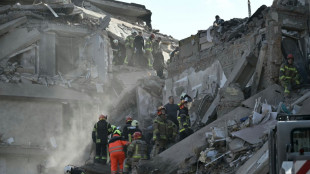 Heavy casualties in Ukraine after Russian strikes
 French wine harvest set to hit historic low
 Kyiv 'cannot agree' to EU membership limiting food exports: minister
 Arteta targets more Arsenal glory after signing new deal until 2030
 Russell hit with Singapore grid penalty for taking new power unit
 Spotify expands audiobooks to more than 180 markets
 French-Japanese duo wins chemistry Nobel for solving molecular 'mystery'
 England's Nations League surge helps heal World Cup wounds
 Mayor of opposition stronghold Izmir defects to Erdogan party
 Mertens beats Gauff to set up Swiatek clash at China Open

 Benin full of pride at role in Messi's last dance
 France suspends stun grenade use at student protests ahead of PM speech
 Indonesian court hears 'negligence' complaint against state over fires, haze
 Rubio in Greece to urge against Western civilisation 'decline'
 Micron workers at Taiwan plant vote in favour of strike
 In 'The Social Reckoning,' Jeremy Allen White takes on Facebook's 'frightening' ambition
A billion-dollar binge which brought some of football's biggest names to Saudi Arabia's modest league has given way to a more cautious phase, with spending down dramatically this year.
After a jaw-dropping 2023, when Cristiano Ronaldo led a parade of largely ageing superstars to the oil-rich, conservative monarchy, Saudi transfer spending slumped from $957 million to $431 million in the latest window.
On any given weekend Ronaldo and Karim Benzema, with six Ballons d'Or between them, can now be seen in the Saudi Pro League, with N'Golo Kante, Sadio Mane and the injured Neymar among a host of other top players.
But their ranks have barely swelled this season, with Brentford's occasional England international Ivan Toney the most notable addition when he signed for Al Ahli.
The Saudi Pro League, the second biggest spender in the summer of 2023, behind only the English Premier League, dropped to sixth this year, trailing the "Big Five" European competitions that it aims to rival.
According to analysts, Saudi officials are assessing the commercial returns of their record outlay as Saudi Arabia's lavish drive to modernise its oil-reliant economy comes under budgetary strains.
"I think they achieved the purpose last year, they put themselves on the map, they put the league on the map," said James Dorsey, a senior fellow at the National University of Singapore's Middle East Institute.
"Someone like Ronaldo and others attract audiences... it's now a question of how do you sustain that?"
- 'Not over forever' -
The oil-fuelled Saudi football project has drawn comparisons with the Chinese Super League, which imported players on exorbitant salaries until team owners went bust as the Chinese economy fizzled.
But with Saudi Arabia the sole bidder for the 2034 World Cup, and desperate to re-model itself as a tourism and business magnet before global oil demand falls for good, there is probably more to come from the Pro League.
"There are more considered and strategic ways to address the challenges of talent acquisition, which one senses the Saudis are now contemplating," said Simon Chadwick, professor of sport and geopolitical economy at France's SKEMA Business School.
"The expensive, lavish signings are not over forever, though it seems unlikely we will be seeing an occurrence like 2023 on a regular basis."
The drop in football spending parallels belt-tightening across the world's biggest oil exporter's so-called "giga-projects" -- giant infrastructure gambits ordered under the Vision 2030 economic diversification plan of Crown Prince Mohammed bin Salman, the de facto Saudi ruler.
In April, the Saudi finance minister admitted global shocks such as the Ukraine and Gaza wars and Covid-19 had prompted a review of the reform plans which include NEOM, a futuristic city being built in the desert.
The Public Investment Fund, the acquisitive Saudi sovereign wealth vehicle, has issued bonds four times this year, and state-owned oil giant Aramco floated more than a billion shares to fund major projects, according to experts.
"This year Saudi Arabia has stepped back from many of its big spending commitments to appraise whether the represent value for money, added to which even the PIF has been selling debt bonds on financial markets," Chadwick said.
"Spending on expensive, big name players is ultimately a financially burdensome pursuit in the long term which doesn't guarantee success, especially of the Saudi national team," he added.
"And... the anticipated commercial returns (including TV deals and merchandising) have thus far failed to materialise, necessitating a reappraisal of priorities and objectives."
- 'Wind of austerity' -
Transfers in other countries are also lower this year, with the Premier League's spending nearly halved to comply with profit and sustainability rules.
Globally, transfer fees in men's football fell by 13 percent from a year earlier to $6.4 billion (5.8 billion euros) this summer, according to world body FIFA.
As Chadwick said, "a wind of austerity is blowing through football".
Mohamed Mandour, a journalist at French website Sportsdata, said the lower spending reflects "realism and rationality" at the Saudi Pro League, four of whose biggest teams are owned by the PIF.
"Any sports project spends a lot in the beginning phase," he told AFP, saying the league is looking for "sponsors and resources for the clubs, some of which are from outside Saudi Arabia itself".
An official in the Saudi Professional League, who wanted to remain anonymous as he was not authorised to speak to the media, told AFP: "Who says we have to sign a big player every summer?"
"Spending this year reflects the maturity of the league and the pursuit of filling the technical gaps" in the teams, the official added.
D.Sawyer--AMWN