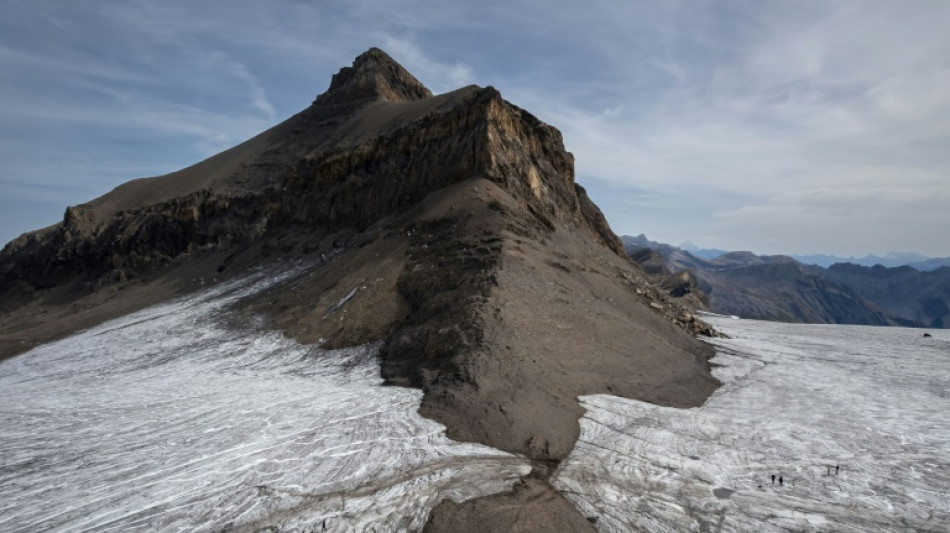
All regions experienced water extremes in 2021: UN / Photo: Fabrice COFFRINI - AFP
 Berlin Literary Guide: Book Launches, Festivals, and Readings Through August

 Nepal rescuers drill through debris towards trapped tunnel workers

 Manhunt in Switzerland after fatal rave shooting

 'No' camp seen winning Iceland's EU referendum
 Nepal flood survivors return to ruins to salvage memories
 Killing of Palestinian children and teens by Israel surges in West Bank
 Educators keep 9/11 memory alive for next generation, 25 years on

 Venezuelans view US oil deal with doubt, hope

 Gobena and Jepchirchir power to Sydney Marathon victories

 Iceland in suspense after close EU vote

 Wallabies hold on for victory in Argentina

 Juve notch second straight win, Fiorentina's centenary party falls flat

 Rybakina eases injury fears ahead of US Open
 Djokovic kicks off latest Grand Slam quest under US Open lights

 'Sorry' De Zerbi won't panic after Spurs shambles

 UN, Nepal warn of climate threat after deadly floods

 USTA boss says structure of new player council not yet set

 Tiny Elversberg stun Leverkusen on Bundesliga debut, Dortmund beat Hamburg

 James Cleverly leaves shadow cabinet to seek London mayoralty

 Baladi Map app turns Lebanon’s local problems into a public record
 Thirty-seven Mumbai pilgrims return after Nepal flood disruption

 Ankle ligament tear ends Neeraj Chopra’s 2026 season

 Chinchpoklicha Chintamani begins 2026 arrival procession in Parel
 Cyberabad civic body demolishes 19 unauthorised structures

 About 50 Karnataka travellers return from Nepal as 24 remain missing
All regions of the world saw water extremes last year -- both floods and droughts -- and billions of people had insufficient freshwater, the United Nations said on Tuesday.
Large areas of the planet recorded drier than normal conditions in 2021, the UN's World Meteorological Organization said in its first annual State of Global Water Resources report.
The report assesses the effects of changes in the climate, environment and society on the Earth’s freshwater resources -- limited supplies that are under growing demand -- so they can be managed better.
"The impacts of climate change are often felt through water -- more intense and frequent droughts, more extreme flooding, more erratic seasonal rainfall and accelerated melting of glaciers -- with cascading effects on economies, ecosystems and all aspects of our daily lives," said WMO head Petteri Taalas.
"And yet there is insufficient understanding of changes in the distribution, quantity and quality of freshwater resources."
Some 3.6 billion people face inadequate access to freshwater at least one month per year. That is forecast to rise to more than five billion by 2050, the report said.
Between 2001 and 2018, 74 percent of all natural disasters were water-related, according to UN studies.
In 2021, all regions saw devastating water extremes, the report said.
There were record-breaking floods in western Europe and the Amazon, while water levels in rivers in Paraguay and southern Brazil dropped to an all-time low.
The report assessed streamflow -- the volume of water flowing through a river -- over a 30-year period.
Drops in water volumes were twice as widespread as rises.
Major river basins in the Americas and central Africa saw water volumes shrink. Rivers in northern India and southern Africa saw above average increases.
- Frozen resources -
Terrestrial water storage -- all water on the land surface and in the subsurface -- shrank more than it grew, the report said.
Negative hotspots included Patagonia, the Ganges and Indus headwaters, and the southwestern United States.
"Some of the hotspots are exacerbated by (over-extraction) of groundwater for irrigation. The melting of snow and ice also has a significant impact in several areas, including Alaska, Patagonia and the Himalayas," the WMO said.
The world’s biggest natural reservoir of freshwater is the cryosphere -- glaciers, snow cover, ice caps and permafrost -- and changes to this reservoir affect food production, health and the natural world, the report said.
Around 1.9 billion people live in areas where drinking water is supplied by glaciers and snow melt but these glaciers are melting increasingly fast, it stressed.
It urged authorities to speed up the introduction of drought and flood early warning systems to help reduce the impact of water extremes.
P.Mathewson--AMWN