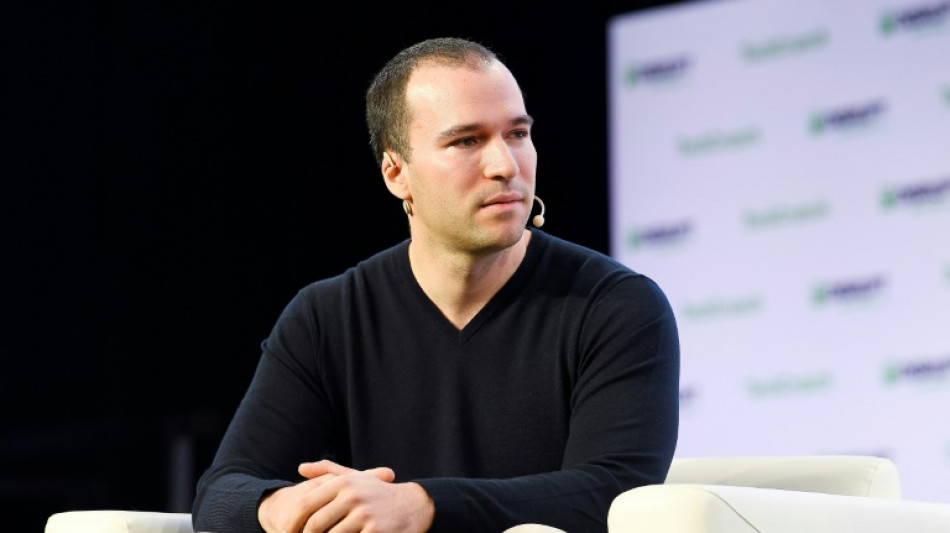
ChatGPT bot 'for professional use' on the way / Photo: Steve Jennings - GETTY IMAGES NORTH AMERICA/AFP
 Aston Villa Defy History With Rare Victory at Old Trafford

 Crowds Gather at San Francisco Park for Elizabeth Holmes Lookalike Tournament

 Making Your Home Safer for Aging Parents: Accessibility Renovations That Add Value

 iPS Cell Research Accelerates Drug Discovery for ALS and Spinal Cord Injury

 Rene Eyre Revisits Autobiographical Performance 'Say A Little Prayer' in London

 UAE's HCT Holds Record Graduation and Announces Major Training Expansion

 NASA Awards $10B Lunar Contract Framework to SpaceX, Blue Origin

Hot startup OpenAI on Wednesday initiated a waitlist for a professional and paid version of its software ChatGPT, which has sparked debate about artificial intelligence and the future of work.
OpenAI co-founder Greg Brockman teased an upcoming version of ChatGPT "geared for professional use" as media reports swirled that Microsoft plans to invest $10 billion in the startup.
Microsoft, which makes its own Cortana digital assistant, declined to comment.
"Working on a professional version of ChatGPT; will offer higher limits and faster performance," Brockman said in a tweet.
OpenAI late last year released its free version of the ChatGPT chatbot that is capable of answering questions so well that it reopened the debate on risks linked to artificial intelligence (AI) technologies.
ChatGPT has also prompted concerns it could be used by students for homework assignments or to replace authors or others with writing jobs.
The professional model will come with a fee and be faster than the free version, which will remain available, the company said.
A waiting list page asked people what prices they think would be too high, too low, and just right for ChatGPT and how upset they would be if they could no longer use the chatbot.
"If you are selected, we'll reach out to you to set up a payment process and a pilot," the page explained.
"Please keep in mind that this is an early experimental program that is subject to change."
Claude de Loupy, head of Syllabs, a French company specialized in automatic text generation, said "ChatGPT's response can be off the mark," but that its overall performance remains "really impressive."
Conversations with the chatbot, posted online by fascinated users, show a kind of omniscient machine that is capable of explaining scientific concepts or writing scenes for a play or even lines of computer code.
Its level of sophistication both fascinates and worries some observers, who voice concern these technologies could be misused to trick people, by spreading false information or by creating increasingly credible scams.
Asked about these dangers, a response from ChatGPT said that human-like chatbots could be hazardous if misused.
"There are potential dangers in building highly sophisticated chatbots, particularly if they are designed to be indistinguishable from humans in their language and behavior," the chatbot told AFP.
On its welcome page, OpenAI lays out disclaimers, saying the chatbot "may occasionally generate incorrect information" or "produce harmful instructions or biased content."
OpenAI, cofounded in 2015 in San Francisco by billionaire tech mogul Elon Musk, who left the business in 2018, received $1 billion from Microsoft in 2019.
G.Stevens--AMWN

