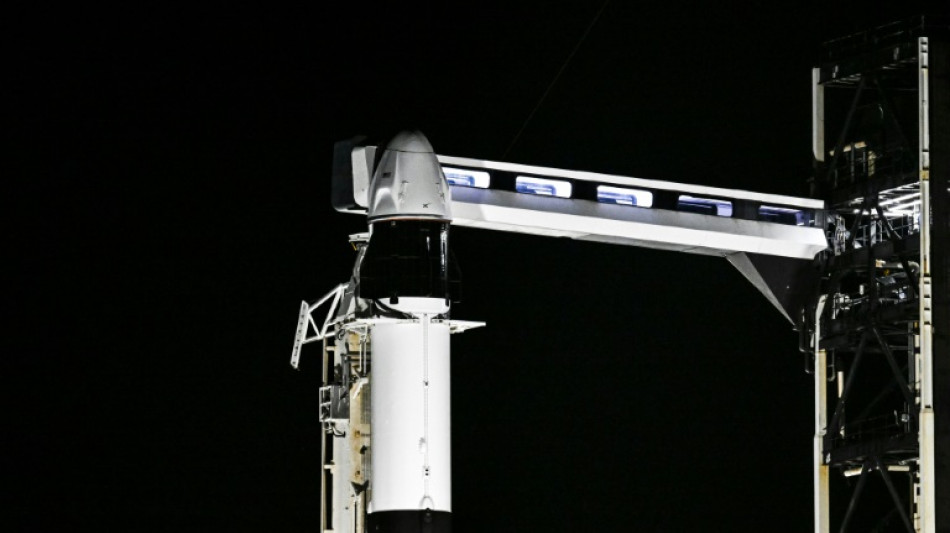
SpaceX Polaris Dawn mission set to launch early Friday / Photo: CHANDAN KHANNA - AFP/File
 Crowds Gather at San Francisco Park for Elizabeth Holmes Lookalike Tournament

 Central Tokyo Apartment Rents Forecast to Rise 11% by 2030

 London Museum Granted 24/7 License Ahead of November Opening

 Dana White Confirms Flight to Washington for Trump Meeting on Press Secretary Role

 Dengue Fever Expands Into High Himalayas as Climate Change Warms Nepal

 IoT Refrigerator Hacks Disrupt Blood Labs and Supermarkets Across Europe and US
The SpaceX Polaris Dawn mission, a multiday orbital expedition set to feature the first-ever spacewalk by private citizens, is now scheduled to launch on Friday, according to the Federal Aviation Administration.
An operations plan released by the agency indicates a four-hour launch window opening at 3:33 am (0733 GMT) on Friday from NASA's Kennedy Space Center, with backup opportunities on Saturday and Sunday. Elon Musk's company has not yet commented on the new launch window.
Organized by billionaire entrepreneur Jared Isaacman, the Polaris Dawn mission aims to reach a peak altitude of 870 miles (1,400 kilometers) -- the highest for any crewed mission in over half a century, since NASA's Apollo program.
The highlight of the mission is set to be the first spacewalk by a four-member crew composed entirely of non-professional astronauts, who will be wearing sleek, newly developed SpaceX extravehicular activity (EVA) suits.
The launch was delayed twice last week, initially due to a technical issue with the launch tower and subsequently because of weather constraints affecting the splashdown phase.
Complicating matters further, a separate SpaceX Falcon 9 mission lost its first stage booster, which typically performs a precision upright landing on a drone ship.
This incident led to a temporary grounding, since lifted, of the prolific launch vehicle heavily relied upon by NASA and private companies for deploying astronauts and satellites into orbit.
F.Pedersen--AMWN

