-
 Canadian minister says Russia's G20 presence sparked 'discomfort'
-
China's Xi arrives in Egypt as US sanctions threat looms over Iran links

-
 IMF reaches agreement with Senegal on new $2.2 bn loan programme
-
Car bomb at Colombian police station kills one, injures 11

-
 Germany blames Russia for airport drone incident, hits back with sanctions
-
Rain delays start of play on US Open
-
 Iran president urges return to truce, hails Russian support
-
Man City agree blockbuster deal to sign Chelsea star Fernandez: reports

-
 Aster and World Liberty Financial Launch USD1 RWA Boost: Phase 1, Offering 125M $WLFI + 6.25M USD1 in Rewards
-
Alkemya Metacore Secures $50M via Tokenised Equity to Scale Nickel Energy and Security Tech

-
 Tronchon sprints to Vuelta stage 10 win, Mas keeps red jersey
-
Man City chase Fernandez, Arsenal sell Jesus on deadline day

-
 Germany defender Rudiger announces international retirement
-
EU says Russian 'hybrid attacks' won't halt aid to Ukraine

-
 Musk defends AI data centers, slams EU rules at G20
-
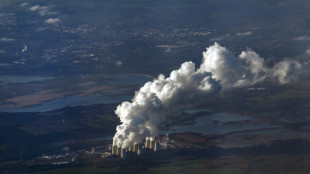
Explosives used in sabotage attack on German power lines
-
 Activists blame Kenya for Ugandan opposition figure's plight
-
Nepali families hold symbolic funerals for missing after floods

-
 Iran president offers US olive branch, hails Russian support
-
Newcastle sign Lille forward Fernandez-Pardo

-
 TrustFinance Community Choice Awards 2026 Opens Global Voting
-
Even at Elysee, phones are handed in, Macron tells French pupils

-
 Nepal disaster a climate 'warning signal': foreign minister
-
Chelsea agree to sign Atalanta's Ahanor, with Palace loan for this season

-
 France winger Diaby returns to Leverkusen until 2031
-
Chelsea sign Atalanta's Ahanor and loan him to Palace

-
 Barcelona confirm Jesus arrival from Arsenal
-
UK chalks up hottest summer on record for second year running

-
 EU official says it's not time to 'normalize' Russia at G20 finance talks
-
China's Xi visits Egypt as US sanctions threat looms over Iran links

-
 RedHill Announces Transformational Acquisition of Commercialization Rights to Ferring’s Rebyota® and Clenpiq®
-
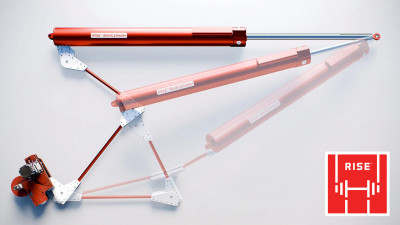
RISE Robotics Awarded $100,000 MassVentures Grant to Accelerate Commercialization of Beltdraulic Technology
-
 TrendEadvisor Launches Global Multi-Asset Platform Combining Online Investing with Social Trading
-
Global bond sell-off deepens on inflation concerns

-
 India's top court drops criminal cases against protesters
-
Germany's far-right AfD promises 'boom' but economists fear worst

-
 Philippine couple married in hip-deep floodwaters
-
Former England captain Stokes signs for Adelaide Strikers

-
 Villa sign Senegal winger Mbaye from PSG
-
Pakistan selector and ex-captain Misbah resigns after coach sacked

-
 Former Peru minister last-minute contender for UN labour agency helm
-
Shein flattens on Hong Kong debut facing global headwinds

-
 Messi legacy will 'live forever', says Beckham
-
Eurozone inflation hits three-year high at 3.3% in August

-
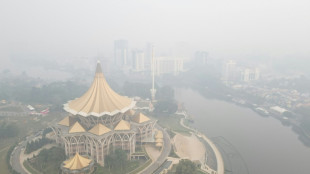 'Literally tasting the smoke': Malaysians suffer as haze worsens
-
Man City chase Fernandez, Arsenal eye Alvarez on deadline day

-
 Kyiv's defences, 'hybrid' threat from Moscow headline EU talks
-
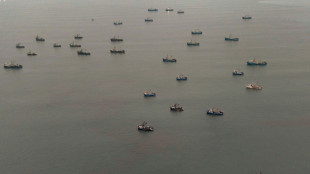
El Nino hammering Peru anchovy fishing: industry officials
-
 Oil extends gains, stocks mostly down as Trump issues fresh Iran warning
-
Mass Russian barrage kills 12 in Kyiv
SpaceX Polaris Dawn crew begins historic private spacewalk
A pioneering private crew made history Thursday with the first-ever spacewalk by non-professional astronauts, marking a giant leap forward for the commercial space industry.
The SpaceX Polaris Dawn mission, led by fintech billionaire Jared Isaacman, launched early Tuesday from the Kennedy Space Center in Florida, journeying deeper into the cosmos than any humans in the past 50 years, since the Apollo program.
Then, with their Dragon spaceship's elliptical orbit reduced to a low point of roughly 120 miles and a high of 430 miles, pure oxygen began flowing into their suits, marking the official start of their extravehicular activity (EVA) at 1012 GMT.
"The first spacewalk from Dragon has begun!" SpaceX wrote on social media platform X.
The milestone is the latest in a string of achievements by SpaceX, the company founded by Elon Musk in 2002. Initially dismissed by traditionalists, it has since grown into a powerhouse that has reshaped the space industry.
In 2020, it beat aerospace giant Boeing in delivering a safe crewed spaceship to provide rides to NASA crew to the International Space Station.
Today, it launches more rockets than any competitor, and its Starlink satellite constellation provides internet service to dozens of countries.
- 'Bit of a dance' -
The crew is currently in a "prebreathe" process to purge nitrogen from their blood, preventing decompression sickness caused by nitrogen bubbles. The cabin pressure will be gradually reduced to match that of space.
Then they will open the hatch and Isaacman and crewmate Sarah Gillis, a SpaceX engineer, will take turns peeking out from a structure attached to the hatch dubbed "Skywalker," equipped with hand and footholds.
"It'll look like we're doing a little bit of a dance," Isaacman quipped during a recent press conference.
In reality, they will be stress-testing SpaceX's next-generation suits, which boast heads-up displays, helmet cameras and enhanced joint mobility systems.
However, they won't float away on a tether like early spacefarers such as Soviet cosmonaut Alexei Leonov or NASA's Ed White did in 1965. Instead, they'll cling to the spacecraft as it whizzes around the planet at roughly 17,500 mph.
Mission pilot Scott Poteet and SpaceX engineer Anna Menon will monitor vital support systems during the activity, while Isaacman and Gillis are expected to each spend about 15 to 20 minutes partially outside the craft.
"The risk is greater than zero, that's for sure, and it's certainly higher than anything that has been accomplished on a commercial basis," former NASA administrator Sean O'Keefe told AFP.
"This is another watershed event in the march toward commercialization of space for transportation," he added, comparing the crewmates to early aviators who paved the way for modern air travel.
- First of three Polaris missions -
The spacewalk follows a daring first phase of the mission, during which the Dragon spacecraft reached a peak altitude of 870 miles (1,400 kilometers).
This put the crew more than three times higher than the International Space Station, in a region known as the inner Van Allen radiation belt -- a zone filled with dangerous, high-energy particles.
All four underwent more than two years of training in preparation for the landmark mission, logging hundreds of hours on simulators as well as skydiving, centrifuge training, scuba diving and summiting an Ecuadoran volcano.
Upcoming tasks include testing laser-based satellite communications between the spacecraft and the vast Starlink satellite constellation, and completing dozens of experiments, including tests on contact lenses with embedded microelectronics to monitor changes in eye pressure and shape in space.
Polaris Dawn is the first of three missions under the Polaris program, a collaboration between Isaacman and SpaceX.
Financial terms of the partnership remain under wraps, but Isaacman, the 41-year-old founder and CEO of Shift4Payments, reportedly poured $200 million of his fortune into leading the 2021 all-civilian SpaceX Inspiration4 orbital mission.
The final Polaris mission aims to be the first crewed flight of SpaceX's Starship, a prototype next-generation rocket that is key to founder Elon Musk's ambitions of colonizing Mars.
P.Silva--AMWN