
Tenzai's AI Hacker Is the First Autonomous System to Rank in the Top 1% of Global Hacking Competitions
 Macron, King Charles hail UK-France ties after viewing Bayeux Tapestry

 Fury hits out at 'coward' Joshua as 'Battle of Britain' talks go on

 Maltese tycoon acquitted of masterminding reporter's murder

 George Clooney: a Hollywood icon and campaigner
 Europe, US closer than they look on tech rules, says EU tech chief

 Clooney honoured as Hollywood-light Venice Film Festival kicks off
 Third-ranked Pegula, Medvedev power into US Open third round

 Davis-Woodhall a doubt for Ultimate Championship after car crash

 Third-ranked Pegula powers into US Open third round

 Uber says laying off 'about 10%' of workforce worldwide

 US judge rejects bid to break up Google's ad business

 Rupert Murdoch 'very happy' to be played by Guy Pearce in new film

 Wall Street stocks rise despite bond yields, oil rising
 Brennan claims third Vuelta victory in stage 11 sprint

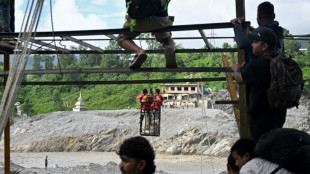 Nepal flood survivors cling to zipline to cross treacherous river

 US Treasury issues $1 coin with Trump's face on it

 Fernandez 'didn't hesitate' over record Man City move

 Dutch shift 86 tonnes of gold from US, Canada to UK

 Nepal floods should mobilise climate action: UN green fund chief

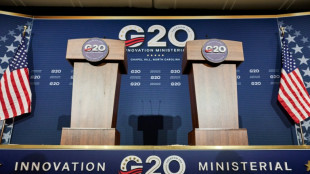 Nvidia boss presses G20 ministers to build AI infrastructure

 Liminal Launches Liminal Prime for Institutional OTC and Stablecoin Liquidity

 10 missing as cargo ship sinks after collision off Istanbul

 30 years on, 'Tomb Raider' reboot sees Lara Croft through a 'modern lens'

 King Charles, Macron to view Bayeux Tapestry as French leader starts UK visit

 George Clooney says US run by 'least qualified people'

Autonomous penetration-testing agent outperformed more than 99% of human participants across six major Capture-the-Flag platforms designed for elite security researchers
TEL AVIV, IL / ACCESS Newswire / March 17, 2026 / Tenzai, the AI-native cybersecurity company building autonomous penetration-testing AI agents, today announced that its AI hacking system achieved top-1% performance across six globally recognized hacking competitions originally designed only for human participants.
While AI security tools have previously demonstrated success in bug bounty competitions and student-level hacking challenges, this is the first time an autonomous AI system has achieved top-tier results in elite Capture-the-Flag (CTF) environments that evaluate advanced exploitation skills.
Across six major CTF platforms, including websec.fr, dreamhack.io, websec.co.il, hack.arrrg.de, pwnable.tw, and Lakera's Agent Breaker, Tenzai's agent consistently solved complex vulnerability challenges, placing it ahead of more than 99% of participants.
Capture-the-Flag competitions are widely used to evaluate real hacking ability. Participants must identify and exploit real vulnerabilities in complex systems, and top rankings are typically achieved by experienced security researchers, professional penetration testers, and bug bounty hunters. Unlike company-sponsored benchmarks, these competitions are primarily populated by individual practitioners competing independently.
To ensure a meaningful benchmark against human expertise, Tenzai evaluated its system across large competitions with tens of thousands of participants, progressively difficult challenges, and specialized environments such as Agent Breaker, which focuses on security issues in AI agents. Many of these competitions release challenges with gated writeups, meaning it's nearly impossible that answers appear in public datasets used for training Tenzai's AI hacker.
Strong performance in these environments requires far more than automated scanning. The competitions contain a fixed number of challenges that increase in complexity and value, meaning high rankings depend on discovering and exploiting extremely complex vulnerabilities, problems that historically only a small number of participants solve.
"At this point, our agent performs better than roughly 99% of people who participate in these competitions," said Pavel Gurvich, CEO and co-founder of Tenzai. "That's more than 125,000 human experts. There is still a small group of exceptional hackers who outperform current AI systems, and closing that gap remains an important challenge. But AI already allows us to bring elite offensive capabilities to organizations on demand and at a scale the industry has never had before."
To reach top-percentile rankings, the system demonstrated capabilities across multiple classes of vulnerabilities, including authentication bypass, insecure direct object reference (IDOR), complex application logic flaws, and multi-stage exploitation chains.
Many of the solved challenges required combining several weaknesses within the same system, a technique commonly used in real attacks but difficult to automate. Rather than relying primarily on large-scale scanning or brute-force enumeration, Tenzai's agent analyzes how applications behave, reasoning about identity, trust boundaries, and system interactions in order to uncover subtle vulnerabilities.
The results suggest that AI systems are beginning to approach the offensive capabilities historically only achieved by elite human security researchers.
For organizations, the significance of these results lies in scale. Highly skilled penetration testers remain scarce and are typically engaged periodically. Autonomous agents can continuously test applications as they change, allowing security teams to evaluate new releases and system updates more frequently.
This enables organizations to shorten compliance validation cycles, expand security testing coverage across a larger number of applications, and detect complex vulnerabilities earlier in development.
By combining advanced offensive reasoning with continuous automation, Tenzai's system allows security teams to test software at the pace modern systems are built.
About Tenzai
Tenzai is an AI-native cybersecurity company building autonomous AI hackers designed to help enterprises deliver more secure software. Its platform continuously tests applications by actively probing for vulnerabilities and exploitation paths across enterprise systems. Founded in 2025 by cybersecurity veterans Pavel Gurvich, Ariel Zeitlin, Ofri Ziv, Itamar Tal, and Aner Mazur, Tenzai has raised $75 million in seed funding from investors including Greylock Partners, Battery Ventures, and Lux Capital. Learn more at www.tenzai.com.
Media Contact:
Mia Balaban
[email protected]
SOURCE: Tenzai
View the original press release on ACCESS Newswire
F.Pedersen--AMWN